4.41,741 floated over the Valley of the Kings at dawn
Hot Air Balloon Ride in Luxor Egypt - Flight and Tour Options
Watch dawn break over the Valley of the Kings from 1,500 feet. Fly with licensed pilots on a sunrise hot air balloon ride in Egypt, with roundtrip flights from Cairo, hotel pickup, and guided temple visits included. Book your day tour and land ready for Luxor.
"Excellent day trip! Our guide Esraa made everything go smoothly and kept it calm and enjoyable. Abanoub, our driver, was punctual and professional all day. Truly amazing experience."
4.4★average rating1,741traveler reviews100%free cancellation63countries travelers came from
Choosing your hot air balloon ride in Luxor, Egypt
A sunrise flight over the West Bank tombs is the one experience here that lifts you off the ground, and every other option keeps your feet on the temple stone. The real choice is time: one long day by plane from Cairo, or several days drifting down the Nile between Luxor and Aswan with the balloon built into the itinerary. Day trips suit travelers with a single free day; cruises suit anyone who wants Luxor and Aswan in one trip.
DocumentsDomestic flights from Cairo need a passport valid for at least six months and a full Egyptian tourist visa, so send full names and passport numbers when a tour asks for them, at least 48 hours before a flight-based tour.
Minimum ageSome balloon tours set the minimum age at six years old, so check before booking with young children.
MobilityRiding the balloon means climbing over the basket side, standing for the whole flight and bending low to brace at landing, which rules the flight out after a knee replacement or with limited mobility.
WeatherThe Civil Aviation Authority grounds the balloons when winds pass about 12 knots or dust and poor visibility move in, and a grounded morning does not derail the day since sightseeing on foot carries on as planned.
TimingOn a cruise, balloon passengers leave their ship between 3:15 am and 5:15 am, and the flight and landing wrap up between 7 am and 8 am, early enough for the Valley of the Kings by 8 am.
PaymentLuxor's main sites, including Karnak and the Valley of the Kings, take bank cards for tickets instead of cash, so carry a card even on a guided tour.
BasketsShared flights carry 20 to 28 passengers in compartments of two to five, and bags, purses and backpacks stay on the ground.
What to wearDress modestly with shoulders and knees covered, wear a hat to soften the burner's heat overhead, and expect restrooms at the launch field since there are none in the basket.
Booking aheadSecure peak-season cruises and Cairo to Luxor flights eight to twelve weeks in advance for December through February.
accessHot air balloons in Luxor have no doors, so you must climb over the basket side, stand for the whole flight, and bend low to brace for landing, which rules out anyone with a knee replacement or limited mobility, and the minimum age is 6 years old.
Skip the flight if your legs cannot take it: a canceled or skipped balloon still leaves a full morning of sightseeing across Luxor's West and East Banks, and operators on cruise itineraries offer substitutes like a sunrise boat ride or refund the balloon portion.
Your tour options for a hot air balloon ride in Egypt
Private flight day trip
14 hours·Arabic, English
4.4(153)
From Cairo: Luxor & Hot Air Balloon Private Trip by Plane
The most complete one-day option: balloon, flights, hotel, lunch and entry fees all in one booking, at 14 hours door to door.
Free cancellationHotel pickup includedHotel pickup and drop-off
What a hot air balloon ride in Egypt actually includes
11 stops12 places
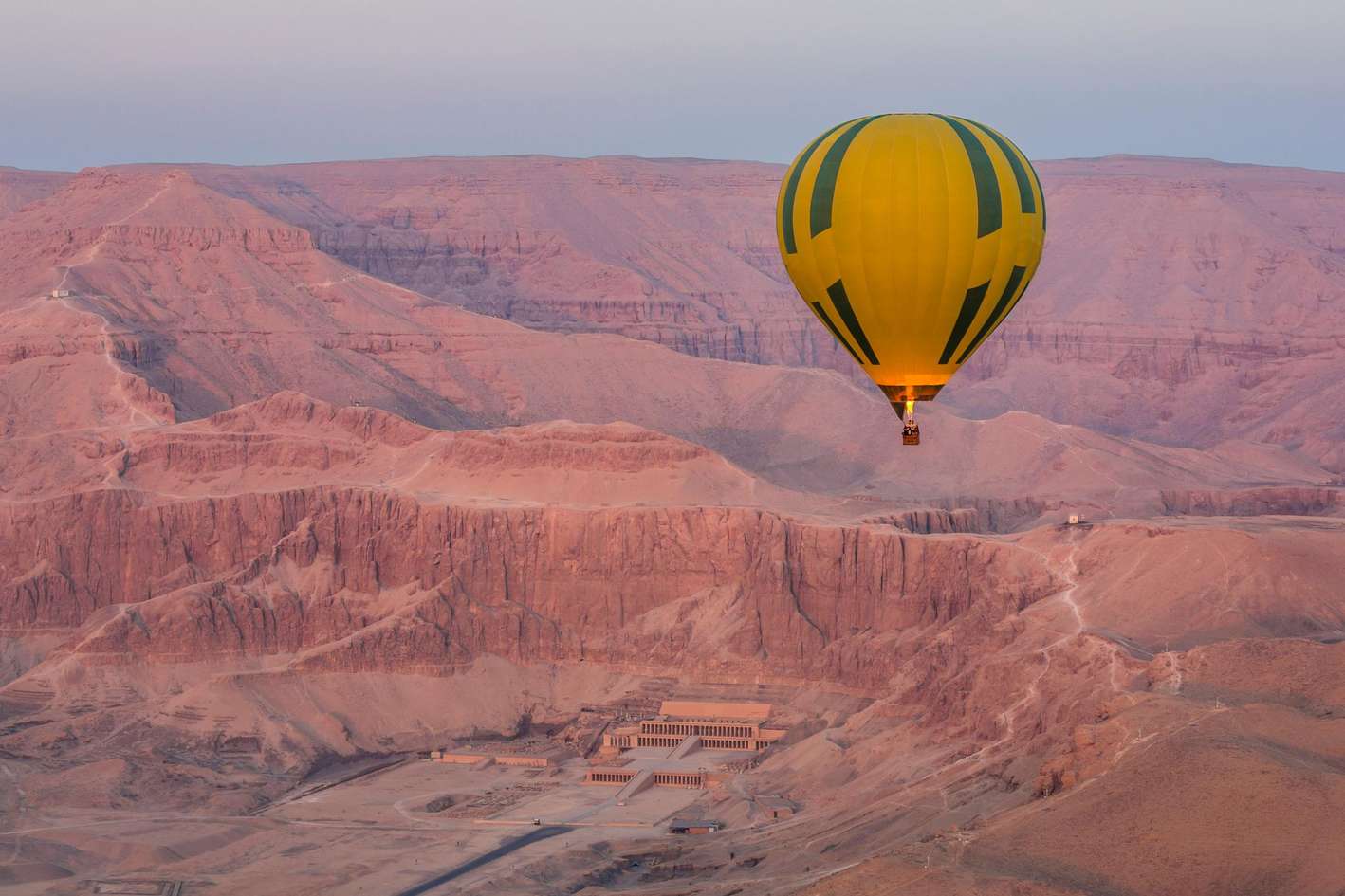
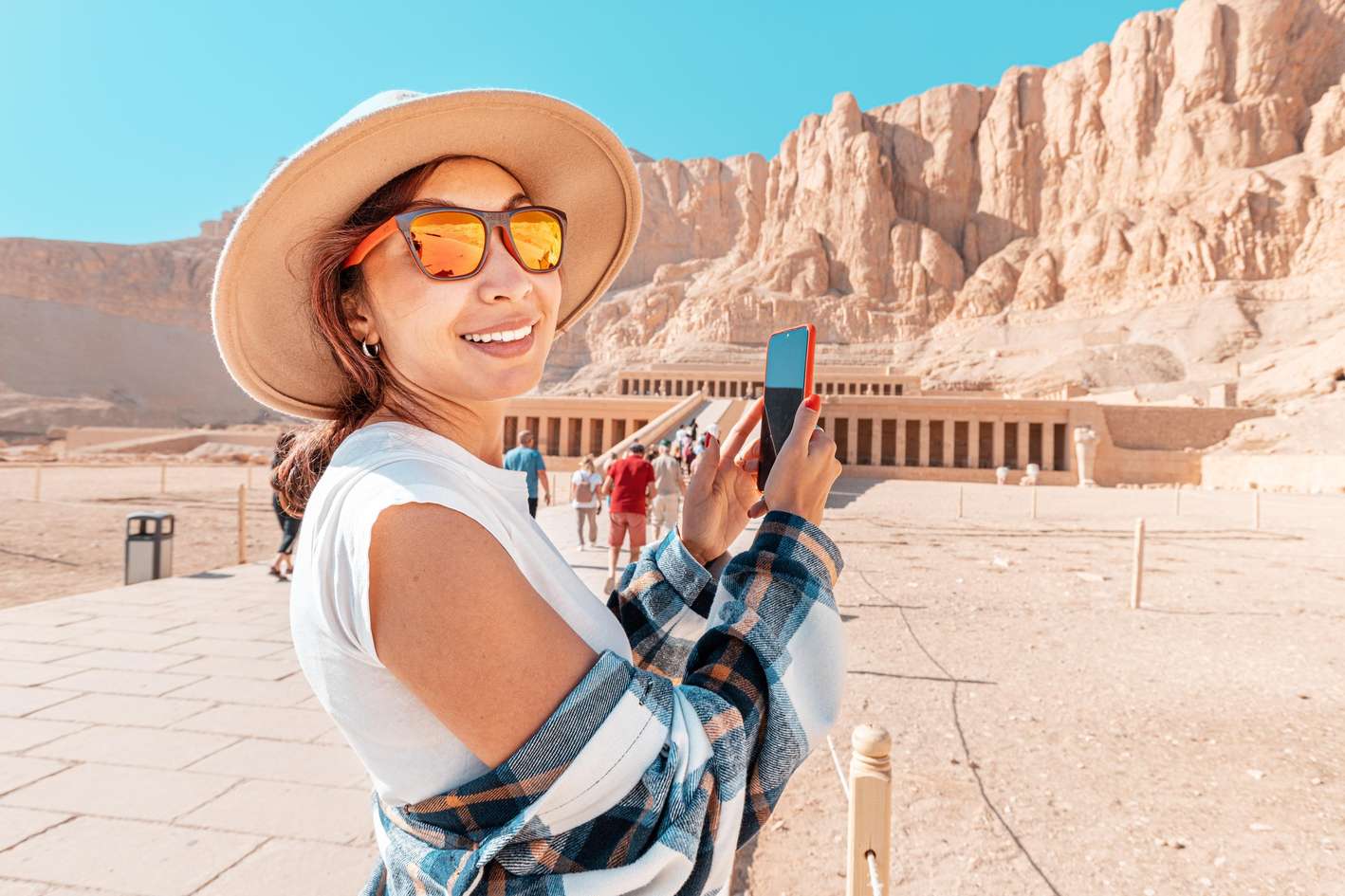
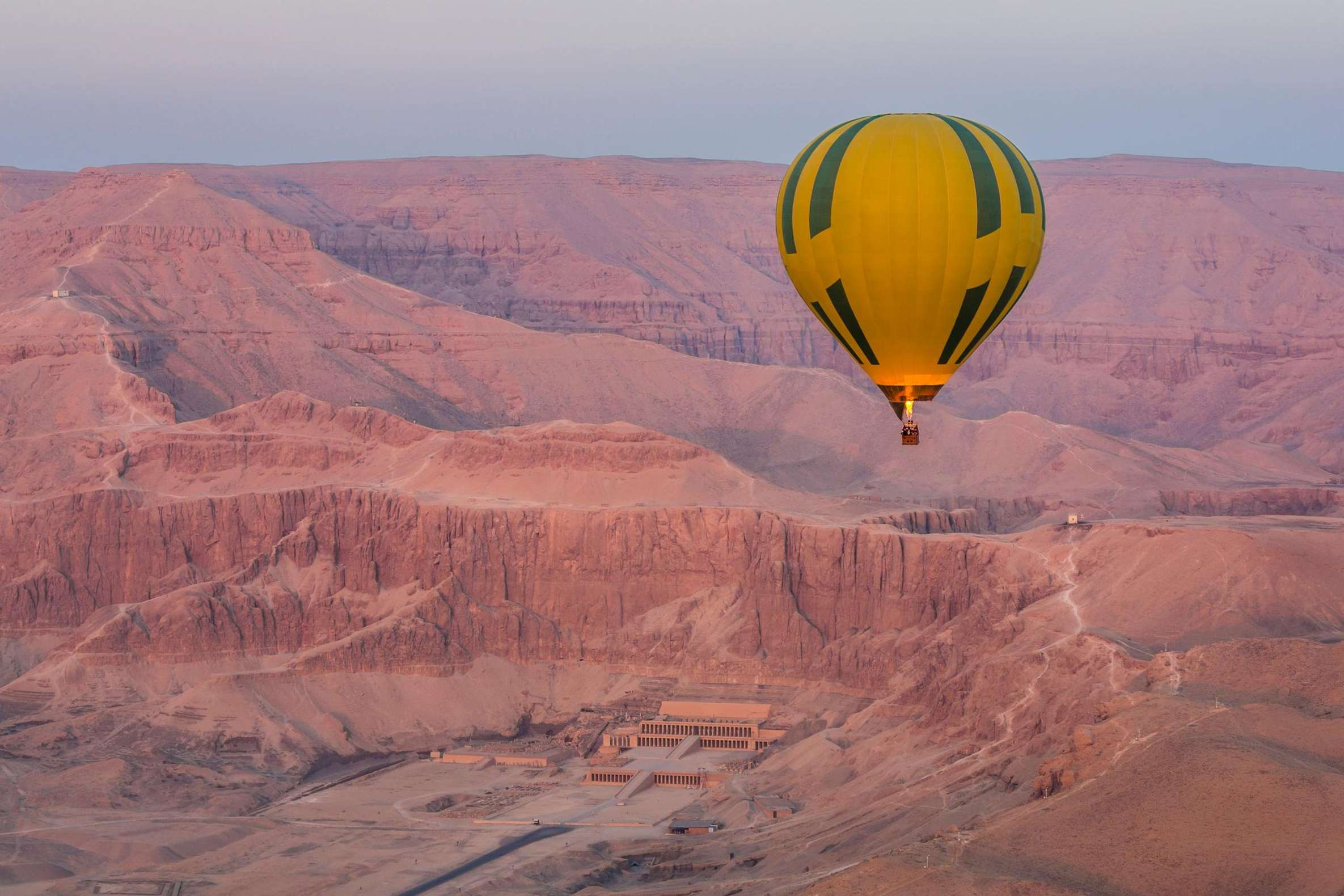
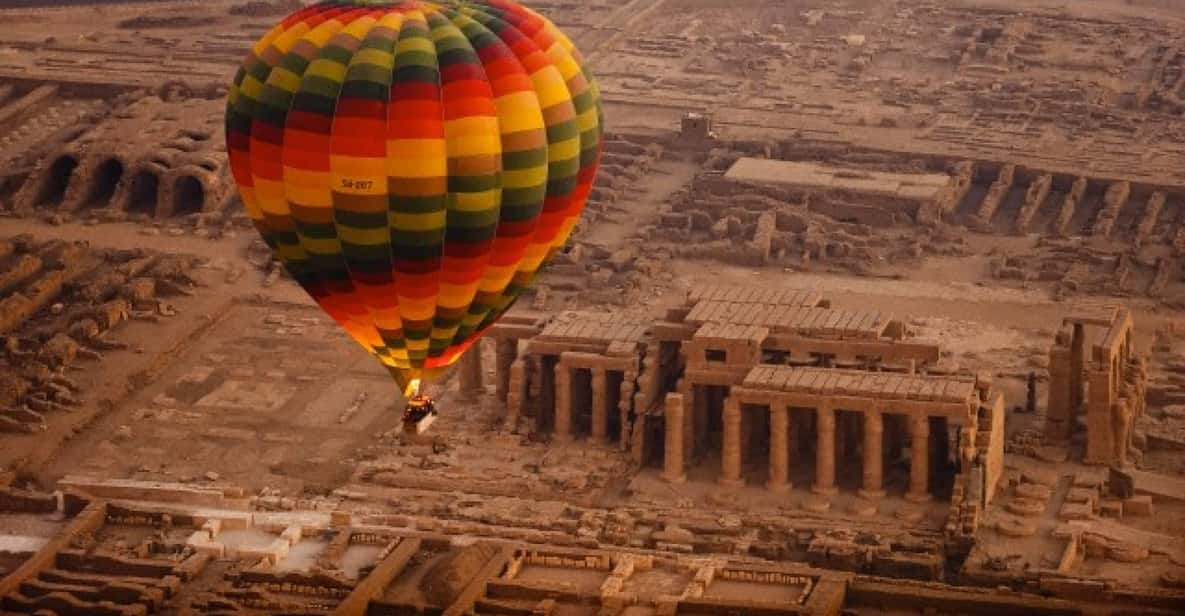
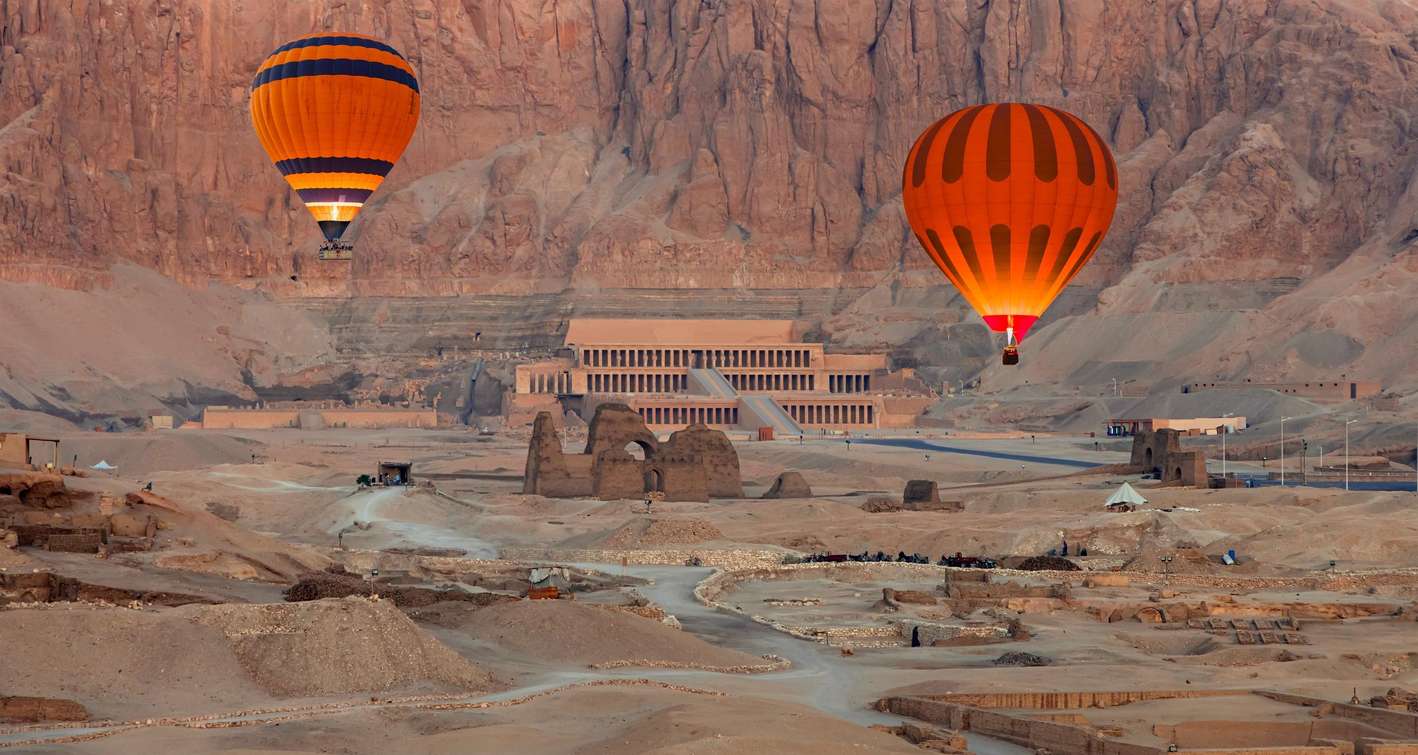
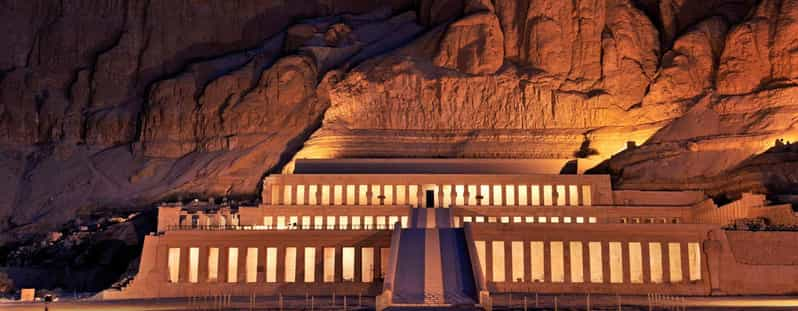
The flight comes first. A balloon crew collects you from a Luxor hotel in the small hours, ferries you to the West Bank launch fields, and lifts you over the necropolis as the sun rises, with Hatshepsut's temple against the cliffs and the green Nile Valley ending hard at the desert edge below.
After landing, the day runs straight into the monuments.
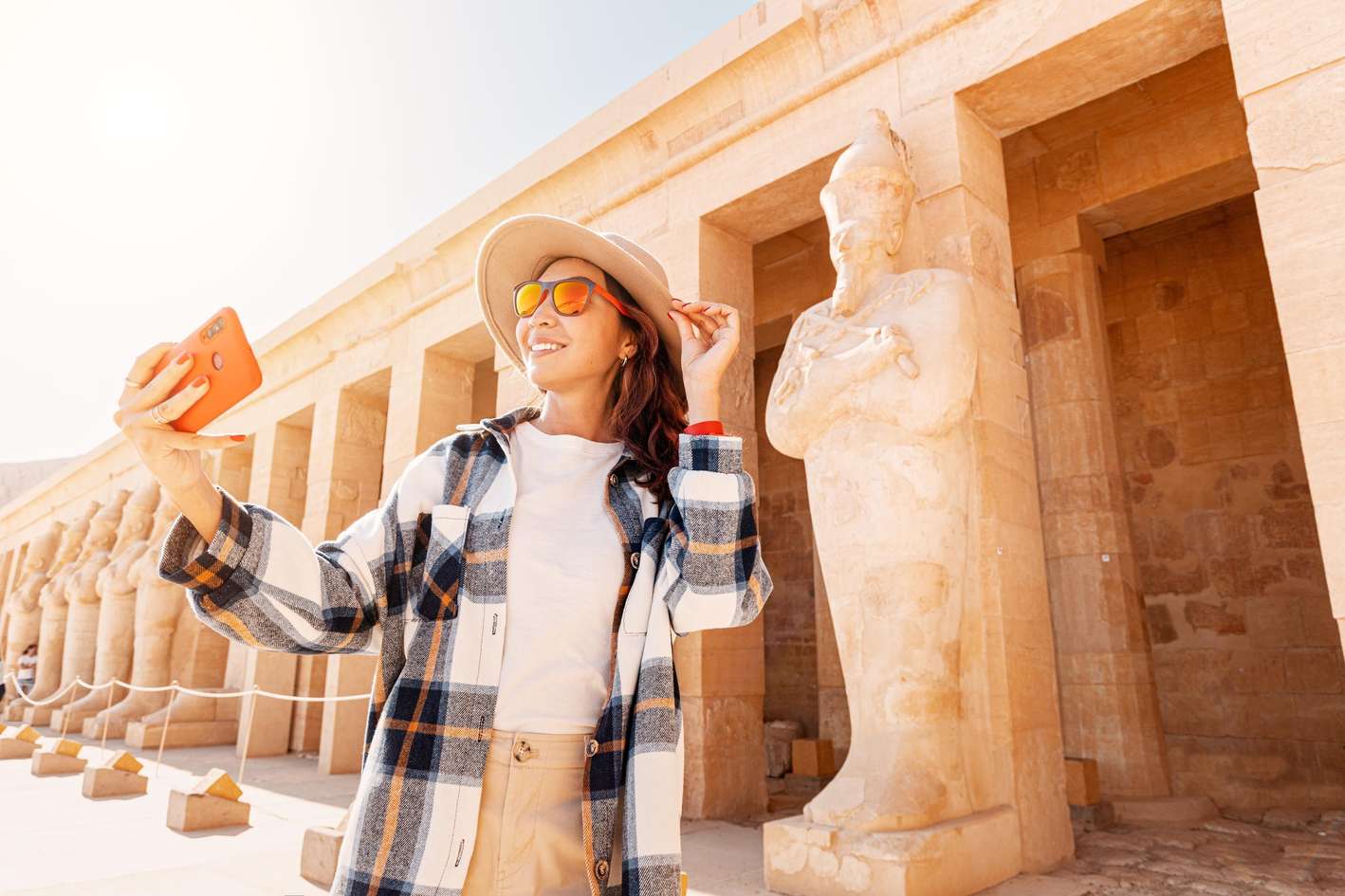
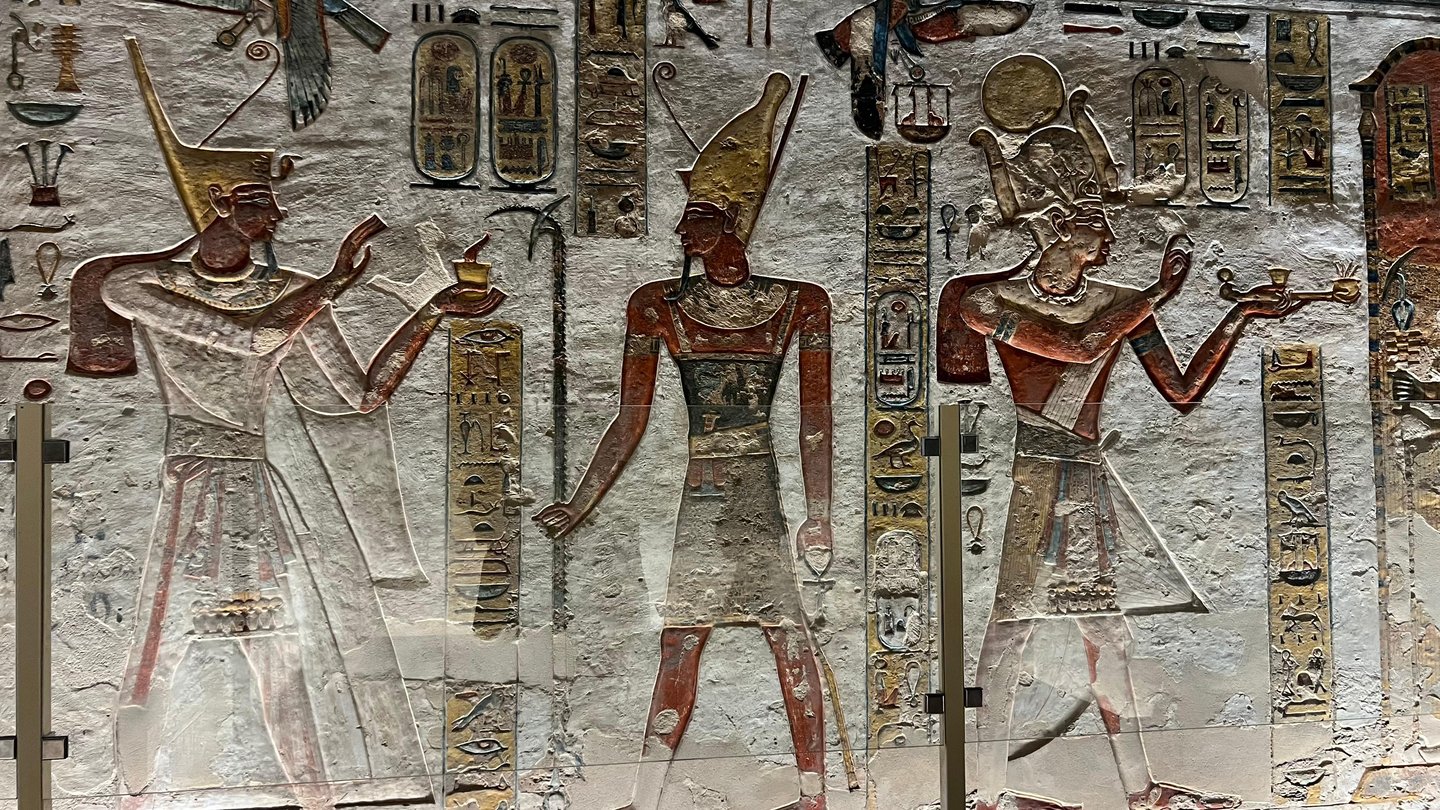
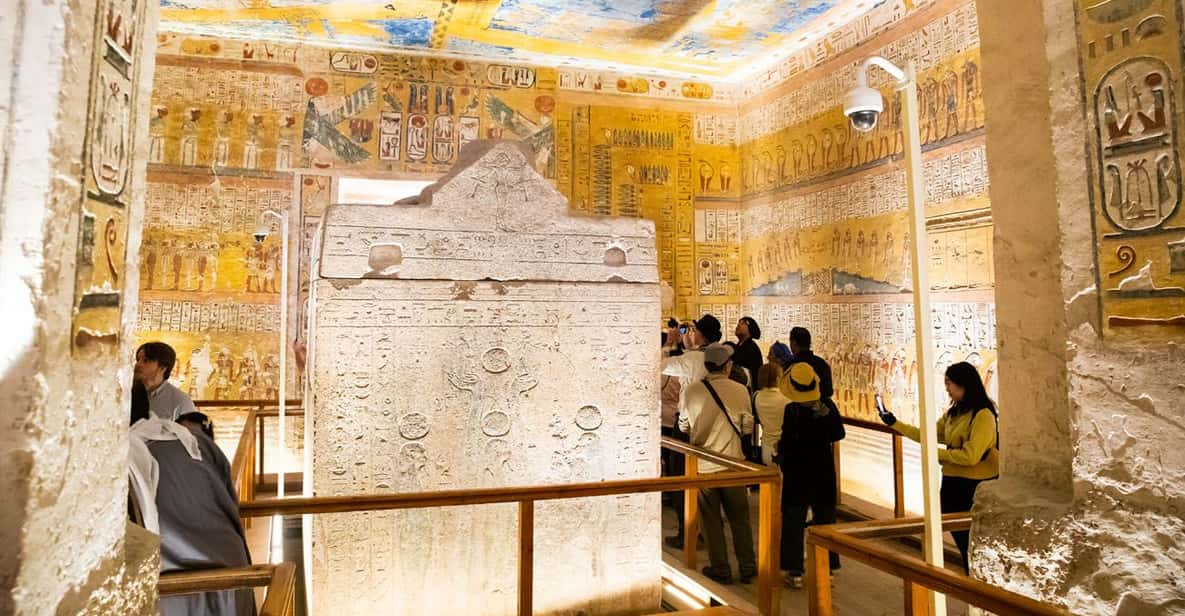
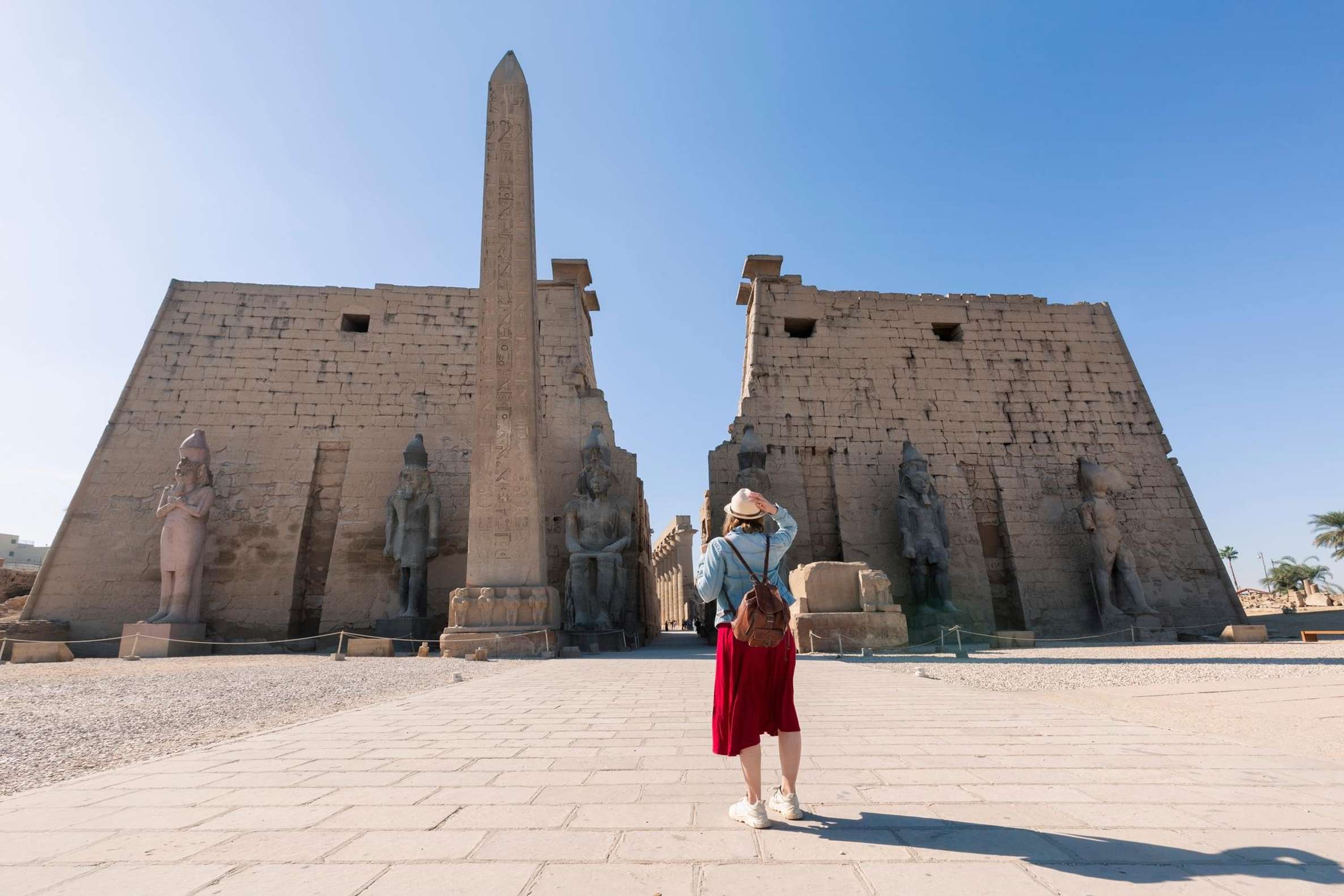
A private guide walks you through the Valley of the Kings, Hatshepsut's terraced temple, Medinet Habu and the Colossi of Memnon on the West Bank, then crosses the river for Karnak and Luxor Temple, with lunch at a local restaurant and a felucca ride on the Nile before the flight back to Cairo.
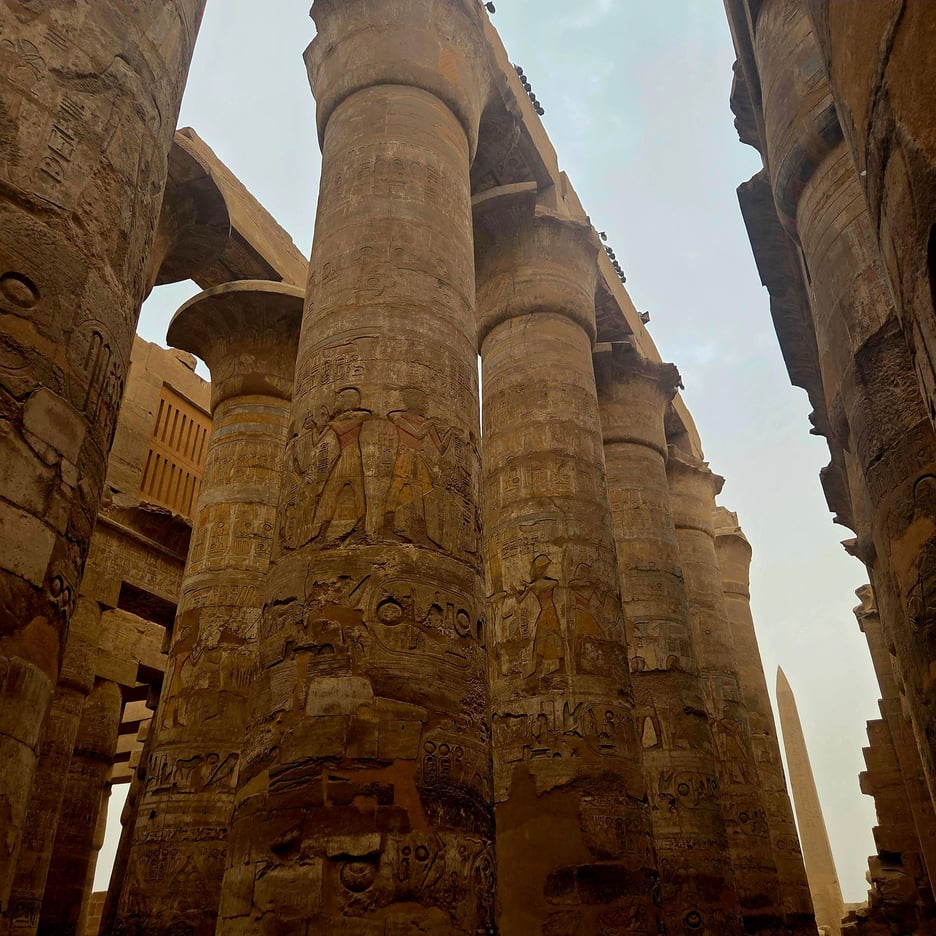
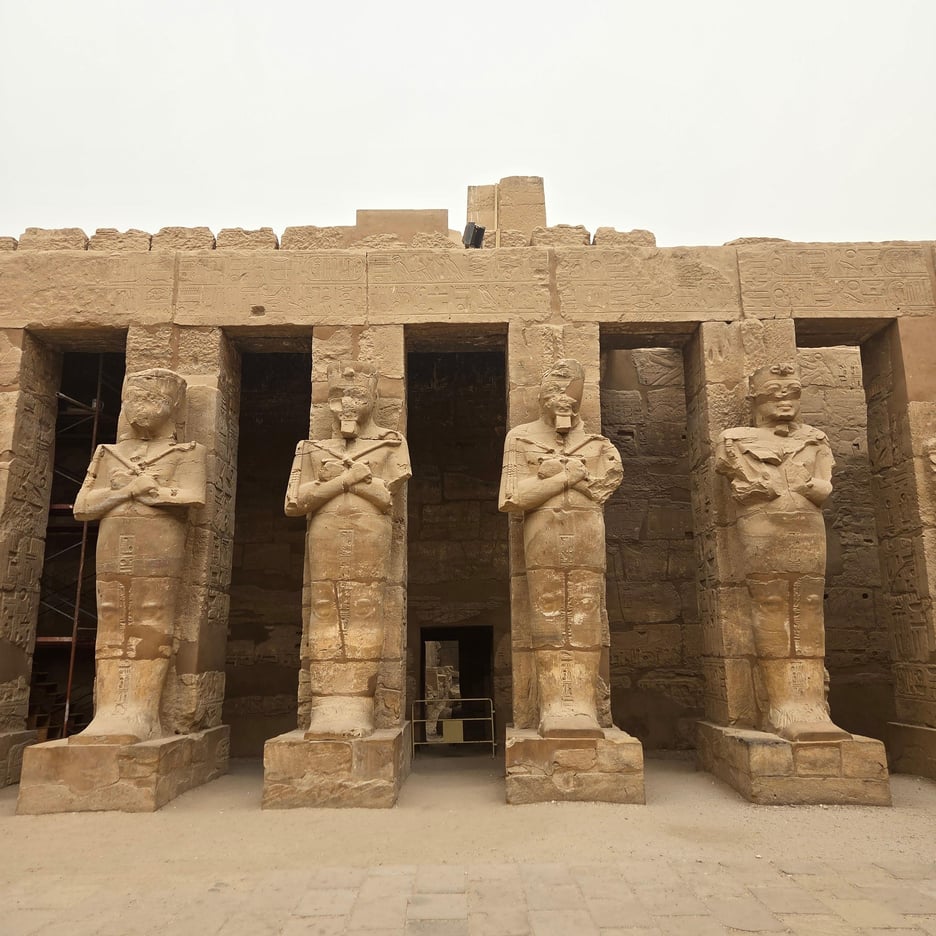
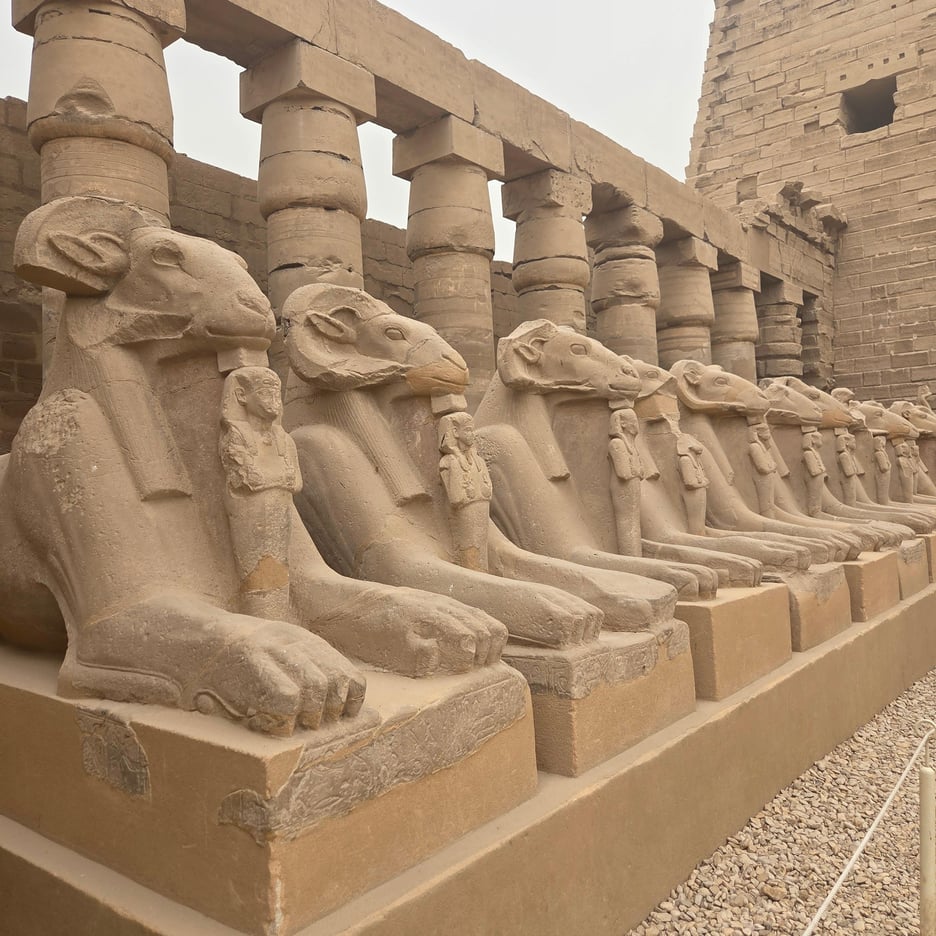
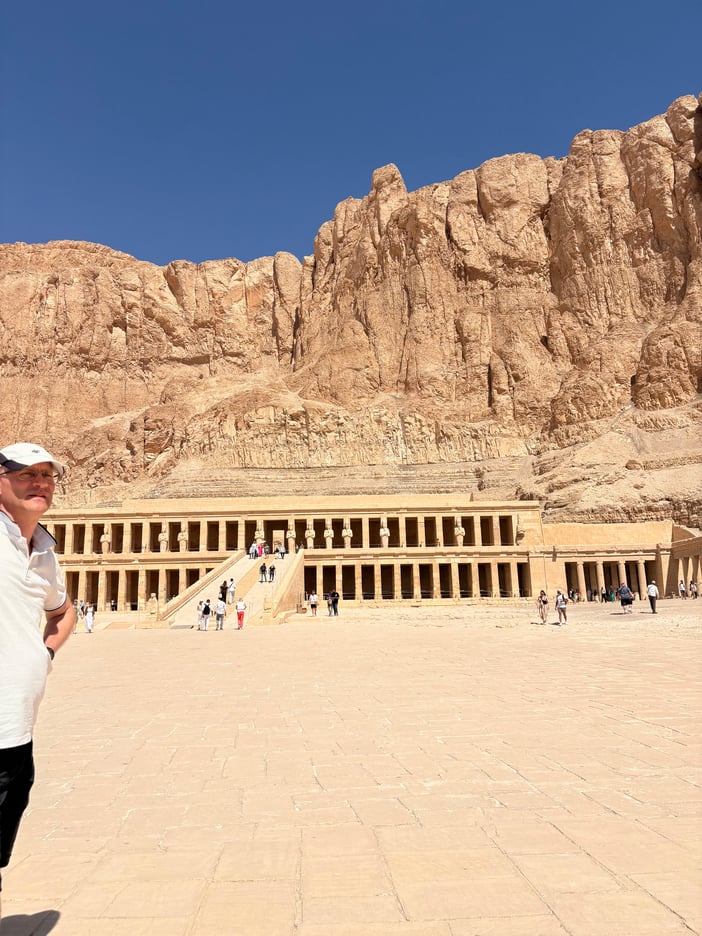
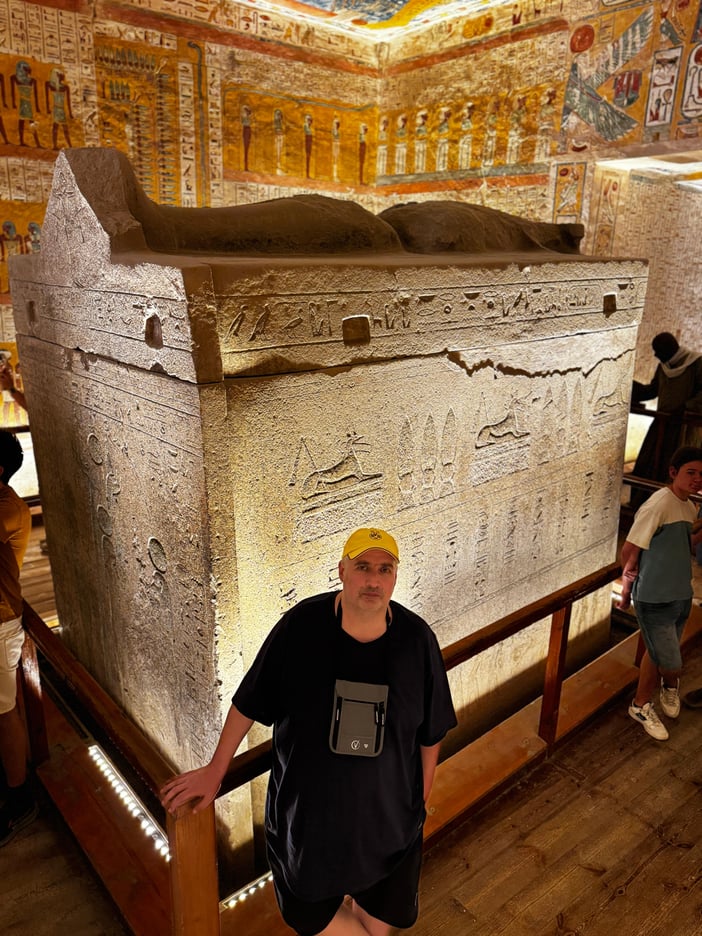
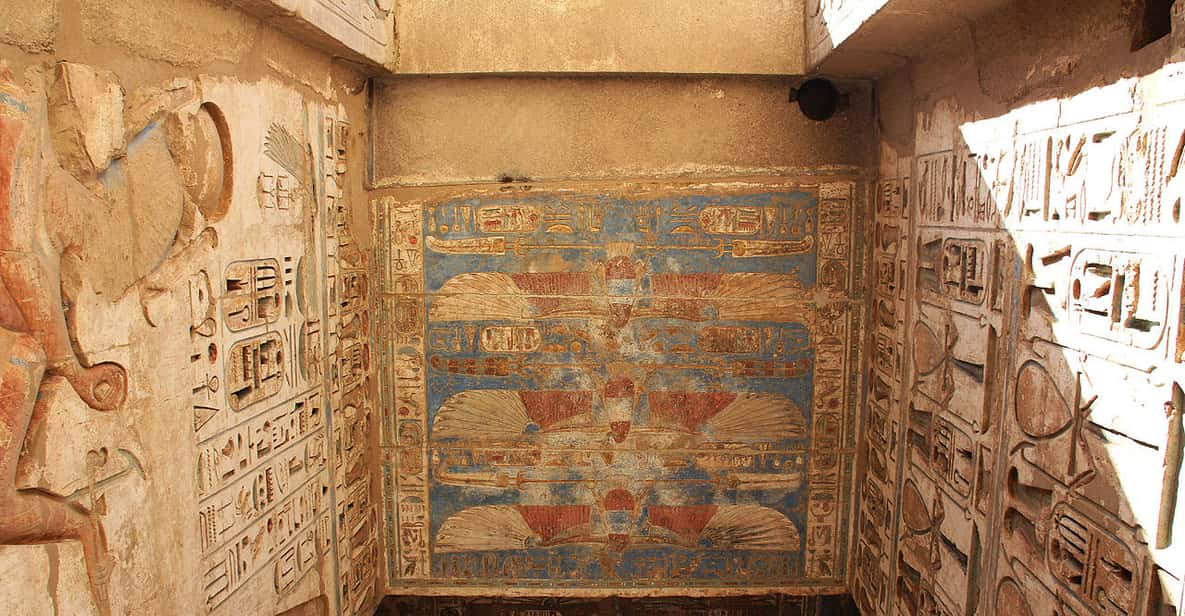
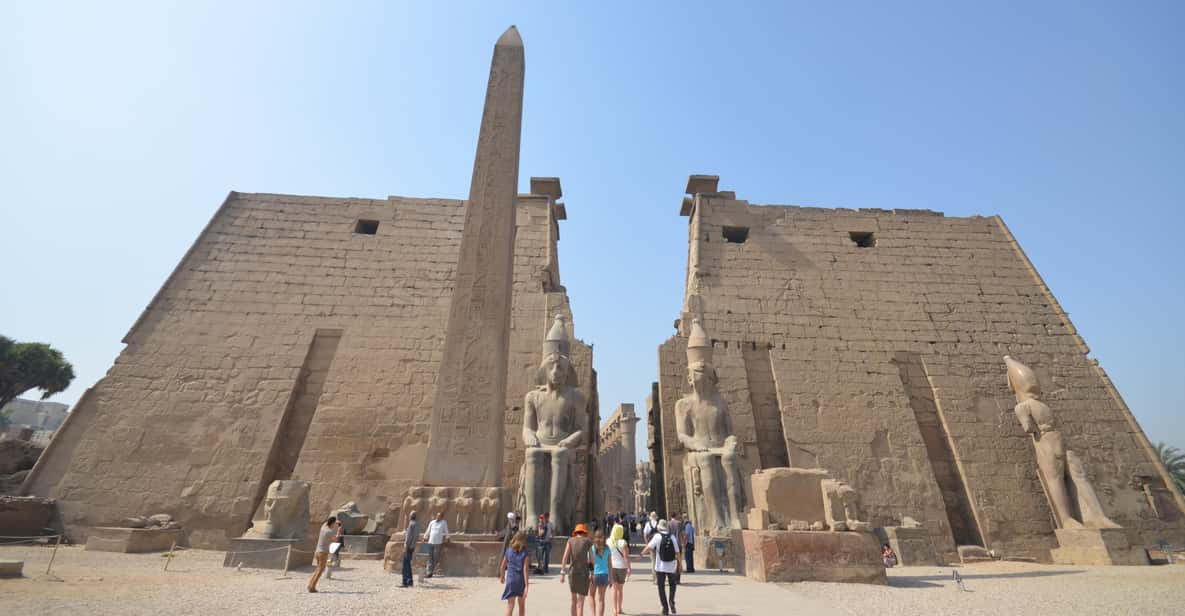
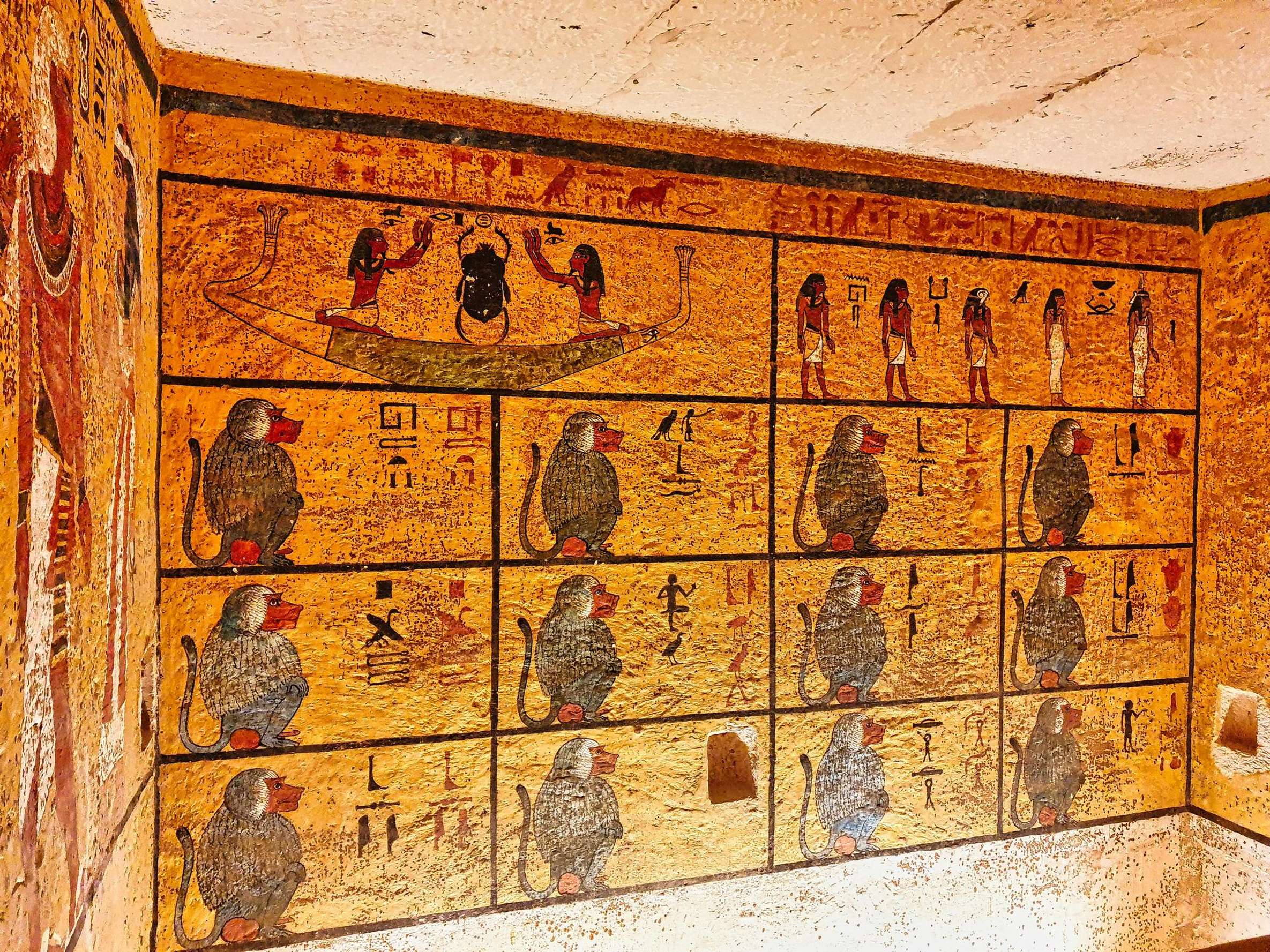
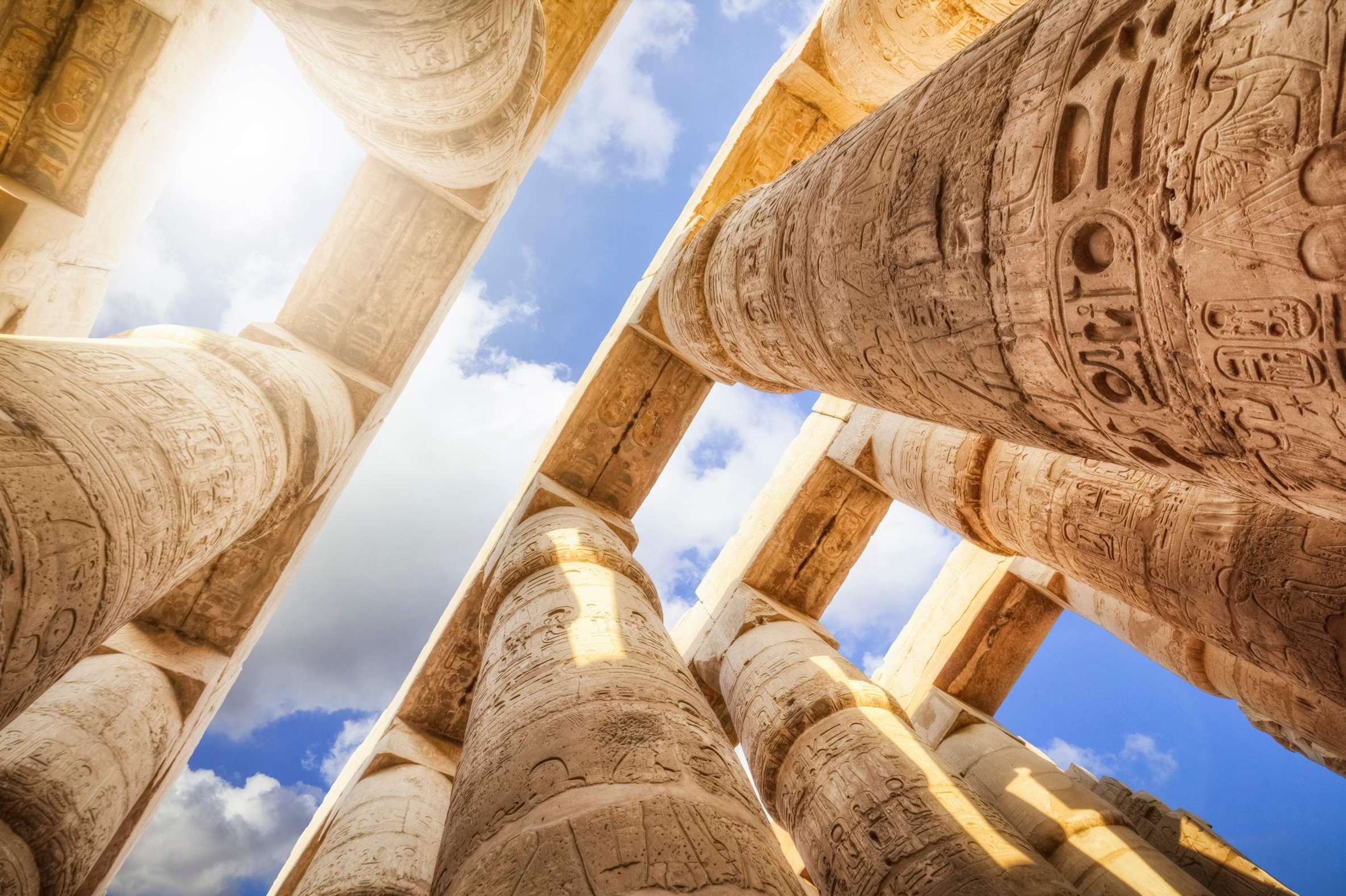
PickupCairoA private air-conditioned vehicle returns you to Luxor airport for the flight back, and a transfer drops you at your Cairo or Giza hotel late at night.From this tour2LuxorBack by the river for a felucca ride on the Nile and time to take in the town at your own pace between the guided visits.3Valley of the KingsRock-cut tombs dug for New Kingdom pharaohs and nobles. Your guide leads you into the painted chambers, and Tutankhamun's mummy still lies in his original tomb here.4Mortuary Temple of HatshepsutQueen Hatshepsut's terraced mortuary temple, set against the limestone cliffs of Deir el-Bahari. You have already seen it from the air; now you walk the ramps and colonnades.5Medinet Habu, LuxorThe mortuary temple of Ramesses III stands on the edge of the desert. From the balloon you saw it from above; on the ground you read its carved scenes with your guide.6Colossi of MemnonTwo massive seated statues of Amenhotep III guard the road into the West Bank fields. A quick photo stop on the drive between monuments.Street View7Local restaurantLunch at a restaurant in Luxor, included in the tour price, before the afternoon continues on the East Bank.From this tour8LuxorBack by the river for a felucca ride on the Nile and time to take in the town at your own pace between the guided visits.From this tour9Temple of KarnakEgypt's largest temple complex, approached along the Avenue of Sphinxes. Your guide focuses on the Great Hypostyle Hall, the obelisks and the Sacred Lake in about two hours.10Luxor TempleThe riverside temple in the centre of town, lit as evening comes on. Your guide walks you through its courts and columns to close the sightseeing day.Drop-offCairoA private air-conditioned vehicle returns you to Luxor airport for the flight back, and a transfer drops you at your Cairo or Giza hotel late at night.From this tour
Included
Hotel pickup and drop-offEntrance fees to all historical sitesTransportation in a private air-conditioned vehicleRoundtrip flight tickets from CairoAccommodation at a 3-star hotel including breakfast (upgrade available)Lunch at a restaurant in Luxor
Choosing your hot air balloon ride in Egypt - day trip or cruise
Green marks the lowest price. Prices per person.
Tour
Price
Duration
Languages
Best for
Our pick
From Cairo: Luxor & Hot Air Balloon Private Trip by Plane
4.4★ (153)
from $486per person
14 hours
Arabic, English, French
travelers who want the balloon and Luxor's tombs in one long day from Cairo
Most reviewers praise their guides by name, calling out deep knowledge of the temples and patient explanations.
Best surprise
Many travelers say the sunrise flight became the highlight of trips they booked mainly for the temples.
Most common wish
Several reviewers wish coordinators sent pickup times and itinerary details earlier than the night before.
How to book your hot air balloon ride in Egypt
01
Pick your date early
Choose a date in the cooler months and book it as soon as your Cairo plans are fixed. From November to February, the sunrise baskets fill two to three weeks ahead.
Pro tipBook your balloon slot at the same time as your domestic flights, because seats out of Cairo are limited too
Common mistakeLeaving the booking until you arrive in Luxor, when peak-season mornings are already full
02
Choose first or second takeoff
Most packages offer a first takeoff, with pickup between 4:20 am and 5 am to launch at dawn, or a second departure between 5 am and 5:45 am that flies in full daylight. Pick the first if you want the sunrise itself and calmer winds.
Pro tipThe first flight flies before the sun is up, so the light on the temples is softer and the air is cooler
RecommendedThe second takeoff suits anyone who struggles with very early wake-ups, since the flight happens in daylight
03
Check the small print
Read what the package covers before paying. Some tours include the balloon, transfers and entrance fees in the price, while a cruise package may list the balloon separately or leave entrance tickets out.
ImportantThe minimum age for the balloon ride is 6 years old on most tours, and a birth certificate may be asked for children flying domestically
Common mistakeAssuming drinks or entrance fees are covered; on some cruises even water is billed separately
04
Confirm the pickup details
After booking, the operator contacts you, often by WhatsApp the day before, with pickup times and the meeting point. Your reply matters: flight details are needed before tickets can be issued.
Pro tipKeep your phone reachable overnight, because pickup from Luxor hotels or cruise ships runs between 3:15 am and 5:15 am depending on the season
ImportantGive accurate contact details when you book, since the operator needs them to send your pickup and flight information
05
Prepare for launch morning
Dress in layers for the pre-dawn chill, wear closed shoes, and carry small banknotes for tips. East Bank guests cross the Nile by motorboat, then a minivan takes you to the launch field for check-in.
Pro tipWear a hat, the burner overhead is loud and radiates heat onto your head
ImportantBags and backpacks are not allowed in the basket, so leave them with the ground crew or at your hotel
What to know before you book a hot air balloon ride in Egypt
Can stop the dayGood to knowGood news
01
ChoosingWhat it is, who it suits, when to go
5
Pickup
Organized balloon packages collect you from your Luxor hotel or moored cruise ship between 3:15 am and 5:15 am, timed to the season's sunrise. East Bank guests ride a minibus to the riverbank, cross the Nile by motorboat with tea and coffee served, then shuttle to the launch fields.
Group size
Standard shared baskets in Luxor carry 20 to 28 passengers, split into compartments of two to five people each. Premium baskets hold 12 to 16. If a smaller basket matters to you, look for a comfort or deluxe option rather than the basic shared flight.
In the air
Flights drift over the West Bank necropolis at 300 to 2,000 feet, commonly around 1,500 feet, and last roughly 30 to 45 minutes. Flights stay west of the Nile; East Bank airspace near Luxor's airport is off limits.
What's included
Inclusions differ from package to package, so read each card. On the private day trip from Cairo, the balloon, round-trip flights, entrance fees, meals and transfers are all covered. Some cruise packages leave entrance fees and even drinking water out of the fare.
Weather
River fog, dust storms, or winds above about 12 knots suspend flying until conditions settle, so a grounded morning is possible. Commercial flights run under Civil Aviation rules with GPS tracking and a 24-hour meteorological station watching the route.
02
BookingHow far ahead, and what happens if plans change
2
Booking ahead
Domestic flights to Luxor have limited seats and should be booked together with your international flights. For December to February sailings and flights, book early; peak-season Nile cruises are best secured eight to twelve weeks in advance.
Cancellation
You can cancel up to 24 hours in advance for a full refund on every balloon package on this page. If the weather grounds the balloons, the day is not lost: past guests have swapped in a sunrise boat ride with breakfast, a camel ride, or quad biking, and the temple tour still runs.
03
Before you goPapers, health, what to bring
3
BagsCan stop the day
Bags, purses, and backpacks are not permitted in the basket, so leave them with the vehicle or at your hotel. Tripods and professional rigs need permits at antiquities sites anyway, and drones may not enter Egypt at all.
Clothing
December to February mornings sit around 5 to 10 degrees Celsius before sunrise, so wear layers: a thermal or long-sleeve top, a fleece, long trousers. Bring a cap too, because the burner radiates heat straight down onto your head, especially if you are tall.
Climbing in
Baskets have no doors or ramps, and you may need to climb over the side. A knee replacement or limited mobility that prevents climbing in, standing for the flight, or bending low to brace for landing makes the ride impractical. The minimum age is 6 on select tours.
04
On the dayWhere to be, when, and how you get there
1
Flight slot
A first takeoff flight picks you up between 4:20 am and 5 am, so you are airborne at dawn with softer golden light and calmer winds. A second departure collects you between 5 am and 5:45 am and flies in full daylight, without the sunrise itself.
05
During the tourWhat is expected of you
1
Tipping
The ground crew expects a tip of about 50 to 100 Egyptian pounds per person when you land, while the pilot is not customarily tipped.
A hot air balloon ride in Egypt - your Luxor guide
Luxor's balloons lift off before any flight from Cairo can land, so the whole trip hangs on one pre-dawn morning. Here is how that morning runs, and how to make it yours.
Luxor· 30.04° N, 31.24° E
If you only remember three things
1
Balloon pickups run between 3:15 and 5:15 am, so you sleep in Luxor the night before.
2
Winter baskets fill two to three weeks ahead; leave more than one morning for the flight.
3
Wear a cap and layers: the burner radiates heat down and it is 5 to 10°C before sunrise.
How a hot air balloon ride in Egypt runs, minute by minute
The knock comes in the dark. Between 3:15 and 5:15 am, a minibus collects you from your Luxor hotel or from the cruise ship at its mooring, timed to the season's sunrise hour.
Guests on the East Bank ride to the riverbank and cross by motorboat, tea and coffee handed out on board; a road route over the bridge south of the city takes 30 to 45 minutes instead.
On the West Bank, another van carries you out to the open launch fields. You check in, stand near the roar of the fans, and watch the ground crews inflate the envelopes by torchlight.
The morning, from pickup to tomb
1
3:15 to 5:15 am
Pickup at your hotel or cruise ship
Timed to the seasonal sunrise hour
2
Before dawn
Crossing to the West Bank
Motorboat with tea and coffee, or 30 to 45 minutes by road
3
Launch field
Check-in and inflation
Ground crews fill the envelope beside you
4
Dawn
The flight itself
30 to 45 minutes airborne, longer when the wind allows
5
By 8 am
Landing and handoff
Your ground guide meets you on the West Bank
The flight is shorter than most people expect: 30 to 45 minutes in the air, sometimes stretched to a full hour by calm winds. Getting in is part of it too, since the basket has no door and you may climb over its side.
The burner roars when it fires and pushes warm air onto the top of your head. Most flyers are back at their hotels by 8:30 am, ready for the day's sightseeing.
Tour for this
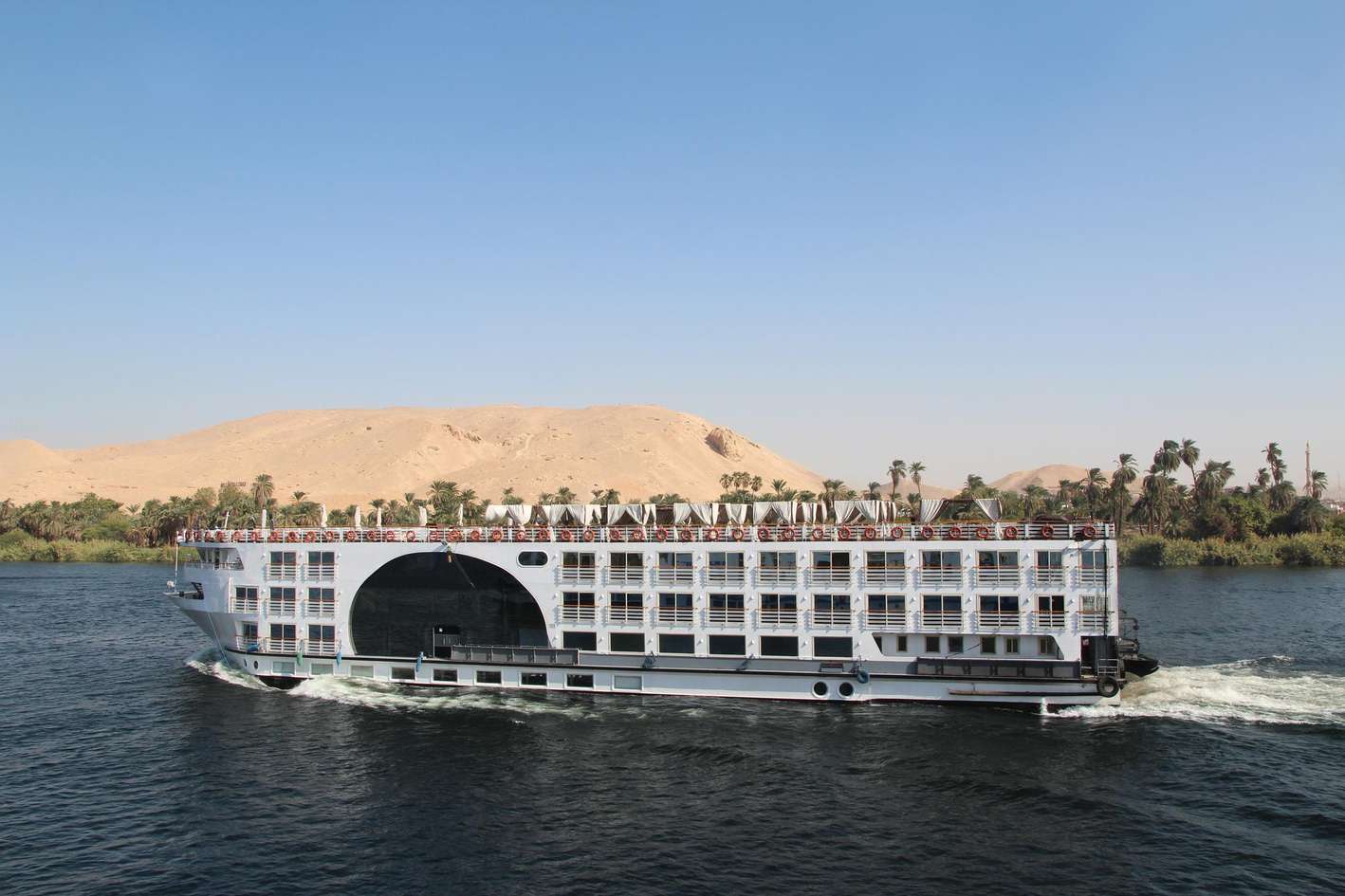
Cairo: 4-Day Nile Cruise to Luxor with Balloon & Flights4.2★ (19) · 4 days · Hotel pickup · Free cancellation
Is a hot air balloon ride in Egypt worth it on top of temple tours?
The honest answer from people who have done both: the flight adds something the tombs cannot. On foot you see painted walls at arm's length. From the basket you see how the West Bank fits together, temples and tombs scattered across the desert with the green Nile Valley running along one edge.
It costs you almost no sightseeing time. The flight ends by 8 am, so the Valley of the Kings, Hatshepsut's temple and Karnak all still fit into the same day, and travelers who booked ground tours say the two belong on the same morning.
What people get wrong
MythIt felt safe, so ballooning here is safe
Reality
Forum travelers point out the sport's history of accidents here; the flight is genuinely weather-dependent
MythThe balloon replaces the temple tour
Reality
The balloon is an aerial view; the tombs still need you on the ground
MythA fear of heights rules it out
Reality
Some nervous flyers rate the views as the highlight; judge your own comfort before booking
Go in knowing the flight is not certain. Weather can cancel it, and some passengers find the open basket unsettling even while they love the view. That is the trade, and most people who take it call it worth making.
Tour for this
From Cairo: Immersive Luxor Attractions Day Tour by Flight5.0★ (4) · 1 day · Hotel pickup · Free cancellation
What you see on a hot air balloon ride over Egypt's West Bank
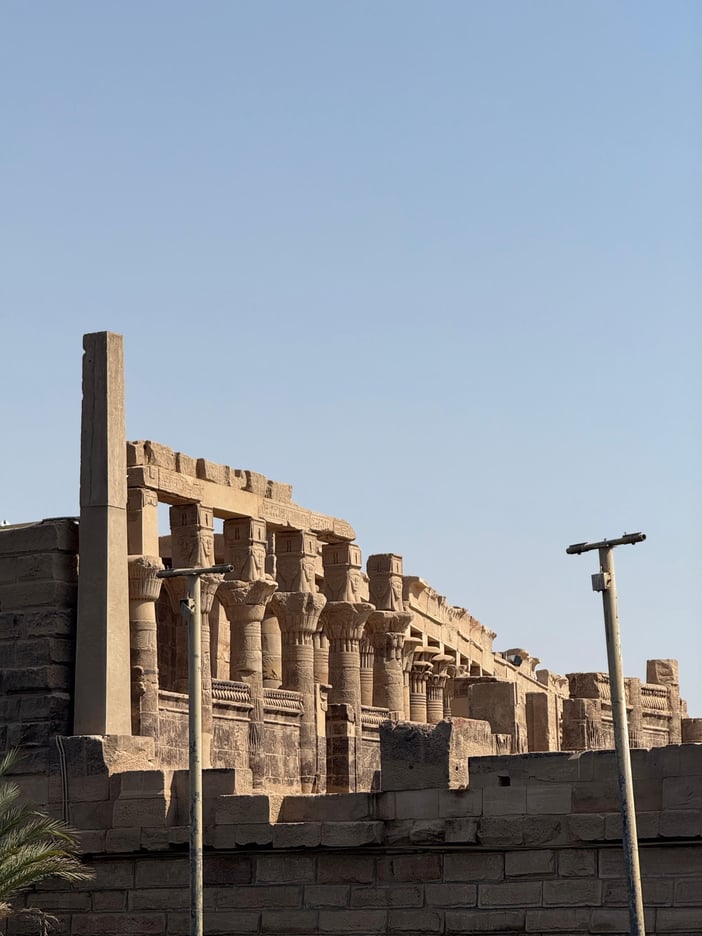
Hatshepsut's temple is the first thing most people look for, its terraces cut back into the limestone cliffs of Deir el-Bahari. From above, the geometry reads plainly in a way it never does from the road below.
Farther along, the toppled Colossus of Ramses II lies across the floor of the Ramesseum, and the mortuary temple of Ramesses III at Medinet Habu stands alone where the fields give out.
The tombs of the Valley of the Kings stay hidden, cut underground, but the valleys they hide in are all laid out beneath you.
The image people carry home, though, is the boundary. A network of irrigation canals decides where farming is possible, and the green fields stop dead at the last canal, turning to bare desert within a few dozen meters with no scrubland in between.
Luxor balloon season crowds and flight weather by month
November brings the highest tour crowds of the year along with prime sunrise flight weather.
HighestFeb, Apr to May, Nov
In betweenJan, Mar, Jun, Oct
LowestJul to Sep, Dec
Darker: a higher how busy it gets score, out of 5
Tap a month to read it.
January combines cool, steady flight conditions with moderate passenger volume.
Lowestall year0 days
Darker months: higher, from 0 to 0 days
Tap a month to read it.
July has few travelers and hot days, but early dawns remain clear and calm.
HighestMar, May to Oct, Dec to Jan30 to 31 days
In betweenApr, Nov29.8 days
LowestFeb27.8 days
Darker months: higher, from 27.8 to 31 days
Tap a month to read it.
All of this depends on the air. Flight descriptions put the drifting height anywhere from 300 to 2,000 feet, with most of the flight near 1,500 feet, which sits right at the aviation authority's cap over the West Bank.
The clearest mornings bring gentle surface winds and quiet air aloft, and on a still winter sunrise the whole West Bank shows up sharp and lit gold.
Tour for this
From Cairo: Luxor & Hot Air Balloon Private Trip by Plane4.4★ (153) · 14 hours · Hotel pickup · Free cancellation
When to book a hot air balloon ride in Egypt, and when balloons stay grounded
The calendar matters more here than almost anywhere else you might fly. From November through February, the calm, stable mornings push cancellation rates down to around 5 to 10 percent. In March and April the khamsin winds arrive and cancellations climb to 20 to 30 percent, so book with a spare morning in hand.
Summer closes the season entirely. Commercial flights are suspended from June 1 to August 30, when Luxor's heat makes flying unsafe, and those months also bring the year's worst temperatures for anyone on the ground.
The machinery behind the flights has changed over the years. Flights are restricted to the west of the Nile, partly to stay clear of the airport's flight paths, and the civil aviation authority now tracks operators with cameras, GPS and a round-the-clock weather station.
The launch field itself is being upgraded, with launch pads growing from 29 to 37.
None of that makes the sport risk-free, and travelers who discuss it online say so plainly. What it does mean is that every go or no-go call is made against measured weather, which is more than most balloon destinations can say.
Tour for this
From Cairo: 3-Night Aswan to Luxor Nile Cruise with Flights4.1★ (50) · 4 days · Hotel pickup · Free cancellation
First takeoff or second departure - picking your hot air balloon ride in Egypt
Two departure slots run most mornings, and they are not the same experience. The first takeoff collects you between 4:20 and 5 am and launches at dawn: you watch the sun come up from the basket, the monuments below lit in soft, diffuse gold, the air at its coolest and the wind at its calmest.
The second departure picks up between 5:00 and 5:45 am, the late end of the same citywide pickup window, and flies after sunrise in full daylight. Direct sun, warmer air, no in-flight sunrise. Photographers generally want the first slot; anyone who dreads the cold often prefers the second.
First takeoff against second departure
First takeoff
Second departure
Pickup
4:20 to 5 am
5:00 to 5:45 am
The sunrise
Seen from the air
Already over
Light
Soft and golden
Direct daylight
Air
Coolest and calmest
Warmer, breezier
Basket
Shared with 20 to 28
Premium baskets of 8 to 16
First takeoff
Pickup
4:20 to 5 am
The sunrise
Seen from the air
Light
Soft and golden
Air
Coolest and calmest
Basket
Shared with 20 to 28
Second departure
Pickup
5:00 to 5:45 am
The sunrise
Already over
Light
Direct daylight
Air
Warmer, breezier
Basket
Premium baskets of 8 to 16
The basket decides the rest. Standard shared flights carry 20 to 28 passengers, split into compartments of two to five people, so you always stand beside your own group.
Premium baskets hold 12 to 16, and comfort or deluxe versions run 8 to 16, at a higher cost. Luxor flights run 30 to 45 minutes, shorter than the famous flights elsewhere, which is one more reason the first slot earns its early alarm.
Tour for this
From Cairo: 4-Day Nile Cruise to Luxor with Balloon Flight4.5★ (162) · 4 days · Hotel pickup · Free cancellation
Booking a hot air balloon ride in Egypt ahead of the crowd
Winter is when everyone wants to fly, and the arithmetic is unforgiving: from November through February, baskets fill two to three weeks in advance. Leave it late in peak season and you are down to whatever cancellation slots appear.
Arranging it on the morning itself is the mistake newcomers make. The flights start too early for same-day booking to work. If you want to arrange in person, do it the day before, and expect the desk at your hotel or a local agent to handle it.
What people pay varies with the channel. Travelers report paying noticeably less through a local agent than others paid through a foreign booking platform, and a forum visitor mentioned hearing of local rates far below the figures quoted to him online.
Those are single anecdotes, so read them as a range and compare what each channel actually includes.
Weigh which kind of booking you need. A traveler with one fixed morning in Luxor generally takes the guarantee of a prebooked slot with a refund path; a traveler with flexible days can shop locally.
Tour for this
Cairo: Private Luxor Day Tour with Entrance fees by Flights4.5★ (832) · 15 hours · Hotel pickup · Free cancellation
Getting from Cairo to your hot air balloon ride in Egypt
Here is the fact that shapes the whole plan: balloon pickups start as early as 3:15 am, timed to a sunrise that moves from 4:58 in June to 6:36 in January, while the earliest Cairo flights take off around the same hours and land an hour later.
The baskets are down before you clear Luxor airport. An overnight in Luxor is not optional.
So the trip starts the afternoon before. Balloon packages arranged from Cairo pick you up around 4 pm, fly you the roughly 511 kilometers south, and settle you into a Luxor hotel before the dark-hours pickup.
One operator runs it as a single long day: an afternoon flight down, a night in a hotel with a breakfast box prepared, the balloon at dawn, and the temples afterward before flying back the same evening. The organized version runs about 14 hours door to door.
Getting there, and what each way costs you
Domestic flight, night beforeAbout one hour in the air, but balloons launch before any morning flight can land
Moderate
Daytime trainTen and a half hours or more each way from Cairo
Difficult
RoadRoughly 635 km and 7.5 to 8 hours of driving through checkpoints
No access
Carry a passport valid for six months and a full Egyptian tourist visa; a Sinai-only stamp does not cover Luxor. Fly from Terminal 3, and allow three hours if you are connecting off an international flight.
The easiest answer is the package that bundles it: From Cairo: Luxor & Hot Air Balloon Private Trip by Plane runs the afternoon flight, the hotel night, the balloon and the full day of temples in one booking, with entrance fees, lunch and a felucca ride included.
Tour for this
From Cairo: 8-Day Tour of Cairo, Luxor and Aswan with Cruise4.3★ (234) · 8 days · Hotel pickup · Free cancellation
Getting ready for your hot air balloon ride in Egypt
Dress for the hour before sunrise, because the day warms quickly. From December to February the basket sits around 5 to 10°C at launch, and the sun changes that within an hour.
A thermal top, a fleece and a light jacket over long trousers beat one heavy coat, because you will be peeling layers by mid-morning.
Wear a cap. The burner fires overhead and radiates heat straight down onto your head, which tall passengers feel most. No bags ride in the basket, so purses and backpacks stay with the ground crew, and your phone or camera goes in a pocket.
What first-timers wish they knew
No bags in the basket
Purses and backpacks are not permitted on the flight
A cap against the burner
The heat radiates down onto the top of your head
Restrooms at the launch field
Use them before boarding; there is nothing on board
Small notes for the ground crew
They expect a tip on landing; the pilot does not
Insurance check
Confirm your policy covers ballooning before you fly
Be honest with yourself about the physical side. You may climb over the basket side, stand for the whole flight, and bend low to brace for landing. A knee that will not bend that far, or limited mobility, makes the flight impractical.
The minimum age is six years old on select tours, so small children stay on the ground. Restrooms sit in the service zones at the launch field; there is nothing aboard.
Tour for this
From Cairo: Private All-Inclusive Tour of Luxor by Plane4.4★ (287) · 10 hours · Hotel pickup · Free cancellation
When your hot air balloon ride in Egypt gets grounded
Some mornings the balloons simply do not fly. The civil aviation authority grounds everything when surface winds climb toward 12 knots, when fog drops the visibility, or when dust and sudden easterly wind shifts make the morning unstable.
That 12-knot line is the grounding threshold; a good flying morning keeps ground breezes down around 4 to 6 mph while winds aloft stay below about 20 knots. The two figures measure different layers of air, and both matter.
What happens next is usually manageable. Because balloon rides finish before standard sightseeing begins, a cancellation almost never wrecks the wider day. Operators on a cruise with a second Luxor day offer an alternative morning.
Others substitute another activity; travelers have been offered a sunrise boat ride with breakfast, a camel ride, or quad biking. The balloon portion is refunded where no substitute runs.
When the morning changes
If this happens
What happens then
Winds near 12 knots or fog
Every balloon is grounded by the aviation authority
A second Luxor morning
The operator offers a rebooked flight
No second morning
A substitute activity, or a refund of the balloon portion
Either way
Full West and East Bank sightseeing still runs
The lesson people repeat: never build a tight itinerary around a guaranteed flight. If the balloon matters to you, leave more than one morning in Luxor. The ground tour runs whatever the sky decides, and a cancelled flight still leaves a full day across both banks.
After your hot air balloon ride in Egypt - the rest of Luxor
You land, hand off to your guide, and the morning is barely spent. The Valley of the Kings and Karnak both open at 6 am and close at 5 pm, so a full day sits in front of you, with Karnak's last entry at 4 pm and Luxor Temple taking visitors until 7 pm.
Budget honestly. A guided Karnak visit runs 1.5 to 2 hours; wandering it alone properly takes 3 to 4 across the 100-hectare site. Most people pair a guided pass with an hour or two on their own.
Bring a bank card. The Luxor sites have gone cashless for tickets, from Karnak and Luxor Temple to the Valley of the Kings and its self-service machines, and even the extra tomb of Seti I. Cash still matters for people: keep small pound notes on you for tomb guardians, restrooms and tips.
Tickets can be bought in advance online to skip the window, and phone photos are free in most open tombs, though flash stays off.
One day scratches the surface. Two days, one per bank, covers Luxor without rushing; three is the honest count for the major sites. Staying over after the balloon is the easiest way to buy that time.
The tour went really well, everything coordinated. Zeinab was easy to reach and gave us all info on time. Guide Ahmed Majid explained the sites' history brilliantly, and the cruise was lovely.
A Luxor balloon flight earns its wake-up call: dawn over the West Bank's temples, the green Nile edge against the desert, and the whole day's sightseeing still ahead by 8 am.
It is weather-dependent and demands a night in Luxor first, so book early, pack a cap and layers, and keep a spare morning in the plan.
Go ifYou are in Luxor between November and February, when cancellations run lowestYou can spare more than one morning for the flightYou book two to three weeks ahead in peak season
Skip ifLimited mobility makes climbing the basket side or bracing for landing impracticalYou are traveling between June and August, when the season is suspendedYou are flying with children under six
Our pick to book
From Cairo: Luxor & Hot Air Balloon Private Trip by Plane4.4★ (153) · 14 hours · Hotel pickup · Free cancellation
Questions about your hot air balloon ride in Egypt
Short answers to what travelers ask before booking a sunrise flight over Luxor's West Bank.
Luxor2026
Dawn over the Valley of the Kings from 1,500 feet, green fields ending hard against the sand. Wear a hat: the burner runs hot overhead.
Is a hot air balloon ride in Luxor worth it if I already have temple tours booked?
Most people who take it say yes, because the flight ends early enough to slot straight into a normal sightseeing day. You see the temples, tombs, and the line where the green Nile Valley meets the desert from above, then meet your guide on the ground a short time later.
Are Luxor hot air balloon rides safe?
Flights are regulated by the Egyptian Civil Aviation Authority, with GPS tracking, operator training, a 24-hour meteorological station, and a required altitude limit of 1,500 feet west of the Nile.
Commercial pilots must hold a licensed qualification backed by logged flight hours and medical checks. Flights are not risk-free and are grounded whenever weather turns, but the rules are enforced.
Can I fly to Luxor from Cairo and take a balloon ride the same morning?
No, you need to be in Luxor the night before. Balloon pickups run around 5 am, while morning flights from Cairo arrive well after the balloons launch. Tours from Cairo handle this for you, with a hotel pickup around 4 pm, an overnight in Luxor, and the flight at dawn.
How many people share one balloon basket?
Standard shared baskets carry between 20 and 28 passengers, split into compartments of two to five people each. Smaller baskets exist on some operators if you want more room.
How long does the actual flight last?
You are airborne for roughly 30 to 45 minutes, sometimes up to an hour depending on the wind. Plan a longer window on the ground, since inflation, the safety briefing, and the transfer to and from the launch field all take time.
How high do you fly, and what will I see?
Balloons drift between 300 and 2,000 feet, commonly around 1,500 feet, over the West Bank necropolis. Hatshepsut Temple sits against the cliffs below you, and the toppled statue of Ramses II at the Ramesseum and the walls of Medinet Habu stand out on the desert edge.
What happens if my balloon flight is cancelled on a Nile cruise?
Your cruise day carries on as planned, because balloons fly before standard sightseeing starts. The operator offers another morning if the ship stays a second day in Luxor, substitutes a different local activity, or refunds the balloon portion.
Can I bring a drone or professional camera gear on the flight?
Drones are prohibited in Egypt without advance authorization, so leave them at home. Tripods and monopods need permits at antiquities sites, and bags and backpacks are not allowed in the basket. Handheld cameras and phones are fine.
How cold is the basket at sunrise in winter?
Expect around 5 to 10 degrees Celsius before sunrise from December to February. Wear layers: a thermal or long-sleeve top, a fleece, and long trousers. It warms quickly after the sun comes up, so layers beat one heavy coat.
How do I get into the basket?
Baskets have no doors or ramps, so you may need to climb over the side, with crew help. If climbing is difficult for you, mention it when booking so the operator can plan around it.
Are there toilets at the launch site or in the balloon?
There are no toilets aboard a balloon. The launch site has modern restrooms in its service zones, so use them before boarding.
Should I tip the balloon crew, and how much?
The ground crew expects a tip after landing and typically asks for one; 50 to 100 Egyptian pounds per person is a typical amount. Pilots are not customarily tipped, and 5 to 10 US dollars per person is a reasonable guideline if you want to recognize the whole team.
More ways to see Egypt beyond a hot air balloon ride