

Our pick
10 hours·English, Spanish
4.0(162)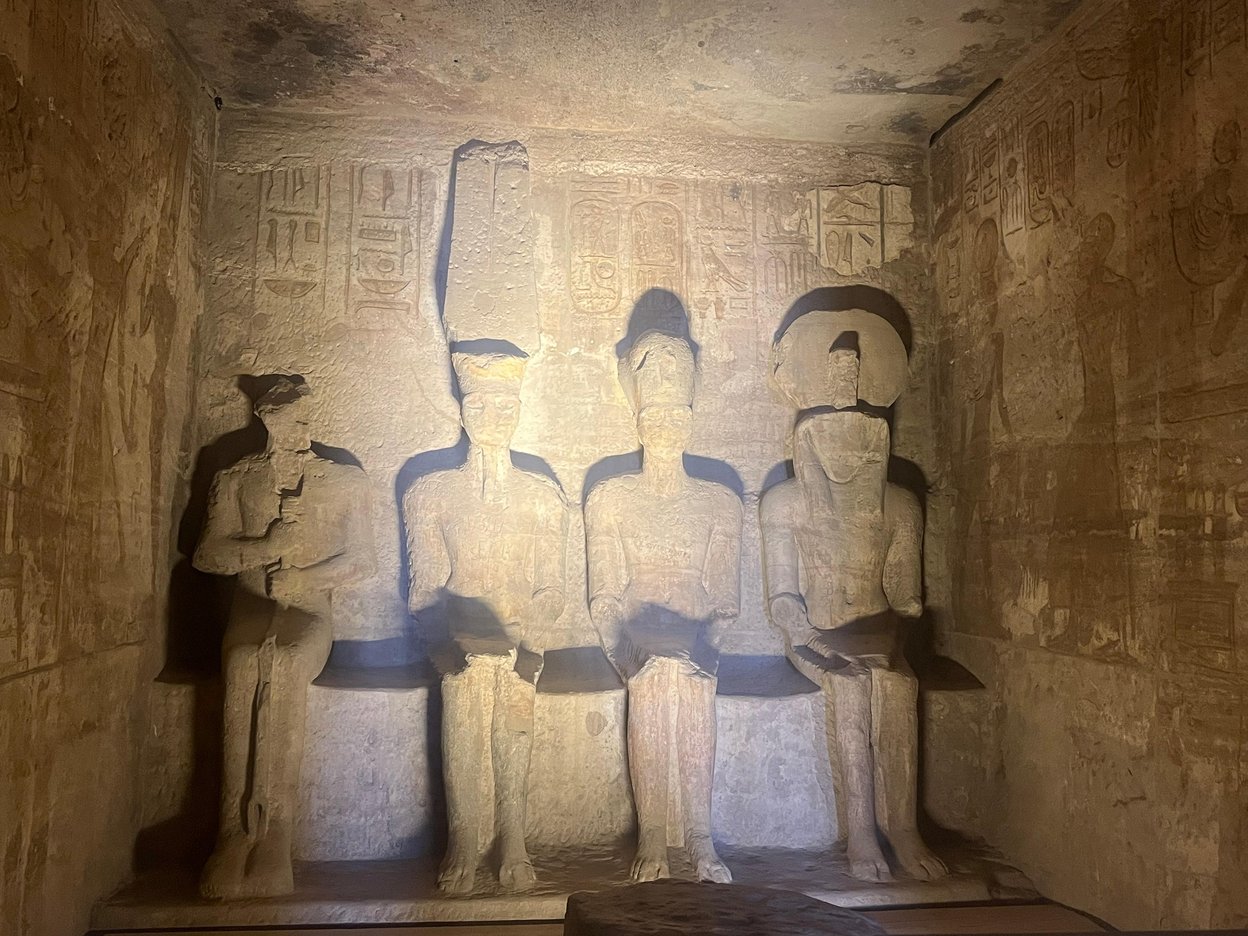
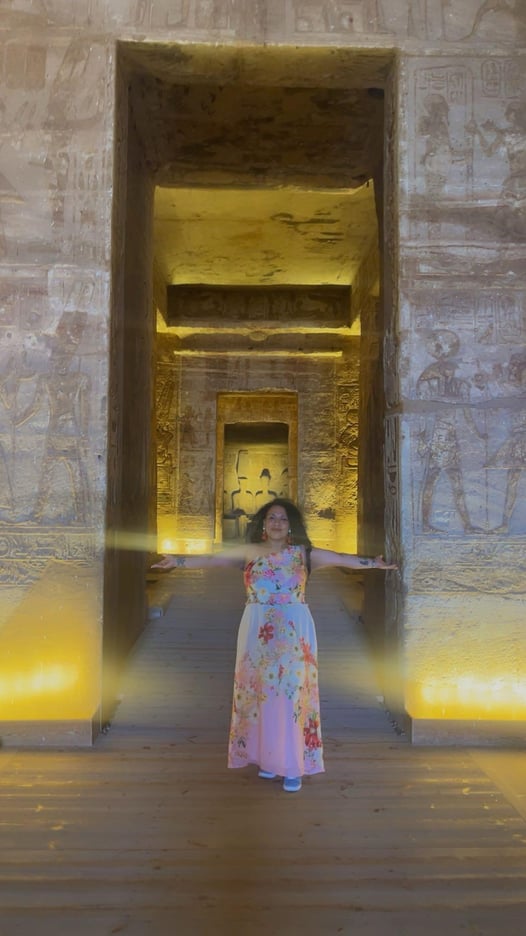
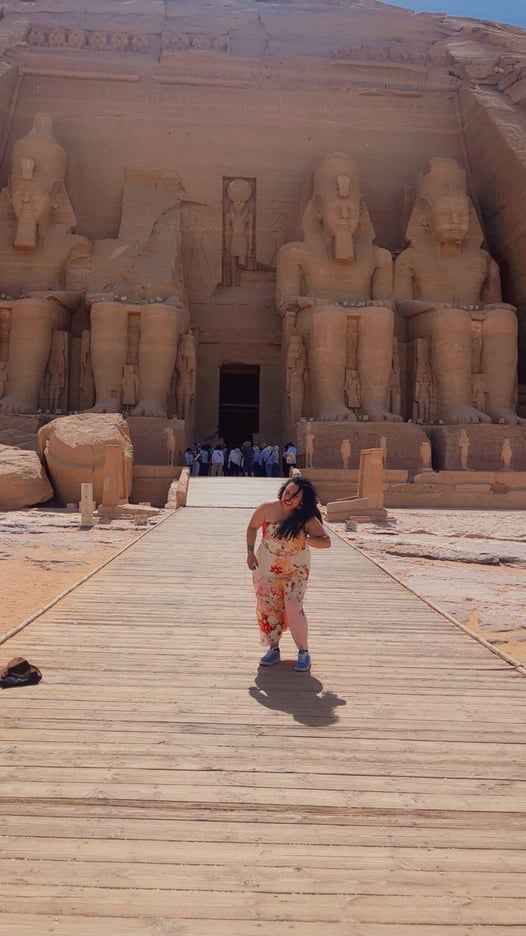
From Cairo: 2-Day Abu Simbel & Luxor Tour
Free cancellationHotel pickup included1 full-day tour to Luxor (East and West Banks)

See Abu Simbel without the 15-hour desert marathon. A two-day guided itinerary covers Luxor and Abu Simbel by domestic flight, with a night in Aswan, an Egyptologist guide, entrance fees and lunch included. Your driver meets you at your Cairo hotel before dawn, and the coordinator sends your pickup details the evening before. Reserve your two-day tour today.
A day trip to Abu Simbel that starts and ends in Luxor turns into a 14 to 16 hour desert drive, roughly 477 to 480 km each way via Aswan.
Two days work far better, and that is how you can book it here: the 2-day Abu Simbel & Luxor tour flies you from Cairo to Aswan, gets you to Abu Simbel by private bus, and beds you down in a 4-star hotel before a full Luxor day.
Same temples, same guide, entrance fees and lunch included, with energy left over.
It runs from Cairo rather than Luxor, so your Luxor sightseeing sits on day two instead of day one, and the flights home depart from Luxor. That small reshuffle buys you the comfort a one-day dash could never offer.
The one-day run from Luxor to Abu Simbel and back asks more than most travelers expect: about 477 kilometres of desert road each way, six to seven hours of driving per leg, and a departure between 3:00 and 4:30 in the morning to make the round trip inside 14 to 16 hours.
The road rules compound it, since the Luxor to Aswan stretch only opens to tourist vehicles between 9 am and 4 pm.
Instead of spending a day in a car, this page recommends the 2-Day Abu Simbel & Luxor Tour, which reaches the same temples rested, not drained.
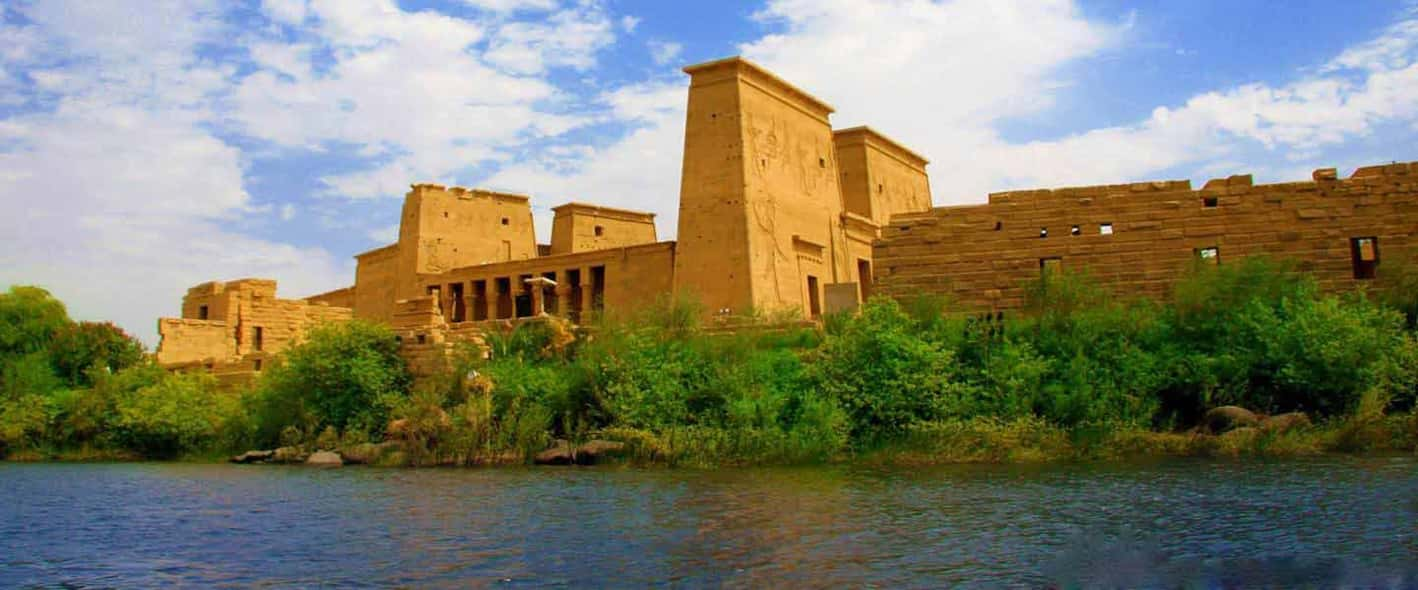
The plan is simple. Day one starts with an early pickup in Cairo and a domestic flight to Aswan, then Philae Temple and the High Dam before the drive south to Abu Simbel.
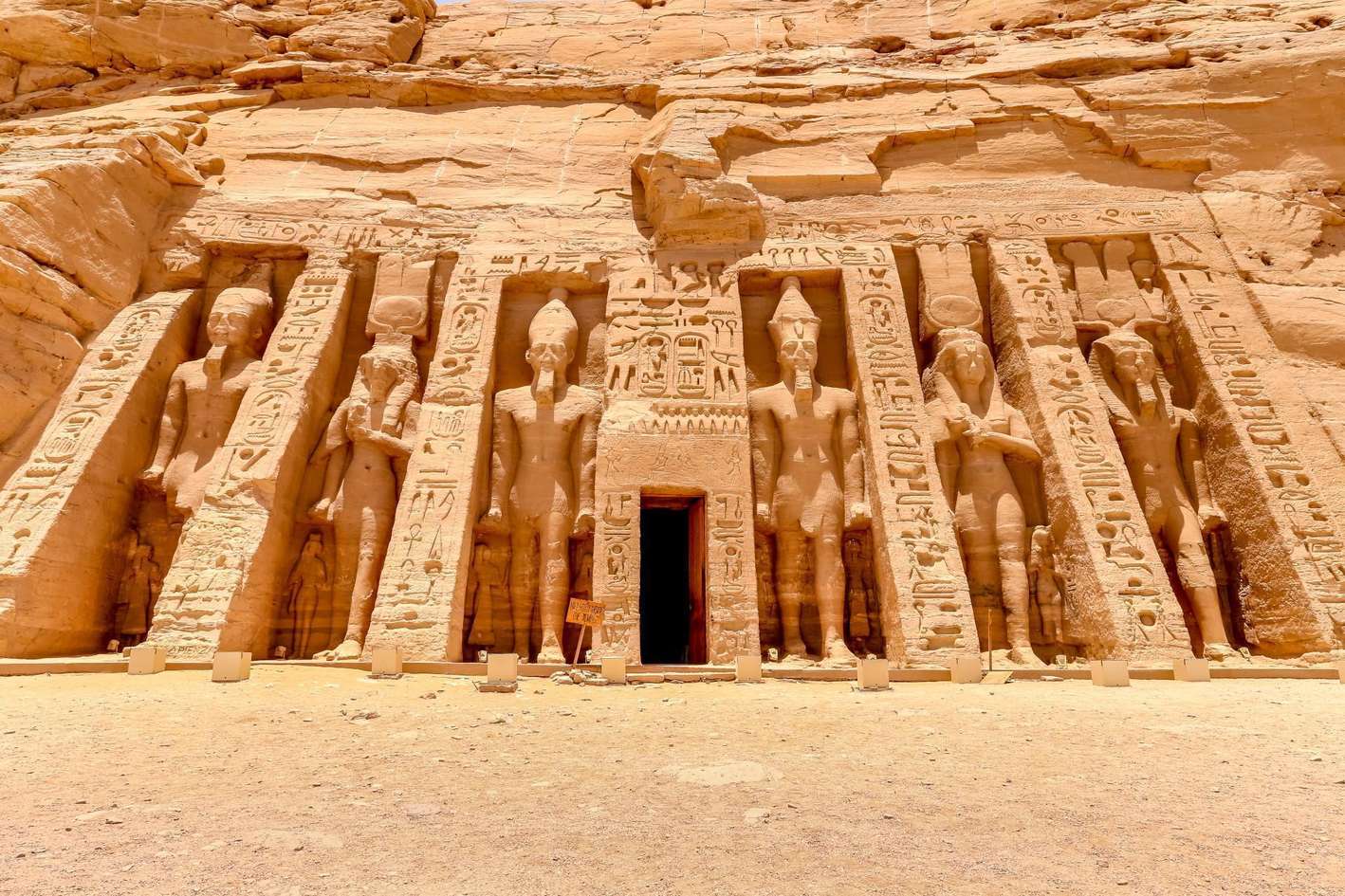
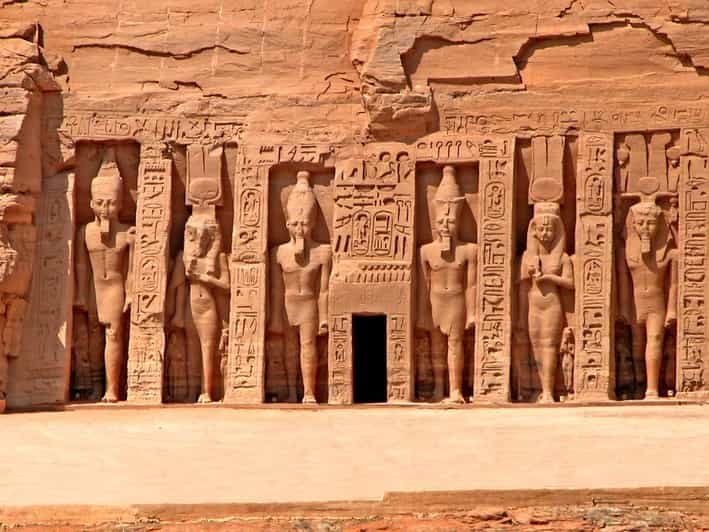
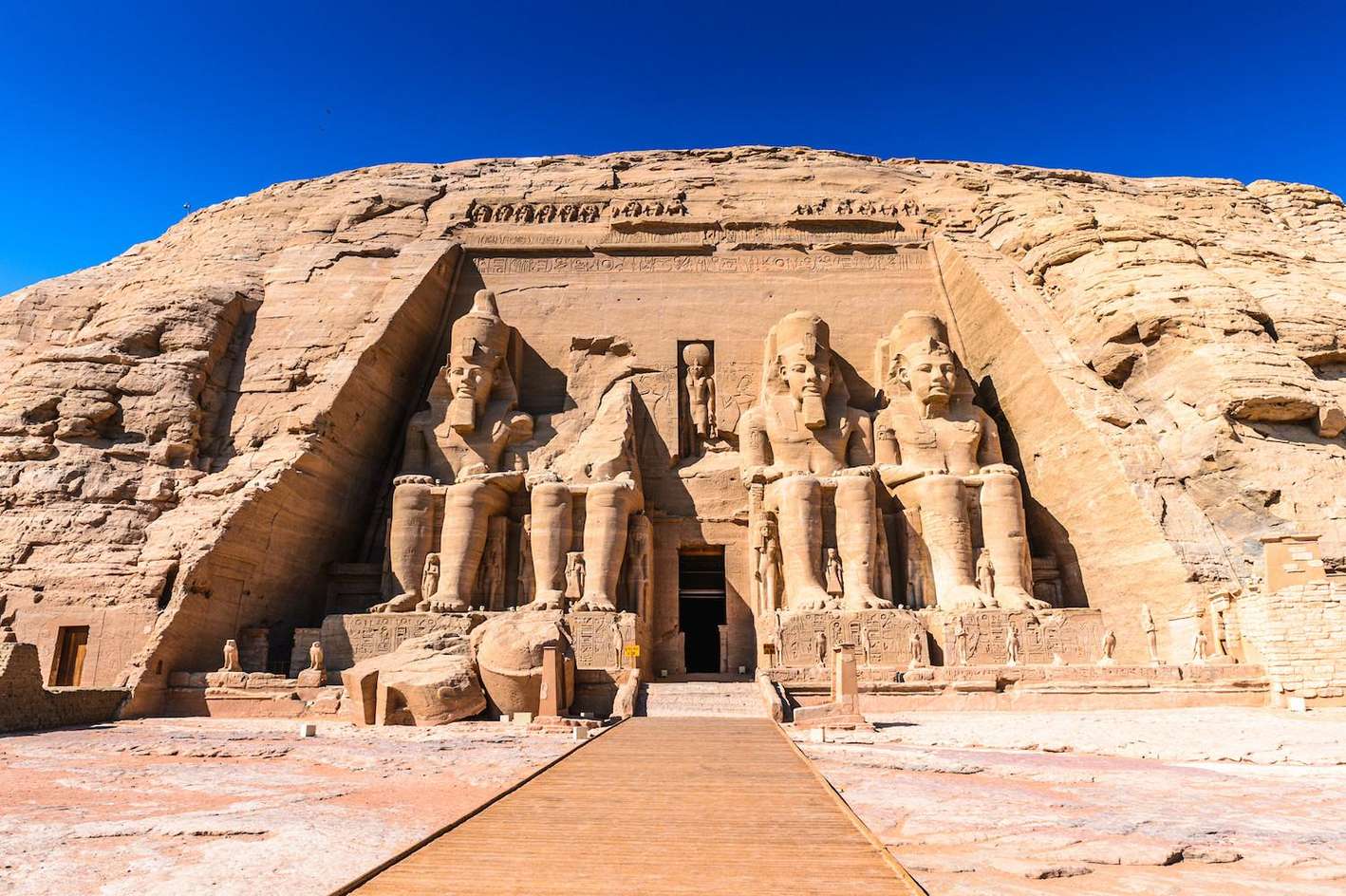
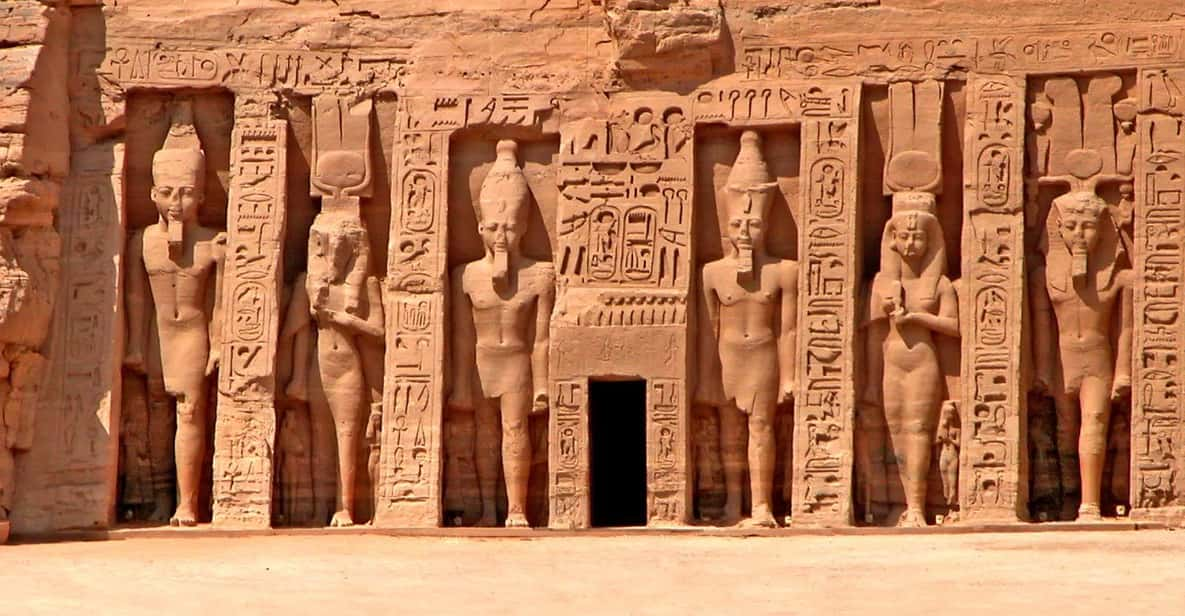
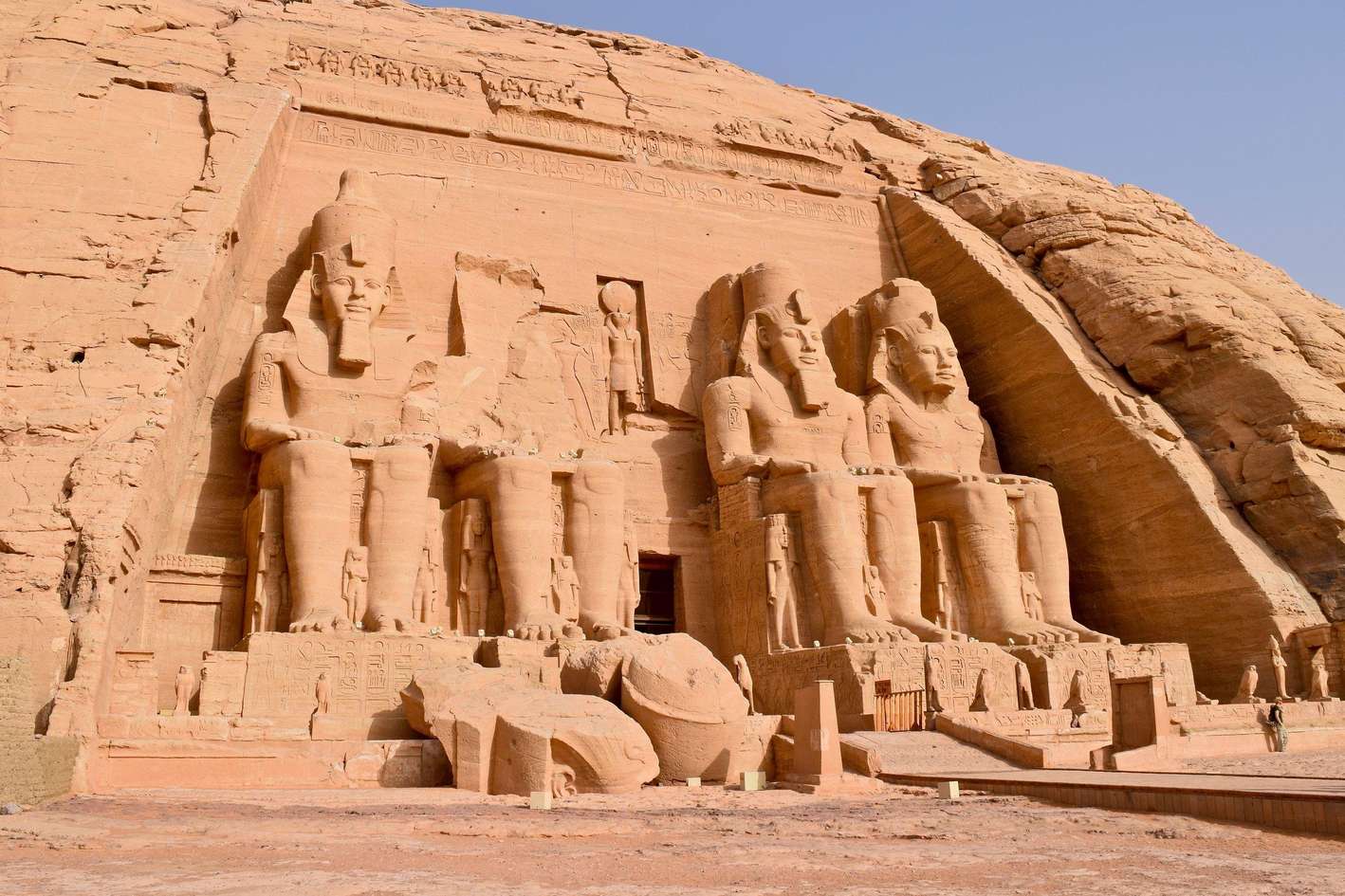
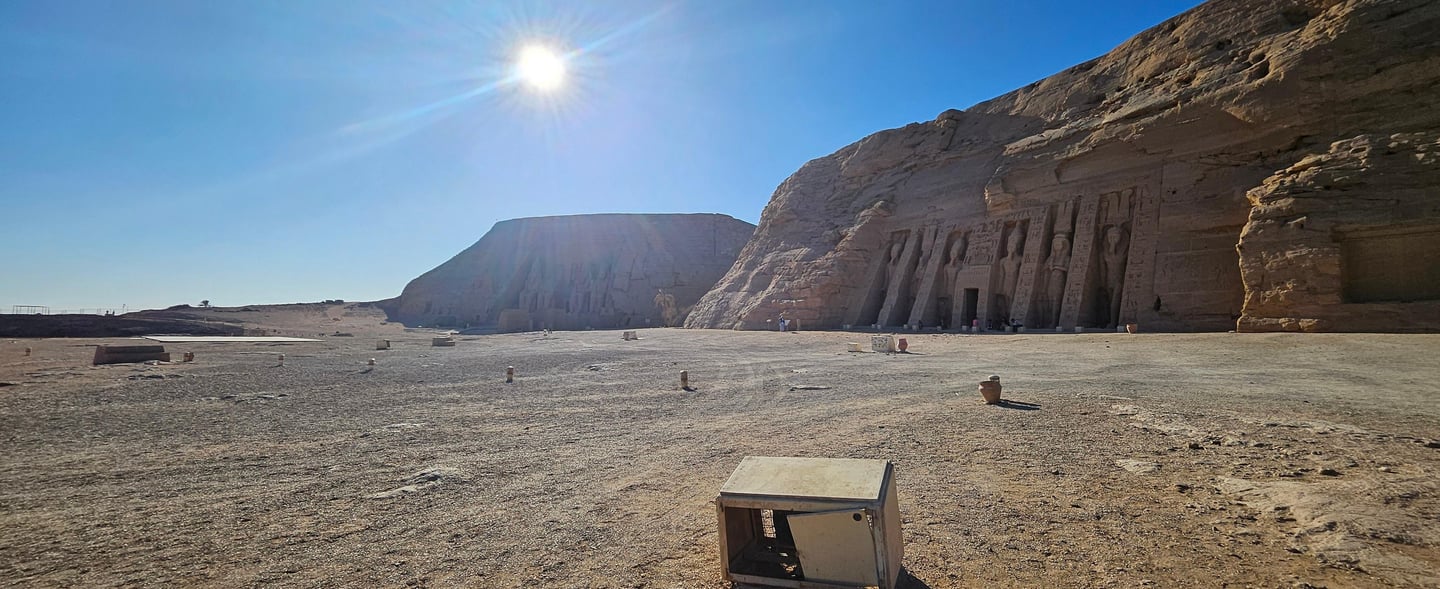
There you stand before the Great Temple of Ramses II, carved straight out of the cliff, and the small temple where Nefertari is carved at the same height as the king, something no other Egyptian site does. A night in a 4-star hotel with breakfast follows.
Day two moves to Luxor for the East and West Banks, including the Valley of the Kings, with entrance fees, lunch, an Egyptologist guide and air-conditioned transfers all covered. Only gratuities stay outside the price.
It suits travelers who want both Luxor's tombs and Abu Simbel's colossi without a marathon, and it can be cancelled up to three days ahead for a full refund, so you can lock it in while flights still have seats.
Green marks the lowest price. Prices per person.
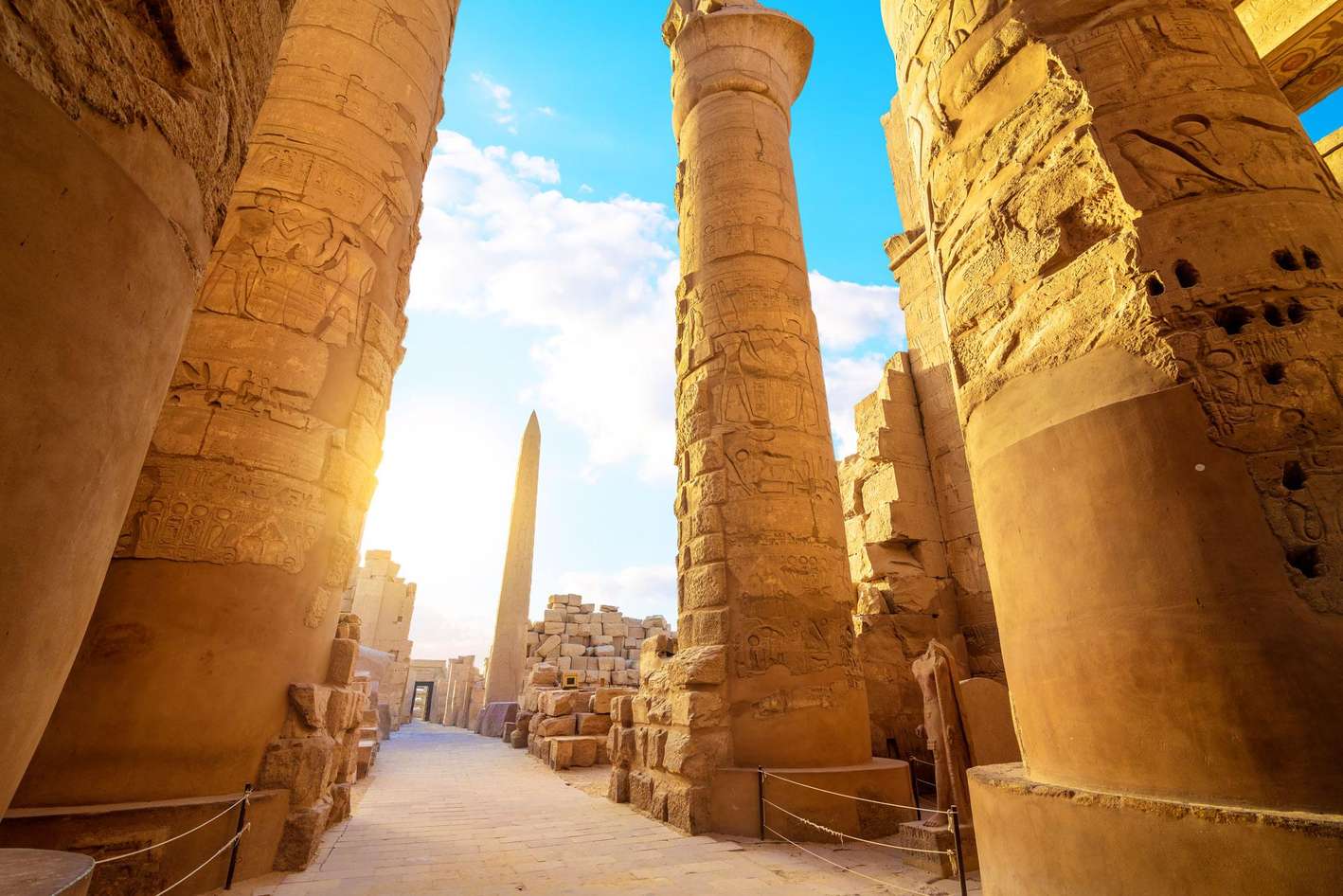


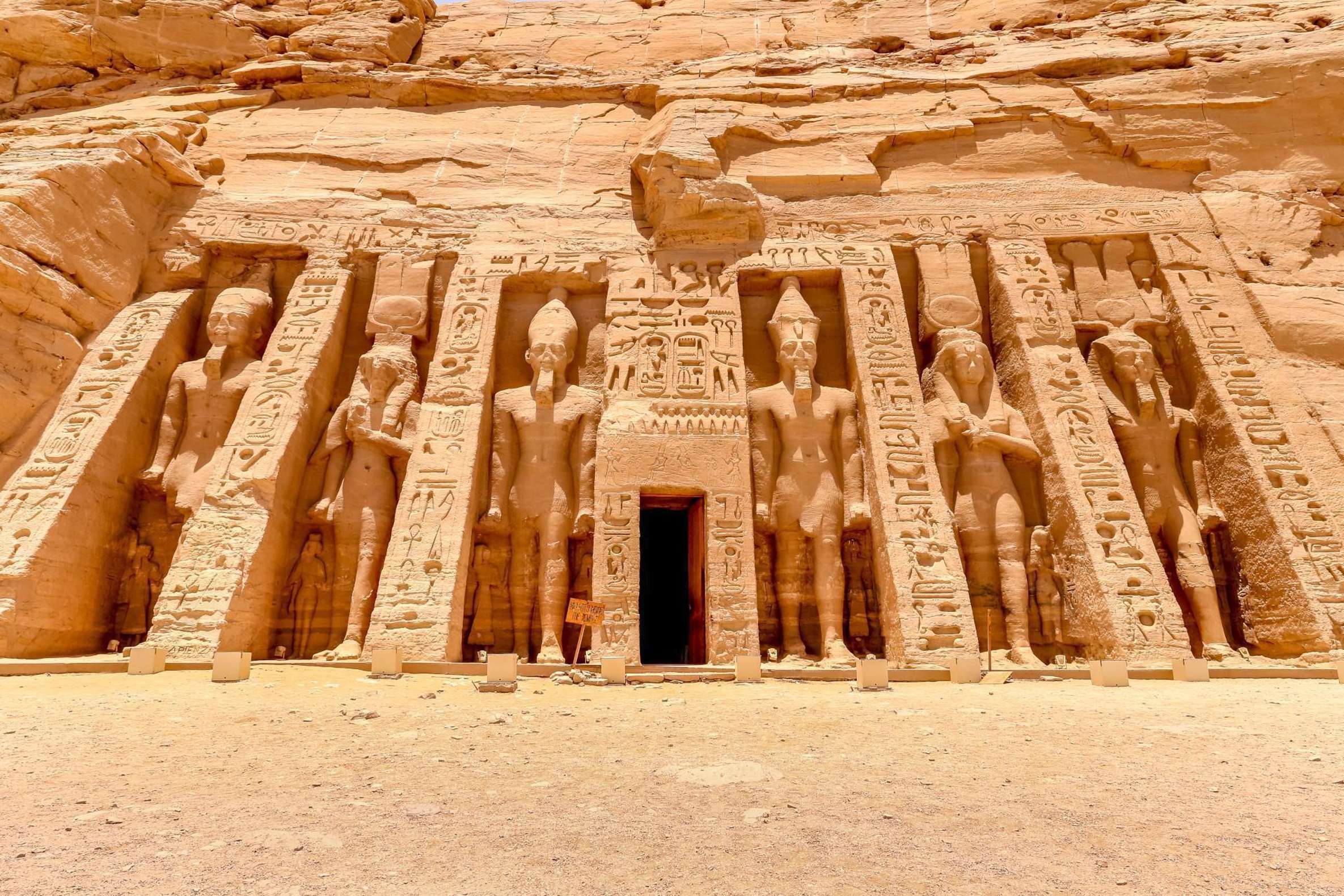
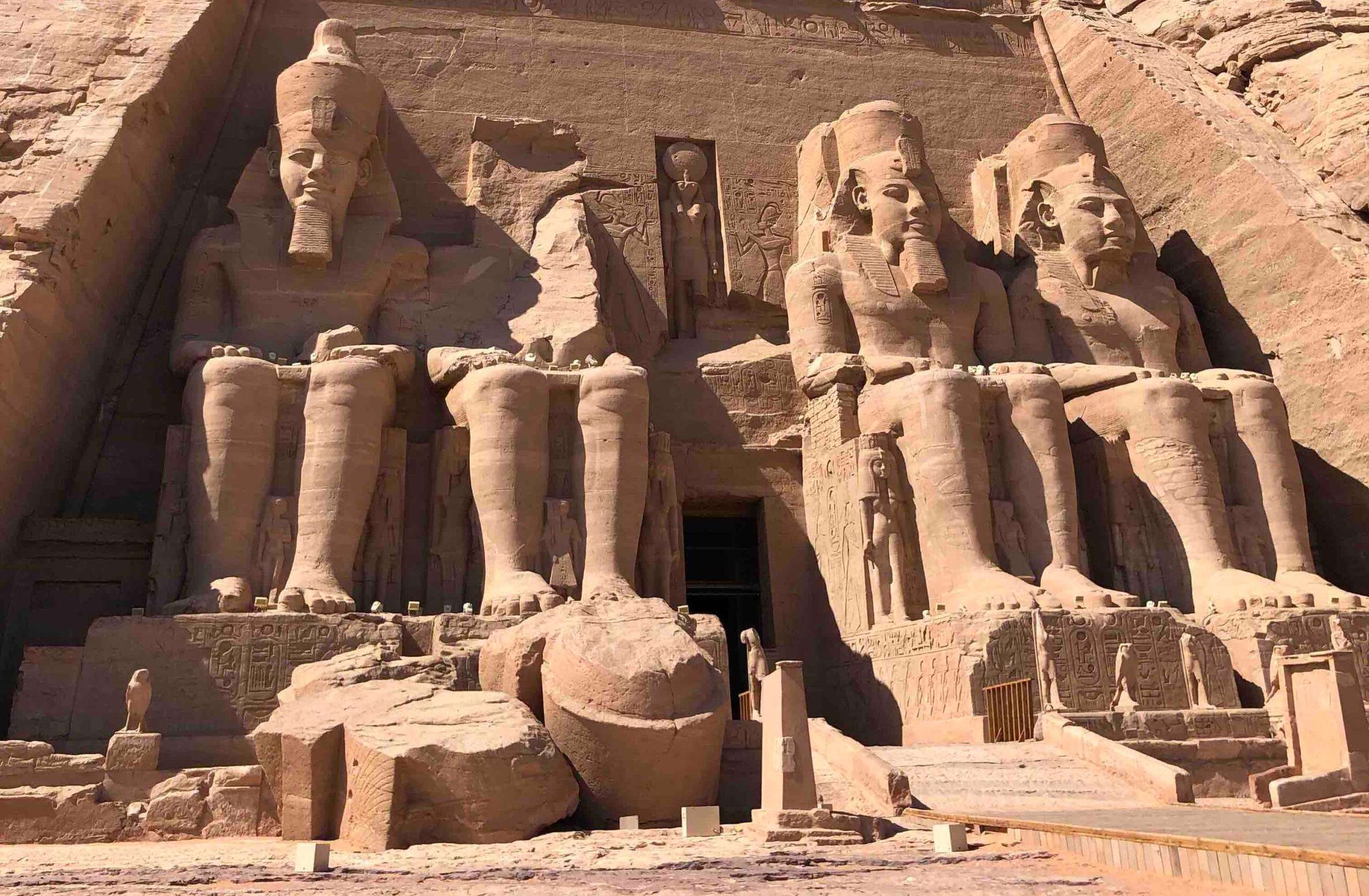
The first sight is the Great Temple of Abu Simbel, carved straight out of a sandstone cliff by Ramses II, with the smaller temple of Queen Nefertari beside it.
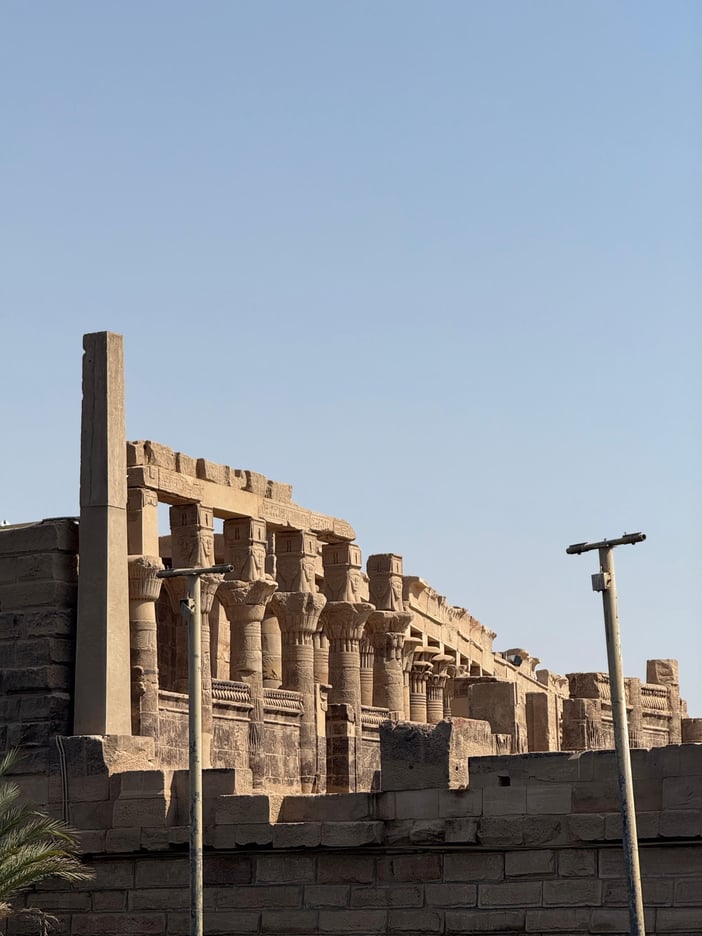
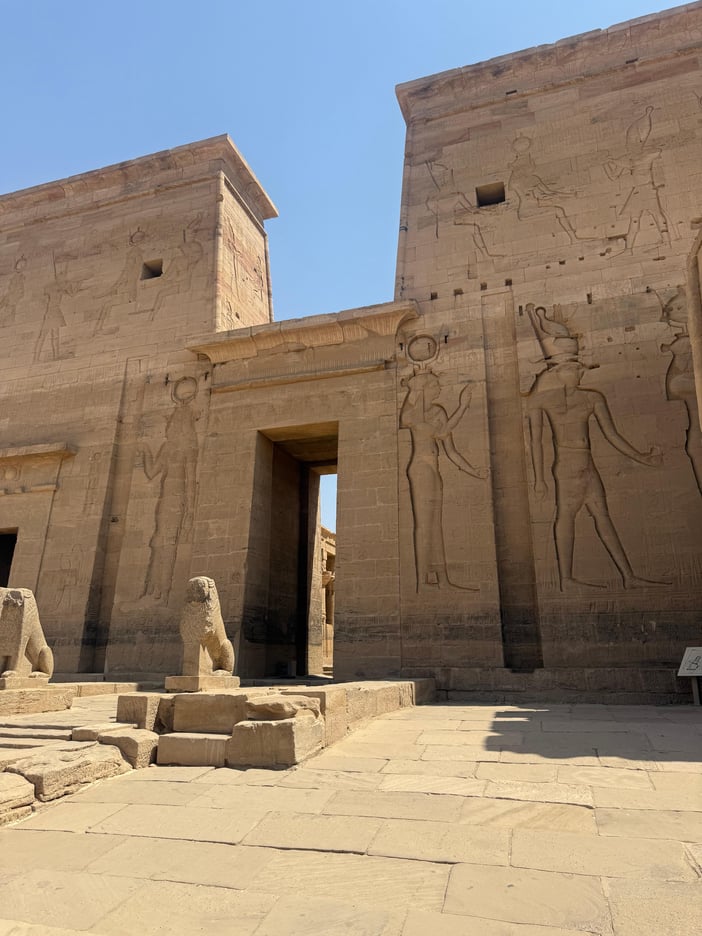
On the two-day tour from Cairo you reach it by flight to Aswan on day one, along with the Philae Temple and the High Dam, then sleep in a 4-star Aswan hotel with breakfast before the Luxor day begins.
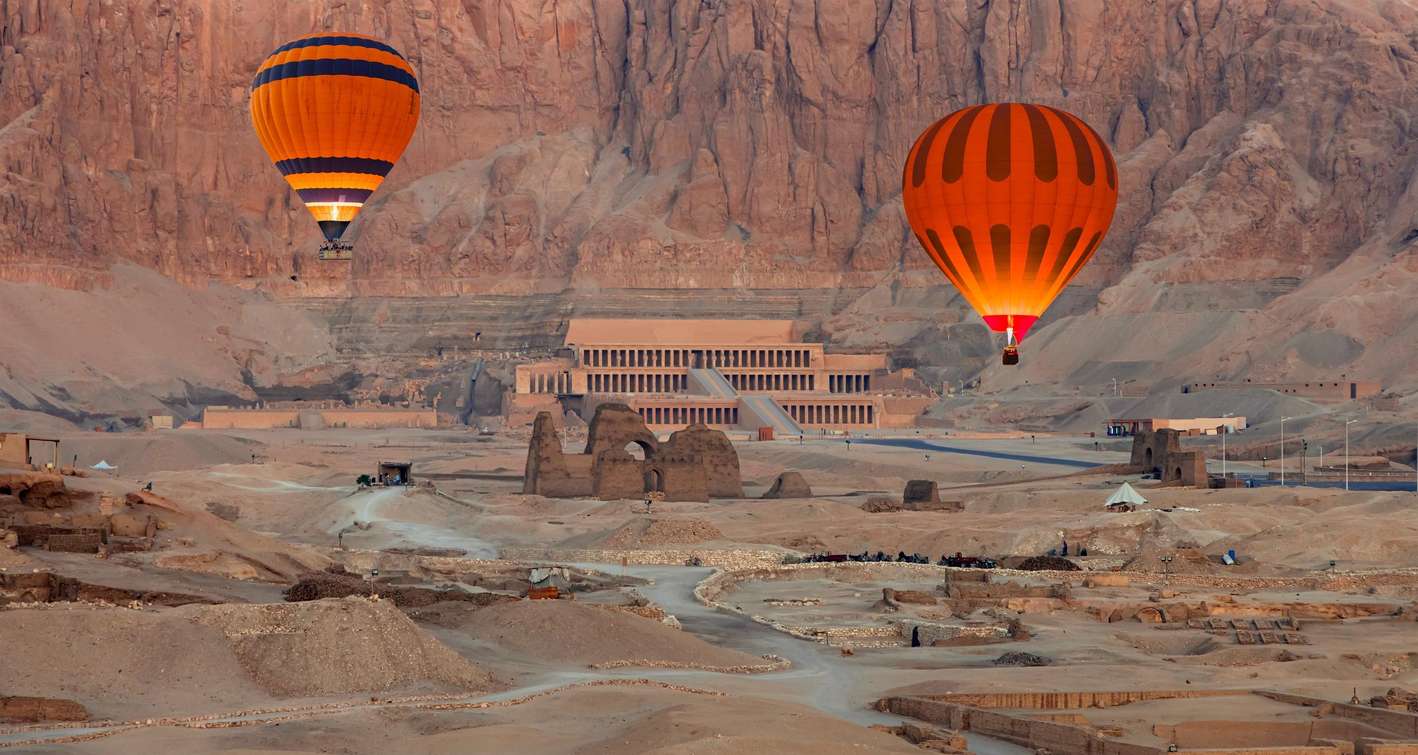
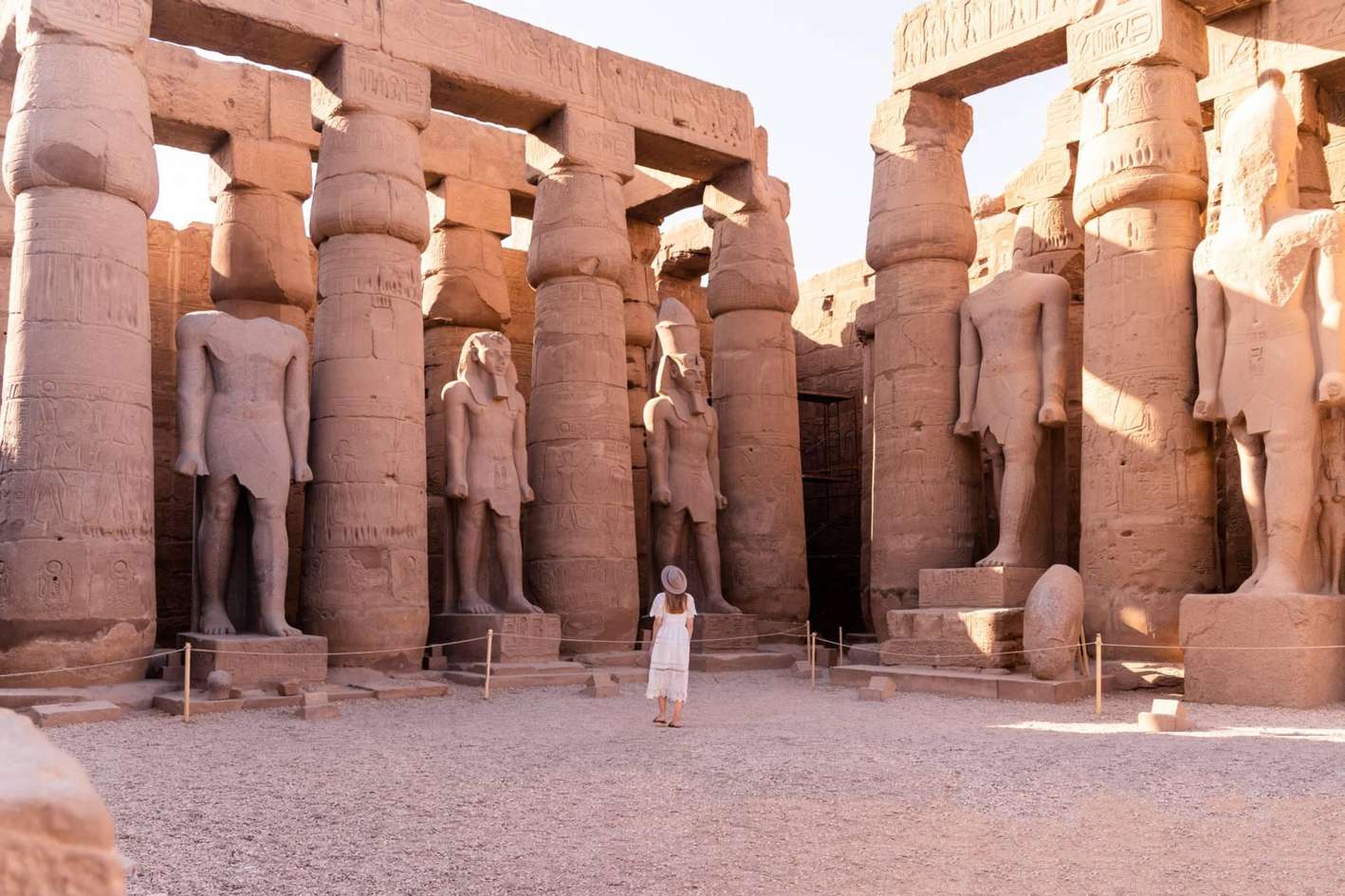
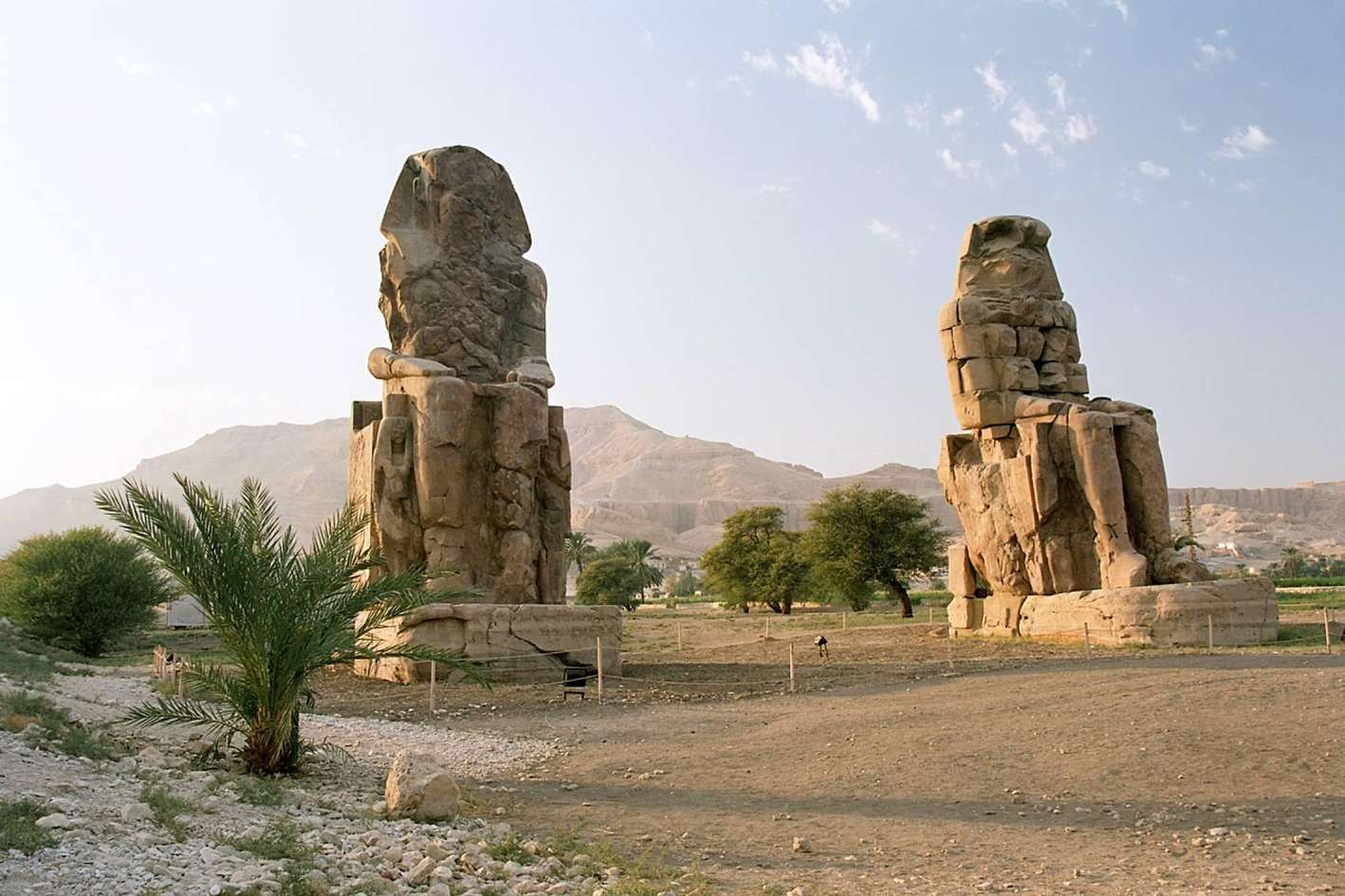
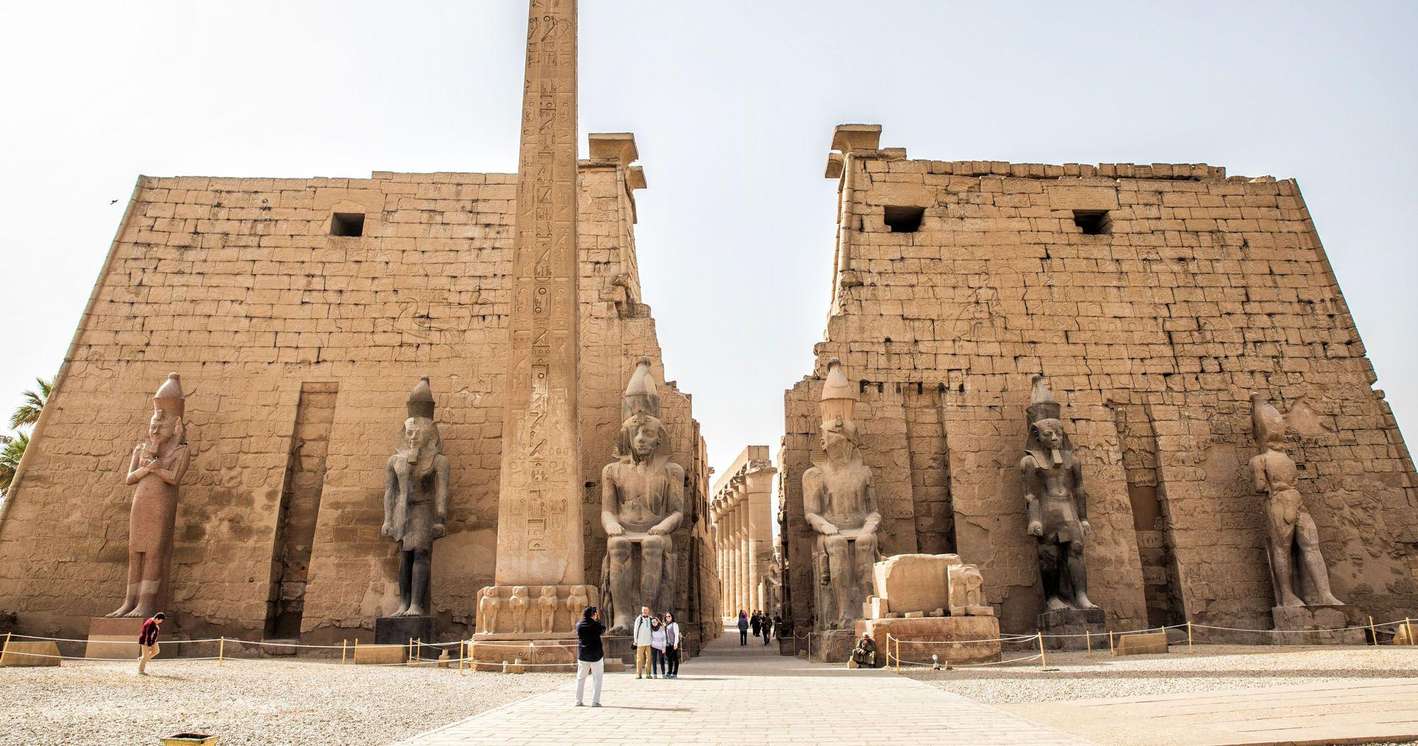
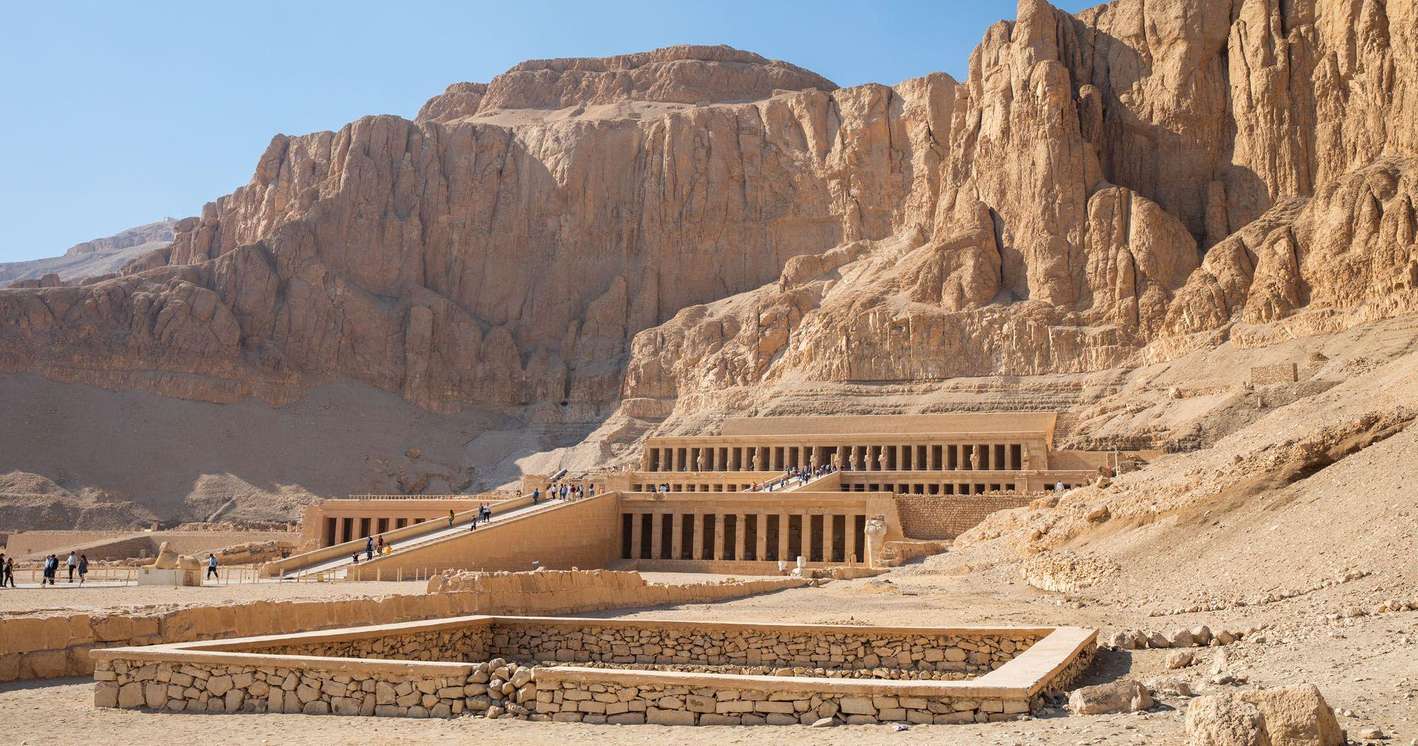
Day two covers Luxor's West and East Banks: the Valley of the Kings, the Colossi of Memnon, Hatshepsut's temple, Luxor Temple and Karnak. An Egyptologist guide, entrance fees, flights between Cairo, Aswan and Luxor, transfers, lunch and the hotel night are all in the price; only gratuities are extra.
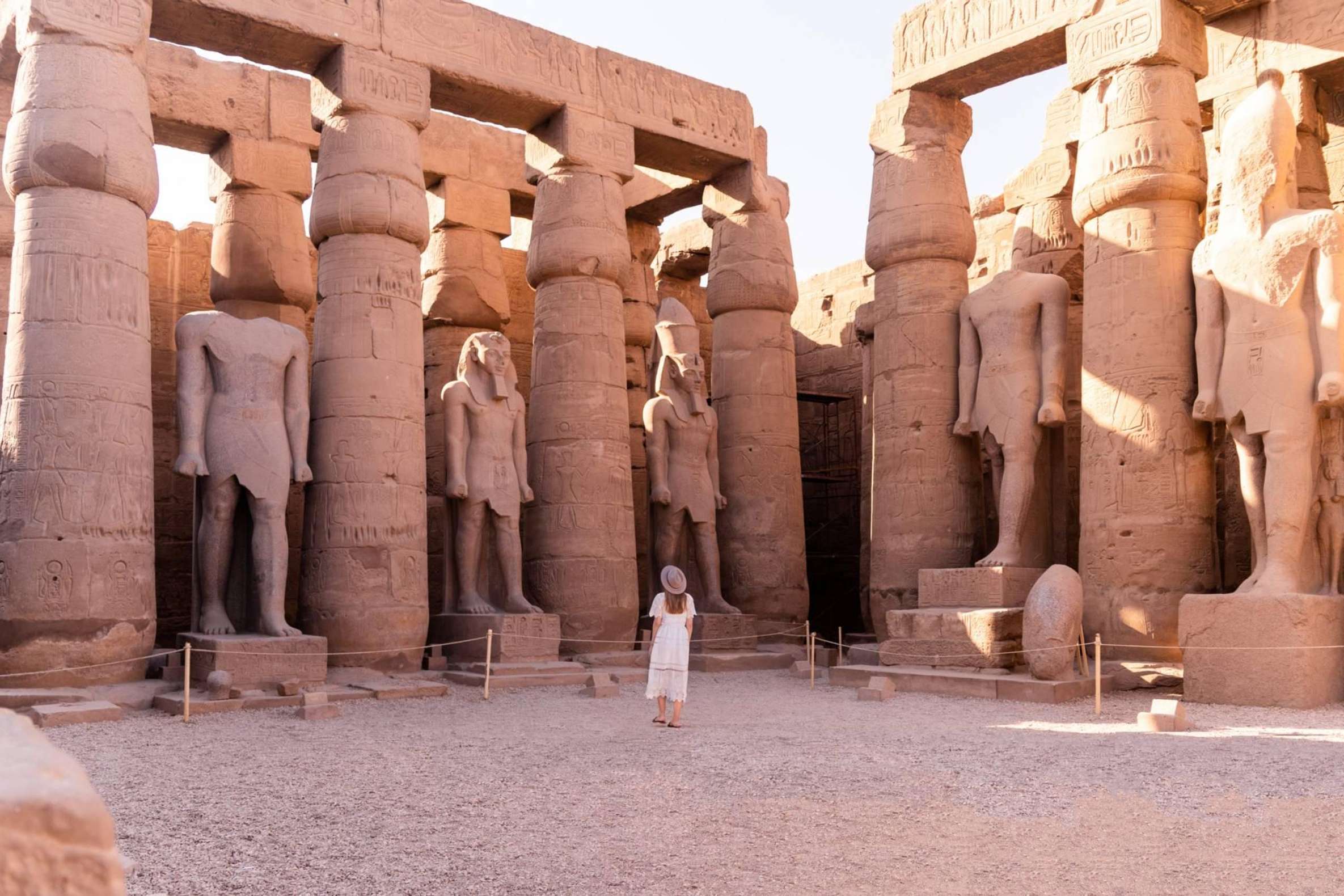
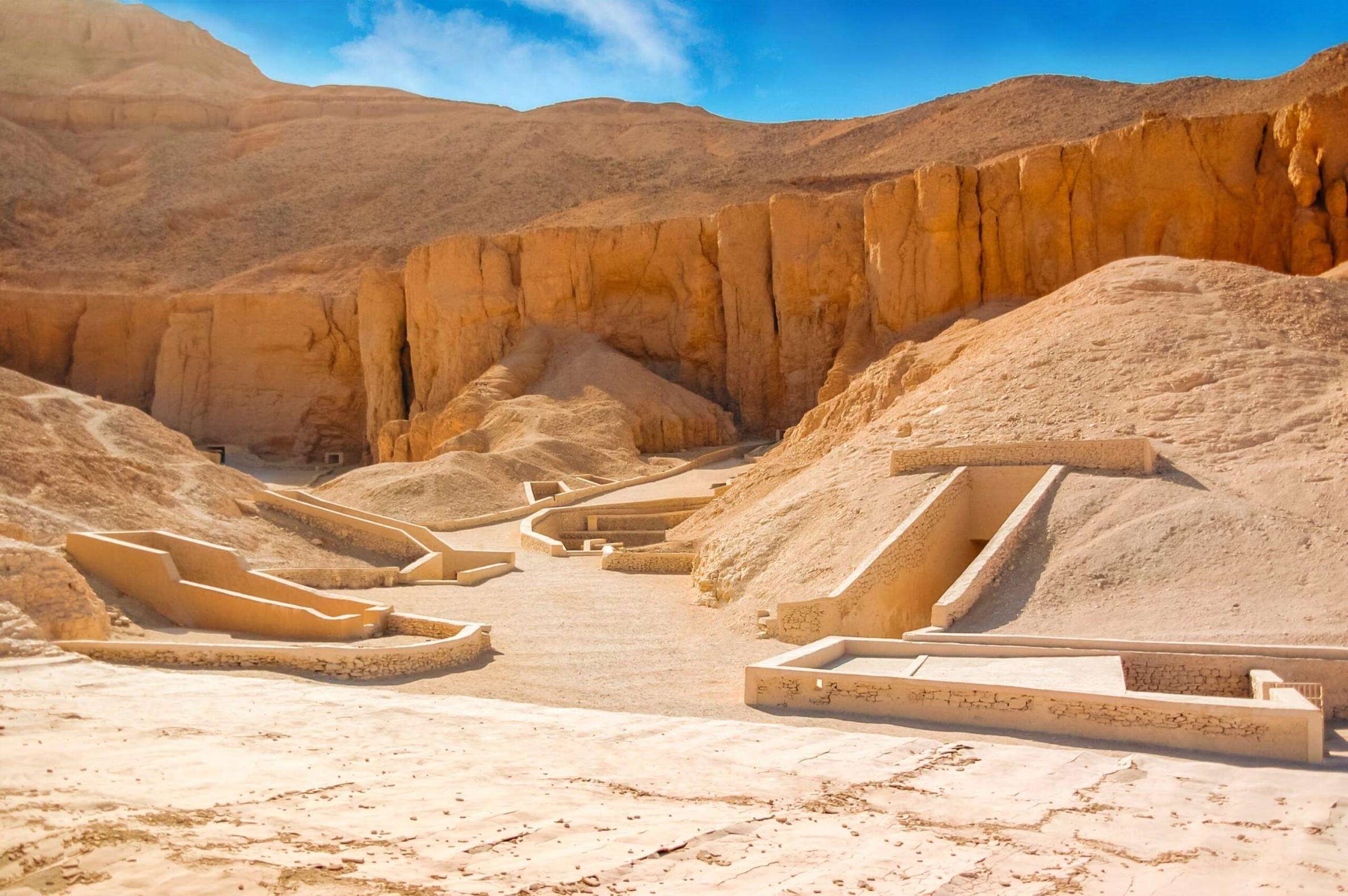
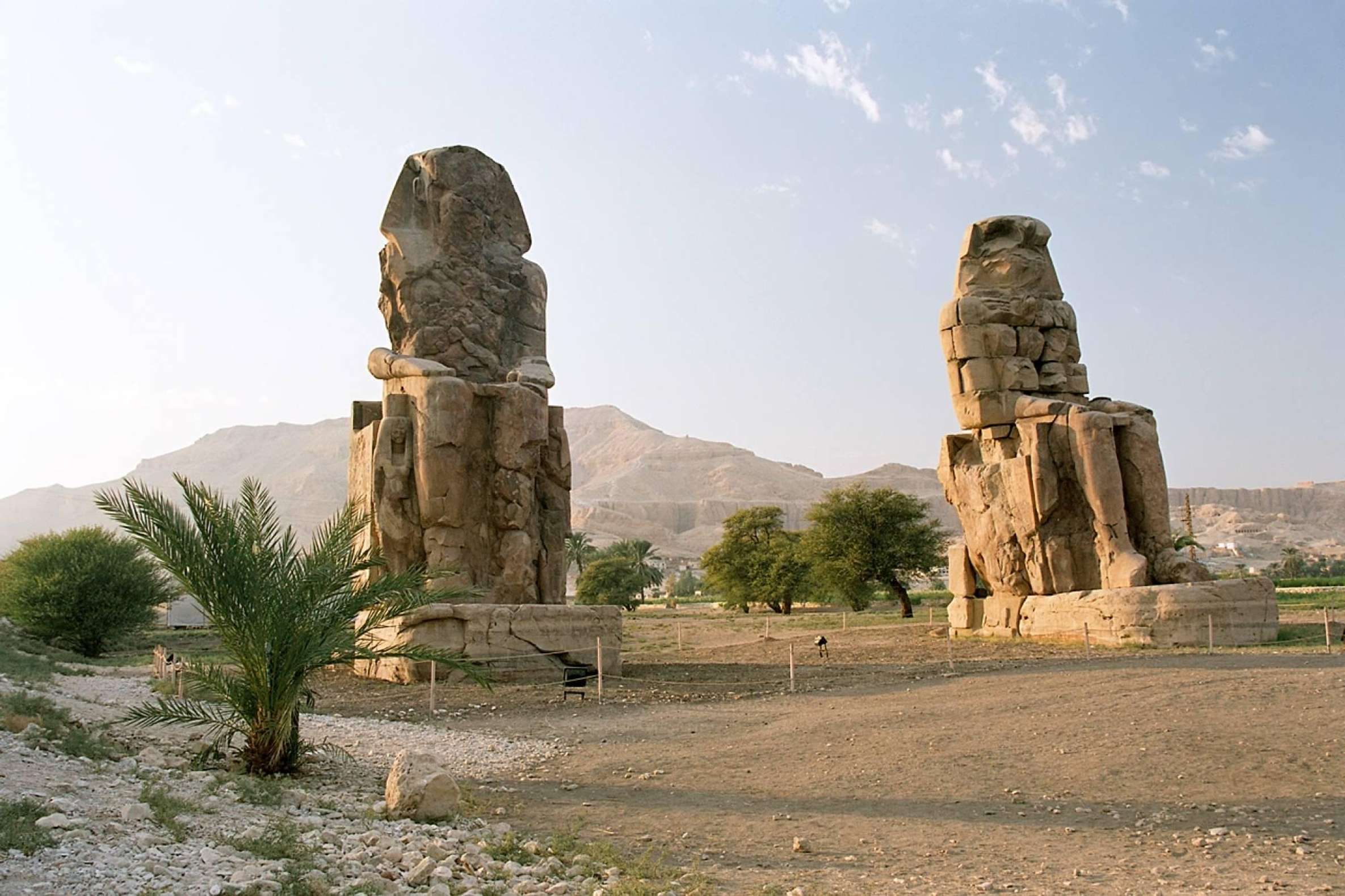
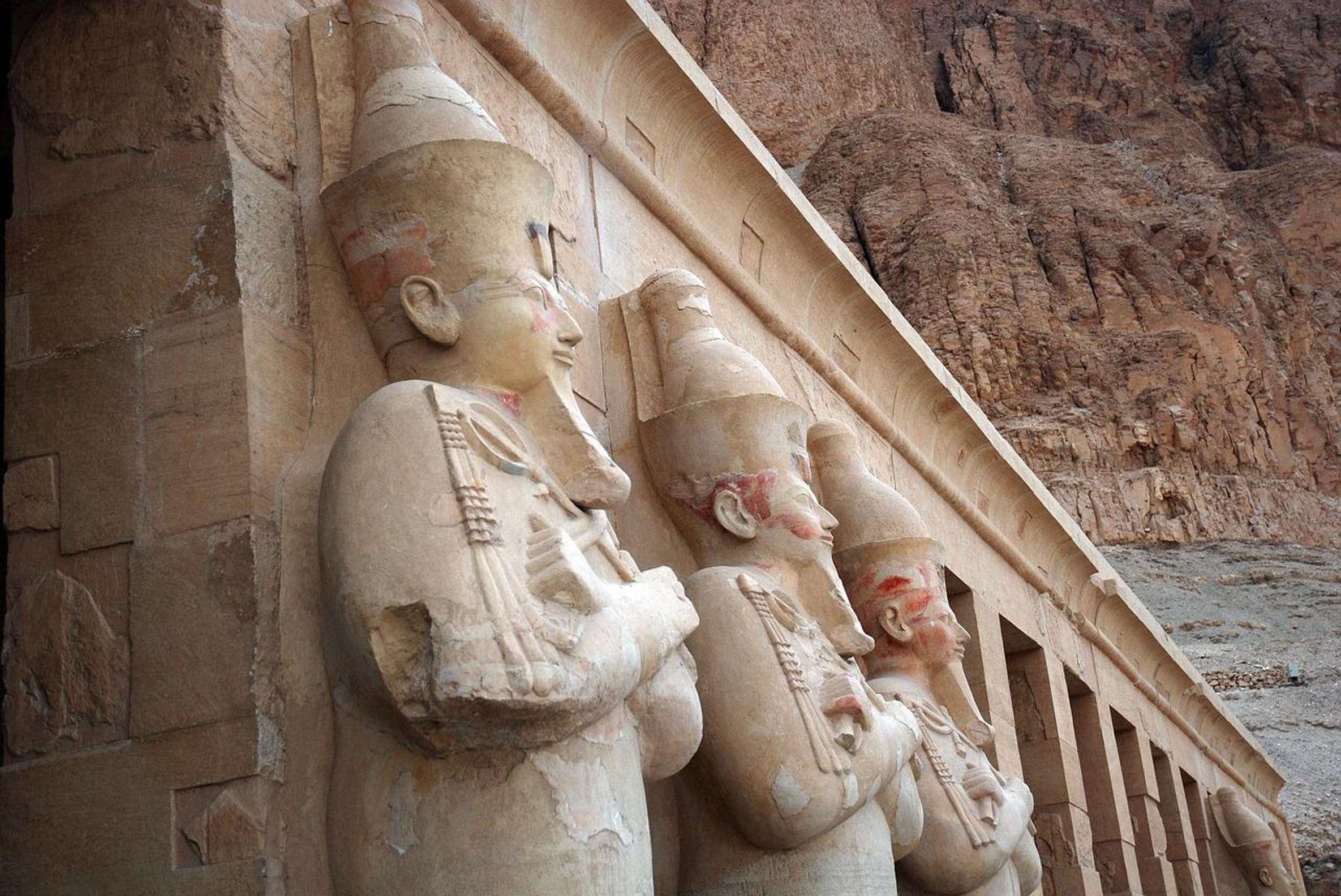
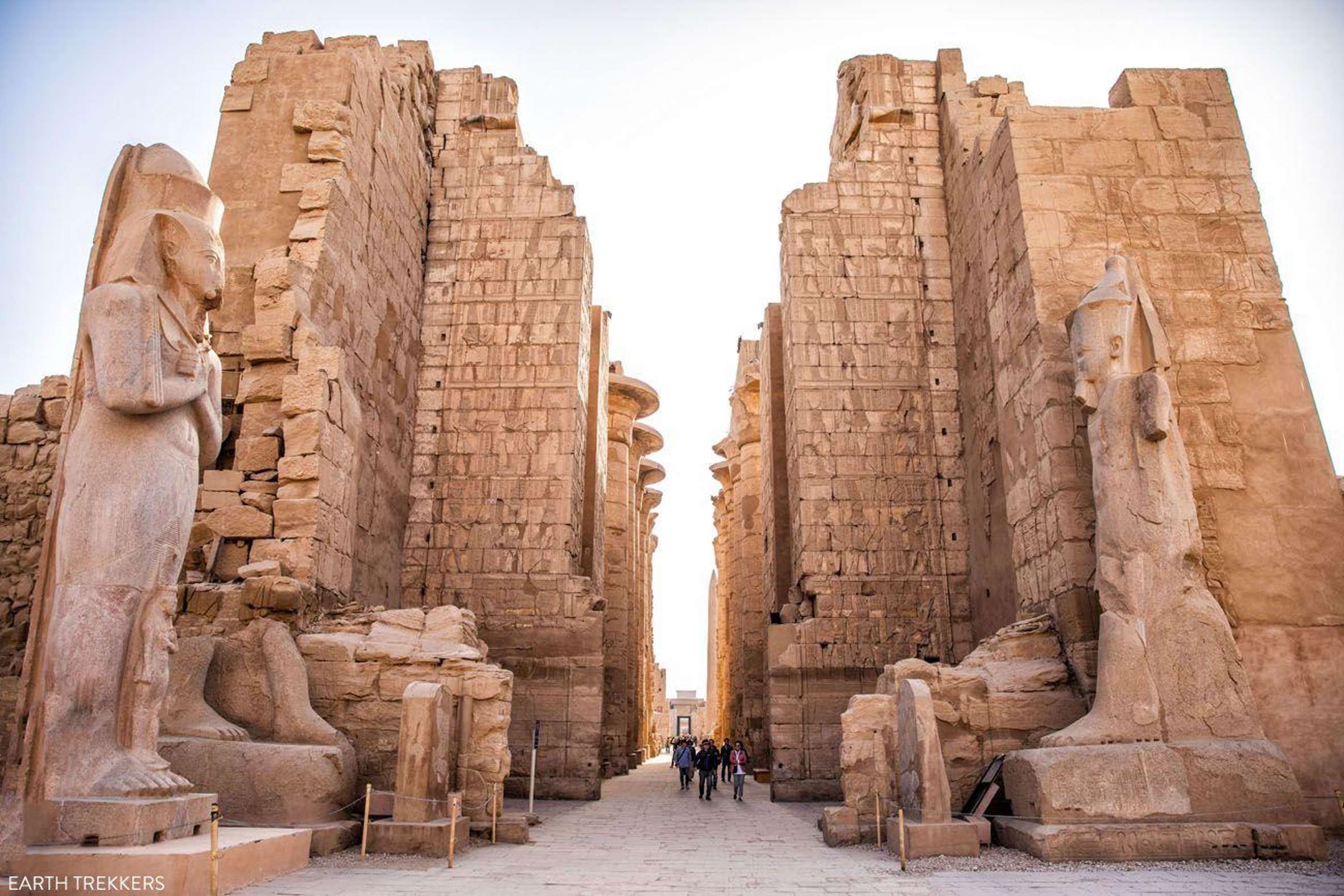
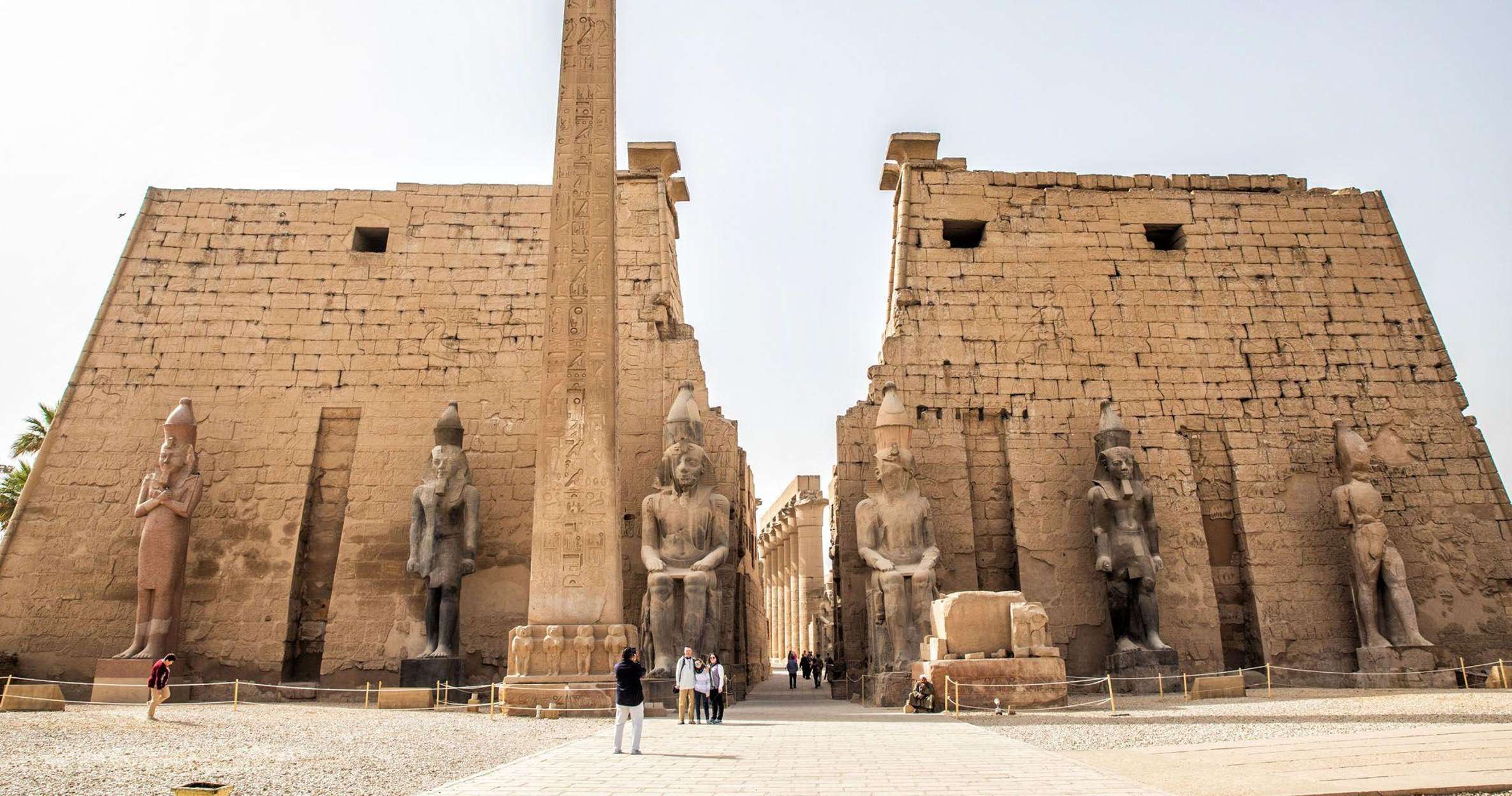
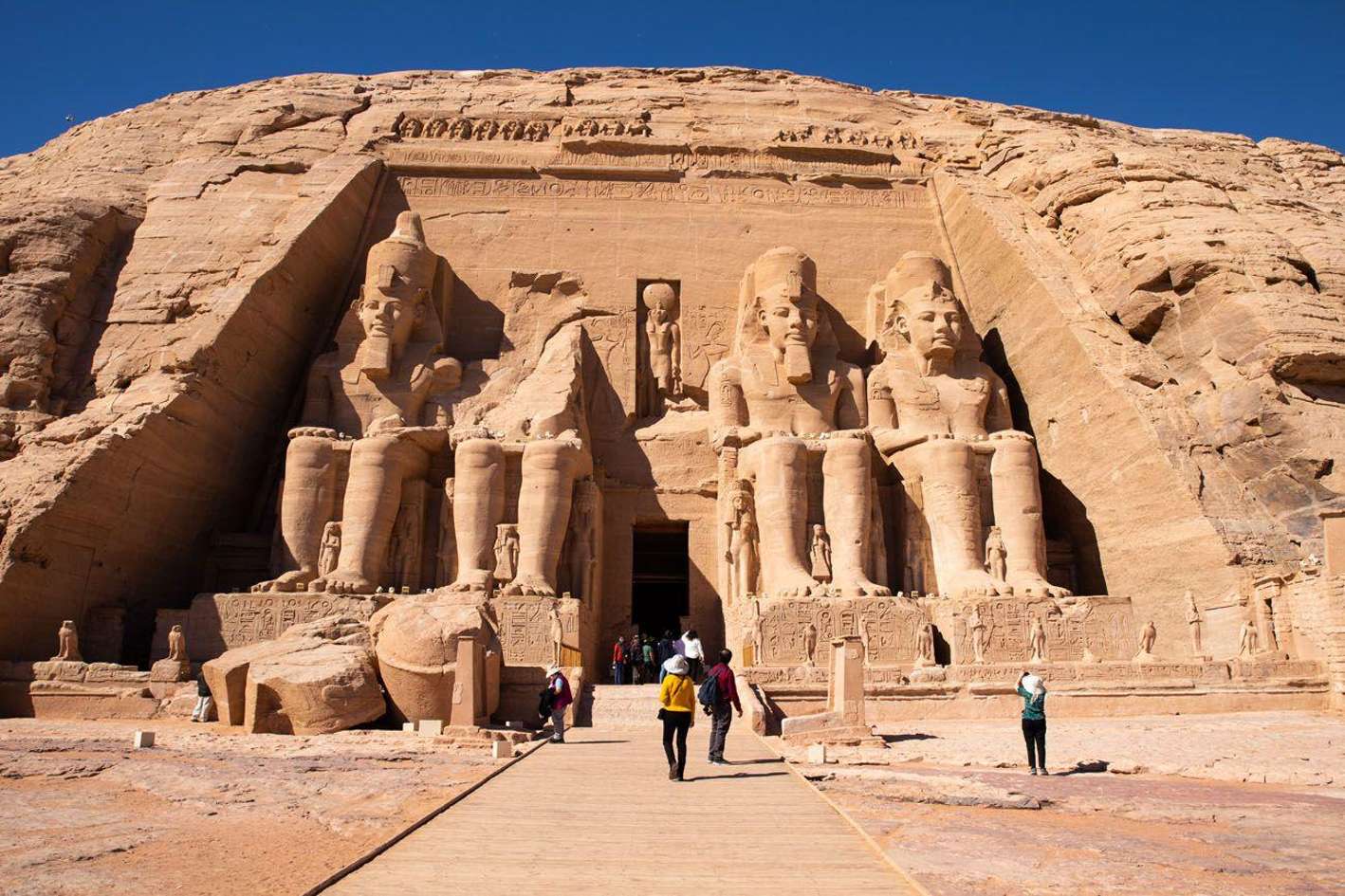
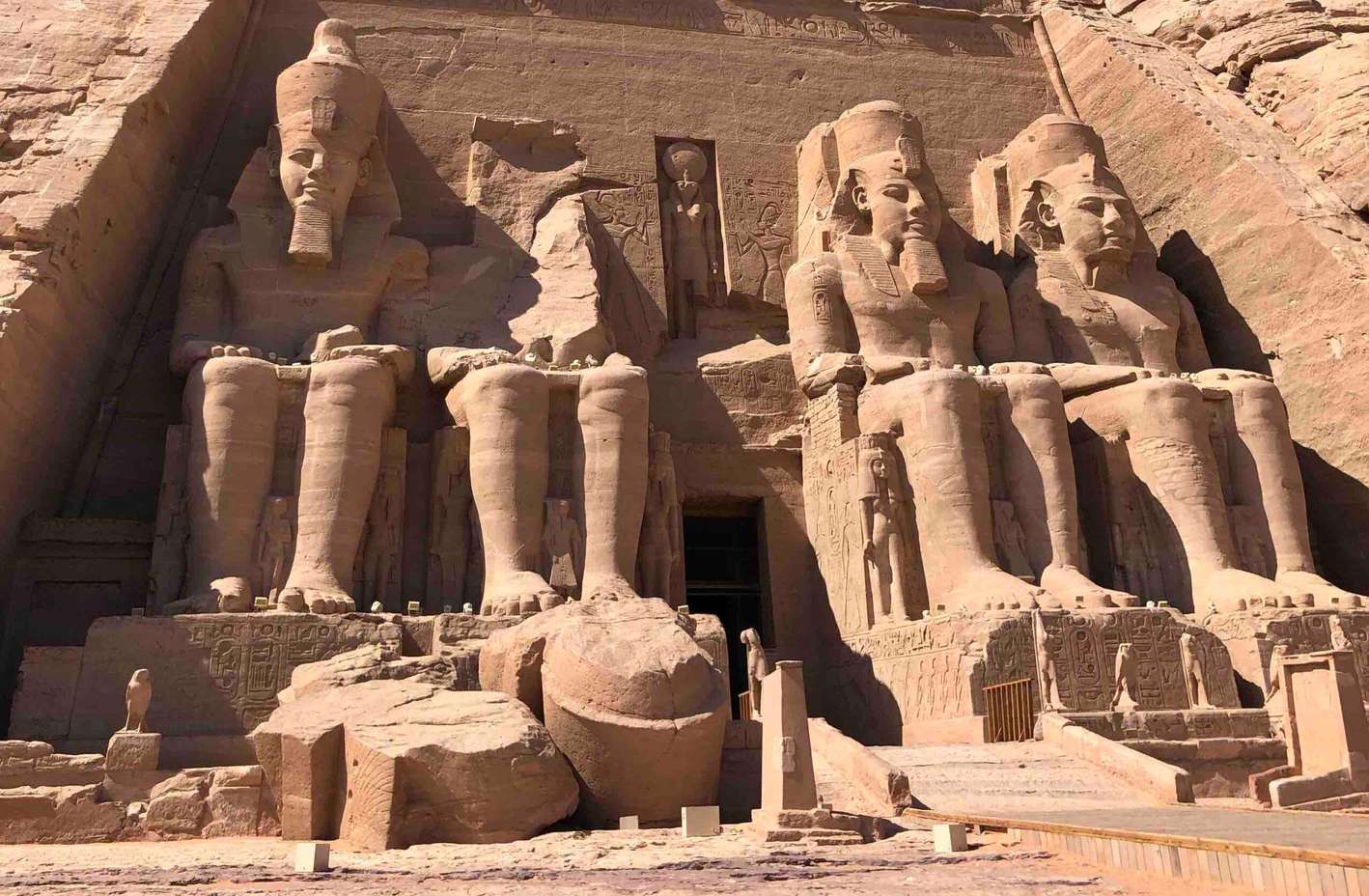
Most reviewers praised their guides for explaining the history clearly and keeping the packed two days running smoothly.
Many couples did not expect the flights, transfers and tickets to fit together so neatly across two full days.
A few wished they had more time at the sites, saying the pace felt hectic with so much packed in.
Choose a date, then look at the itinerary rather than the duration. The 2-Day Abu Simbel & Luxor Tour splits the trip in two: Aswan, Philae and Abu Simbel on day one, Luxor's East and West Banks on day two.
On the booking page, pick the option that matches your language. This tour runs with an Egyptologist guide in Arabic, English, French, Spanish and German, and the option you select fixes which guide meets you.
Read the cancellation terms before you pay. This tour allows a free full refund if you cancel up to 3 days in advance, so make sure your Cairo plans leave that margin around your chosen date.
Have your passport ready. It is required for the tour itself, and it is shown at the police checkpoints on the desert roads to Abu Simbel, where photocopies are not accepted.
Confirm your pickup the evening before, then pack the night before. Day one begins around 3 am at your Cairo hotel for the flight to Aswan, and representatives meet you there on arrival.
Domestic flights link the legs of these itineraries, and air-conditioned private vehicles cover the road transfers, including the desert run to Abu Simbel. The two-day tour moves you Cairo, Aswan, Luxor, Cairo, so no leg is left to arrange yourself.
The flight-based tours here run as private trips with your own guide and driver. On the cruises, the Abu Simbel morning excursion is run as a small shared group, while the rest of the program sails with the ship's guests.
Included items vary from tour to tour, so read the card before you book:
Seats on domestic flights south are limited, and the winter months from December to February are the busiest on the river. Book the two-day tour early, at the same time as your international flights, so the internal flights are secured together with it.
Abu Simbel is an early-morning excursion on every itinerary here: the cruise tours leave around 4:00 to 4:30 am and arrive near opening time. Going early beats the heat and the crowds, and the temples open at 6 am.
The two-day tours let you cancel up to 24 hours ahead for a full refund; the Luxor and Aswan two-day combination follows the same rule. The other two-day tour needs three days' notice.
Government regulations bar guides from lecturing inside the temples, so your guide explains the reliefs on the open forecourt and you walk the halls on your own. Wear modest clothing that covers shoulders and knees for the desert sites.
Carry your physical passport for the whole trip. Police checkpoints line the desert highway between Aswan and Abu Simbel, officers ask for the original document, and photocopies are generally not accepted.
From May to September, afternoon highs at Abu Simbel reach 40°C and more, with almost no shade outside the temple chambers. Tour in the early morning, bring a hat and water, and note that balloon add-ons carry a minimum age of six and need you to climb into the basket.
All the tours here include hotel pickup and drop-off, in Cairo at the start and at every airport and site along the way. On the two-day tour, a representative meets you in the lobby before dawn holding a sign with your name on it.
Photography with a phone or handheld camera is free at Abu Simbel, and your standard ticket already covers the inside of both temples. Flash is banned inside, and any commercial filming or lighting rig needs a permit.
Guides and drivers expect a tip at the end of a tour, and the temple grounds add small extra asks for toilet attendants and guards. Keep a stack of small Egyptian pound notes, since getting change for large bills is hard out there.
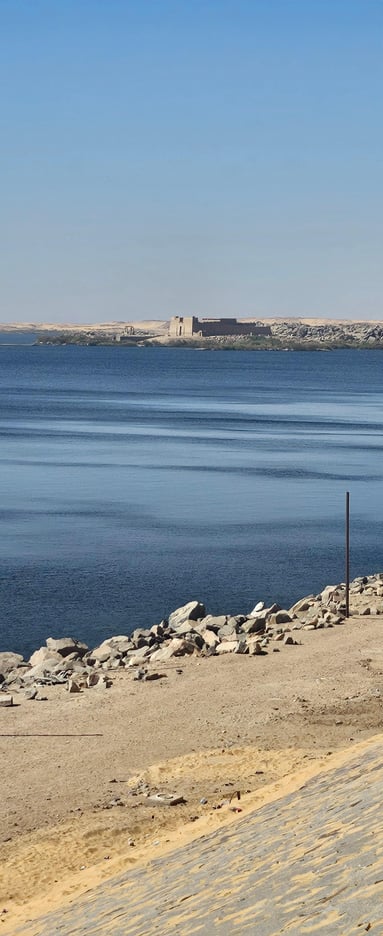
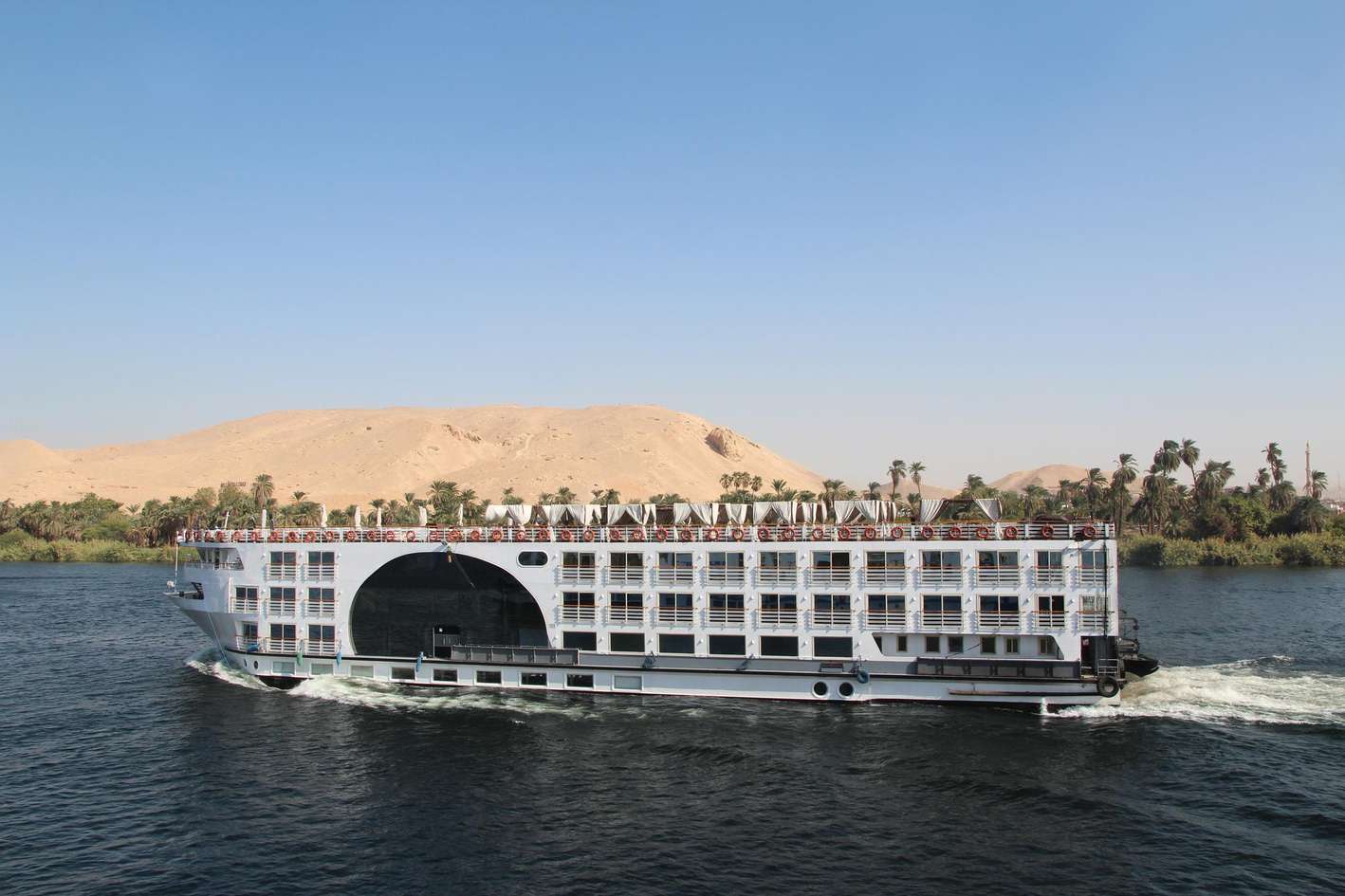
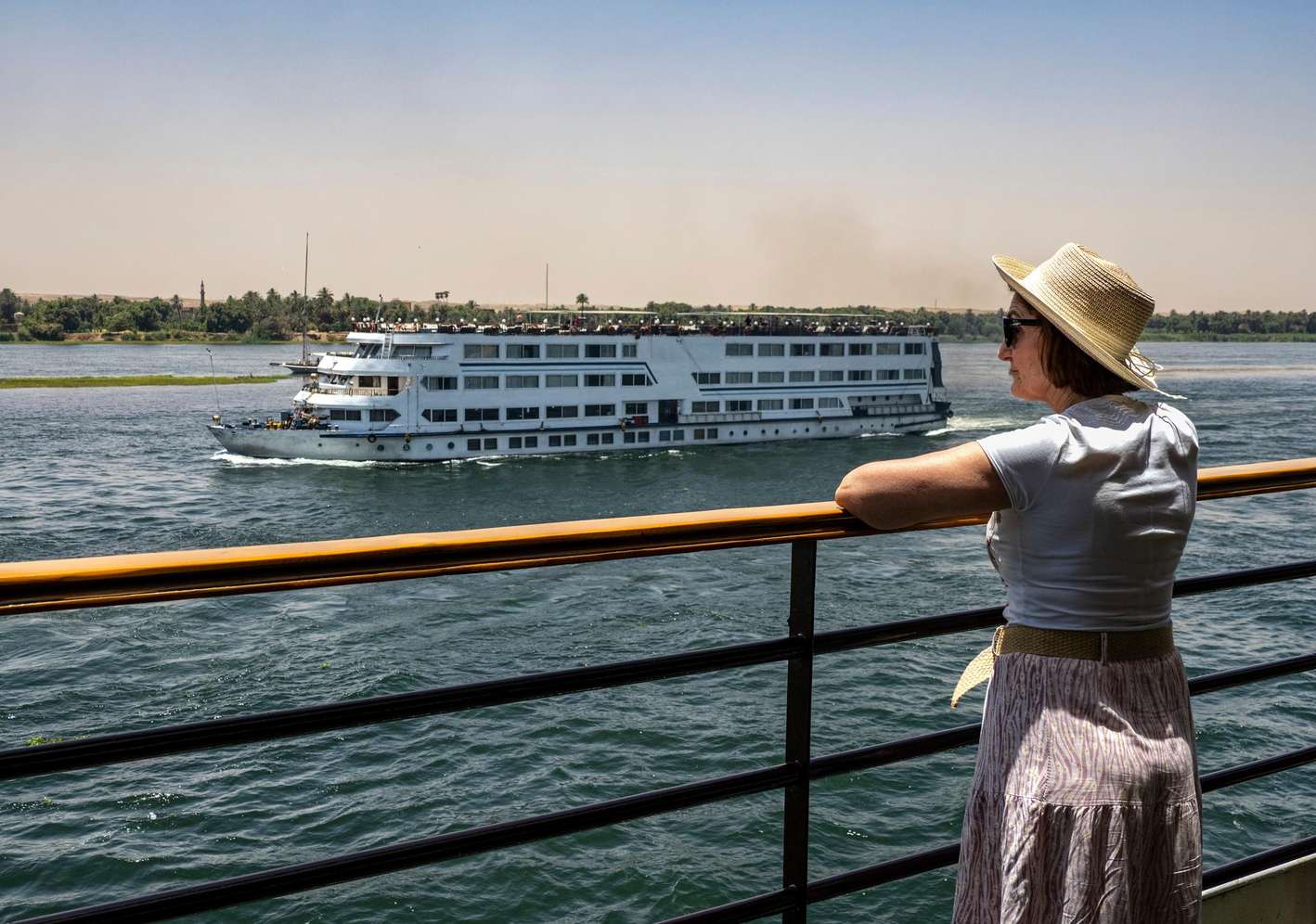
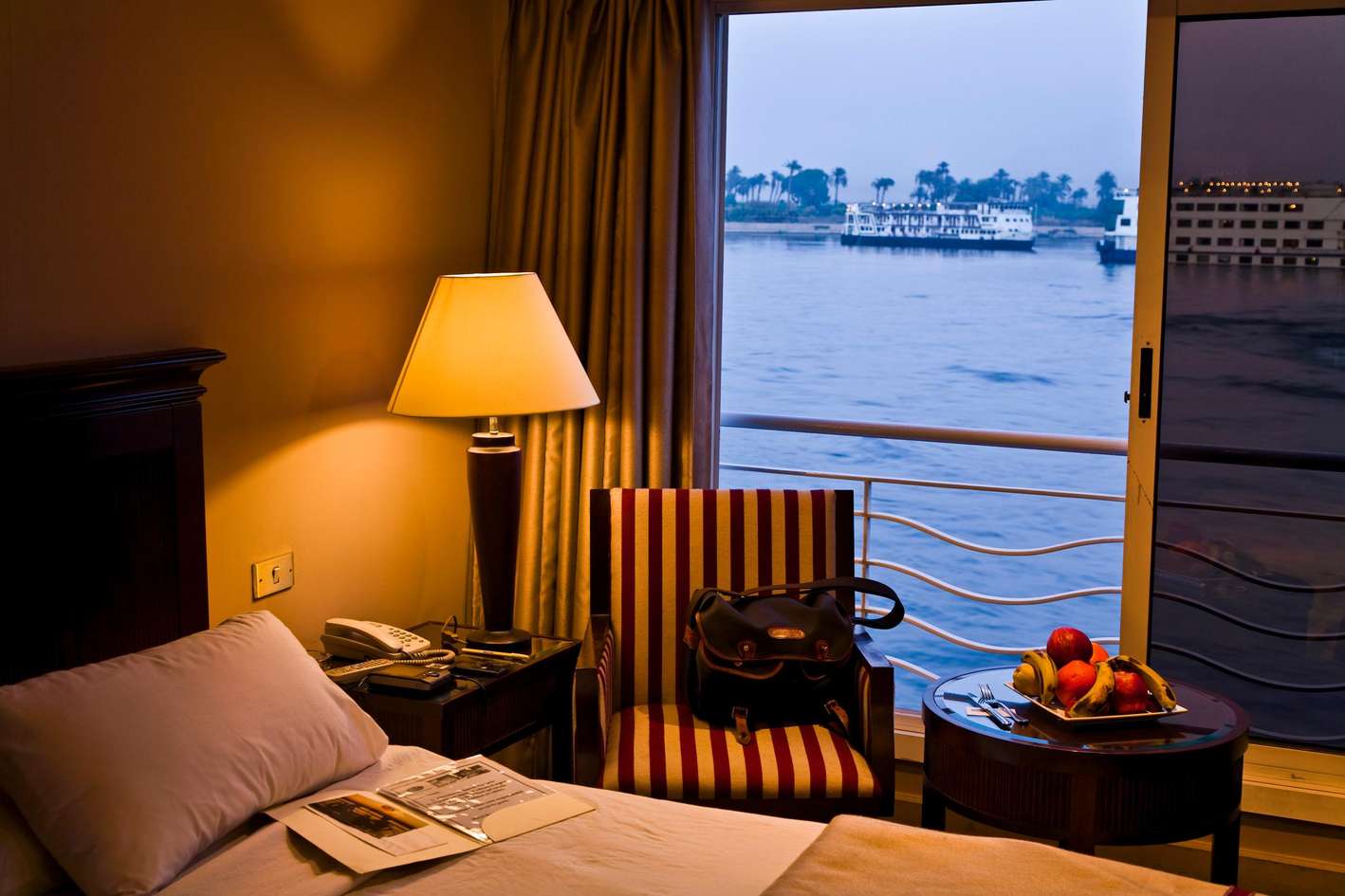



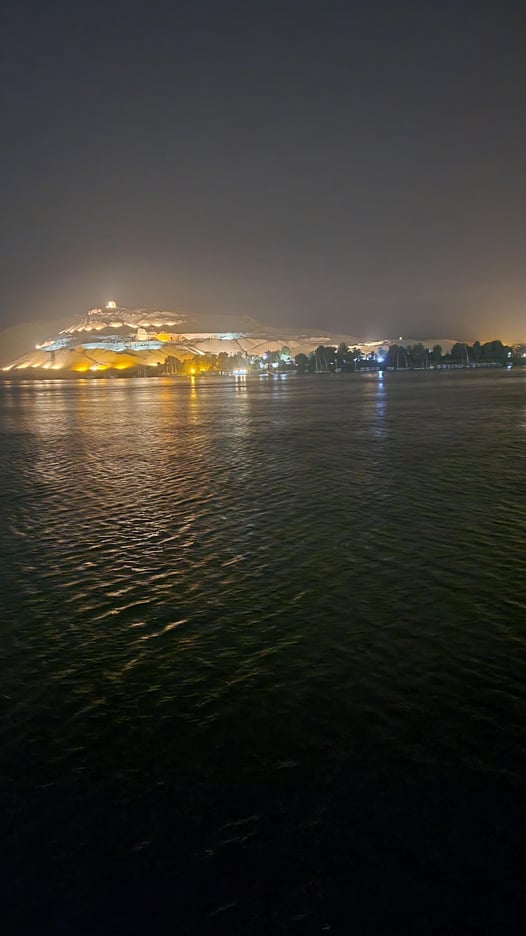

The temples at Abu Simbel sit nearly 480 kilometers south of Luxor, most of it desert road. Before you book anything, you deserve to know what that distance does to a single day.
A same-day return from Luxor means 14 to 16 hours door to door, with a departure between 3:00 and 4:30 am.
No direct flight connects Luxor or Cairo to Abu Simbel; every route transits Aswan.
Entry tickets at the temples are card only, so carry a bank card plus small notes for tips.
Abu Simbel sits close to 480 kilometers south of Luxor, and every road there runs through Aswan. A clean run without traffic is just over five hours each way; checkpoint stops and the fixed road windows stretch it toward six or seven.
Add it up and a one-day return means ten to fourteen hours of driving around a two-hour visit.
The tours on sale here answer that distance with a split. The From Cairo: 2-Day Abu Simbel & Luxor Tour gives the temples a full day of their own, with an overnight in an Aswan hotel before the early start, and hands Luxor's East and West Banks a second day.
Domestic flights, transfers, guide and entrance fees come in the price.
The table lays out each way of covering the distance, and what each one does to your day.
Read it one way and the choice is simple: the direct drive eats a whole day, the guided tour spreads it across two, and no train carries you past Aswan.
After Karnak's pillars and the painted tombs of the kings, another temple can sound like more of the same. Abu Simbel is not.
Ramesses II had the Great Temple hollowed straight out of a living cliff beside a quiet stretch of lake, while the temples of Luxor were raised block by block on a crowded riverbank. The scale of the seated colossi is unmatched anywhere in Egypt.
Then there is Nefertari. On the Small Temple next door, the queen's statues stand the same height as the king's, a break with every convention of Egyptian art of the time. A living queen on equal scale to the pharaoh, in her own rock-cut temple, is the detail guides love to land on.
The temples were carved out of a natural cliff beside the lake, nothing at Luxor is built that way
The site stands alone in the desert, reached by a long dedicated road
Most visitors base themselves in Aswan and arrive early, rested
So yes, it earns its place, and the only real question left is how to get there without wrecking the rest of your trip.
Both temples take about two hours on site: an hour to an hour and a half inside the Great Temple, and half an hour or so for the Temple of Hathor next door. One standard ticket covers both temple interiors, so there is nothing extra to buy at the gate for the main sights.
The story behind the stone is half the visit.
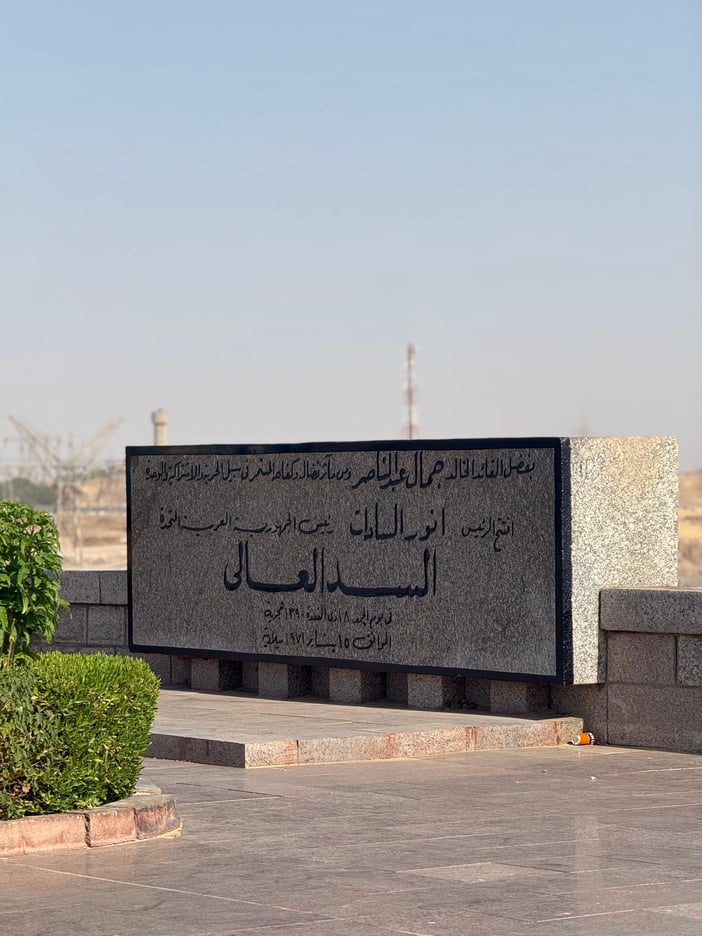
In the 1960s the whole temple was cut apart and rebuilt higher up the cliff: workers sawed the visible surfaces with blades fine enough to leave cuts under 8 millimeters, kept facade blocks under 30 tons, and hoisted the Great Temple 65 meters up and 208 meters back, behind a concrete dome hidden under an artificial hill.
Standing there, you are inside one of the great salvage jobs of the century.
Phone photography is free, and flash is banned inside to protect the ancient pigment. Guides lecture on the forecourt, not within the halls, because regulations forbid speaking inside the temples. Bring a hat for that part; the forecourt has no shade.
It changes how you read the facades: the mountain is the building
Explanations happen outside on unshaded ground, so listen before you enter
No add-on purchase needed at the gate for the main sights
Knowing those three things before you arrive changes the rhythm of the visit: you budget the forecourt time, skip the ticket confusion, and spend your two hours inside the stone.
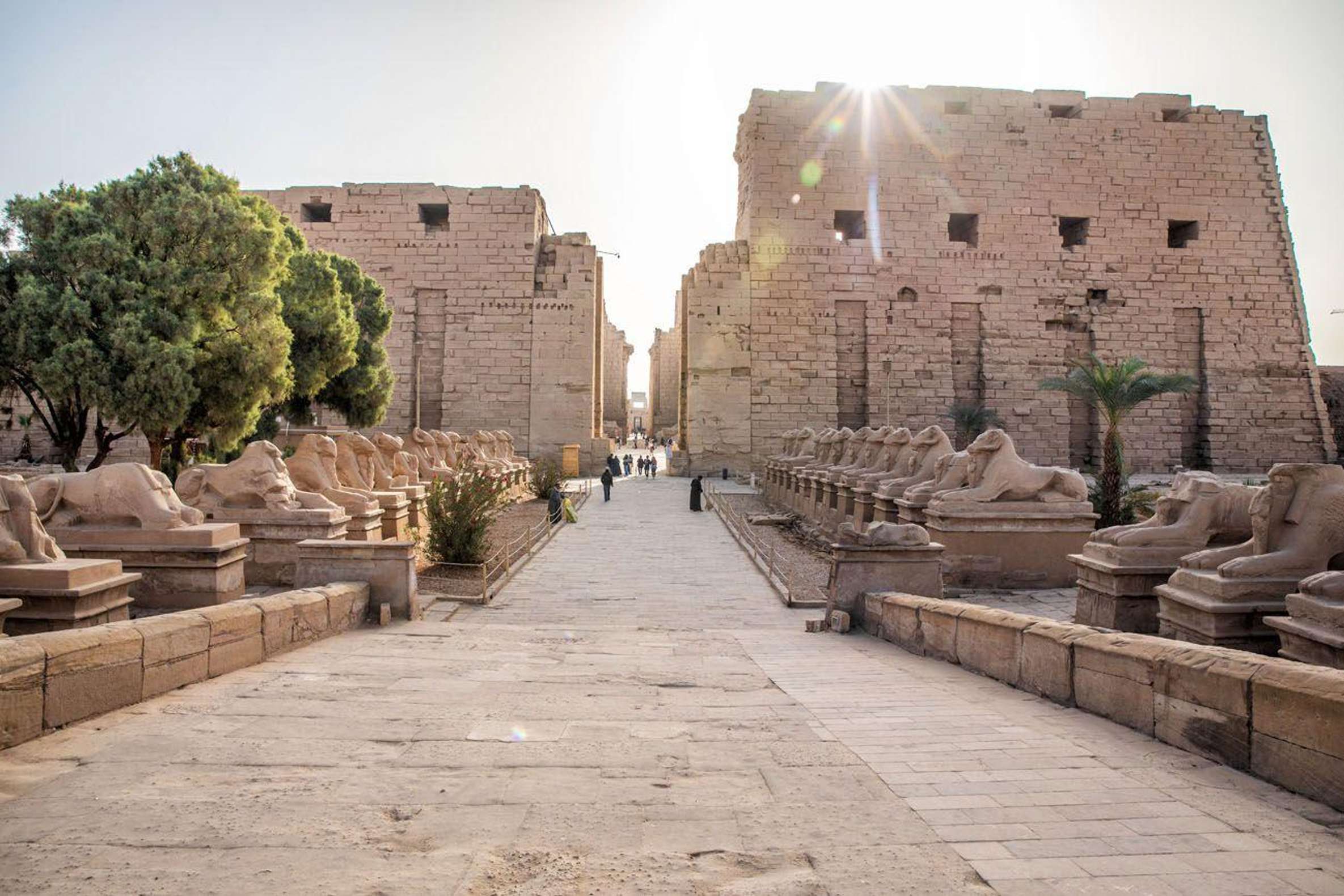
Pick the month and Abu Simbel picks the day for you. From December to February the walking is comfortable and demand is fiercest: flight seats and morning convoy places sell out weeks ahead in high season, so those months reward early booking. November draws the biggest crowds of all.
Summer is the opposite problem. From May to September, afternoon highs average 38 to 41 degrees and regularly touch 40 to 45, and the cliffside grounds have almost no natural shade.
Shelter means the temple chambers themselves, the entrance facilities, or a small cafe by the gate. Guides, barred from lecturing inside, hold forth on that open forecourt, so in summer you want to arrive early and be gone before midday.
November: 5 out of 5 for how busy it gets. The busiest month of the year brings heavy tour crowds and comfortable 29°C afternoons.
Tap a month to read it.
July: highs around 40.6°C. Fierce afternoon heat averaging 41°C keeps visitor numbers down to lighter summer crowds.
Tap a month to read it.
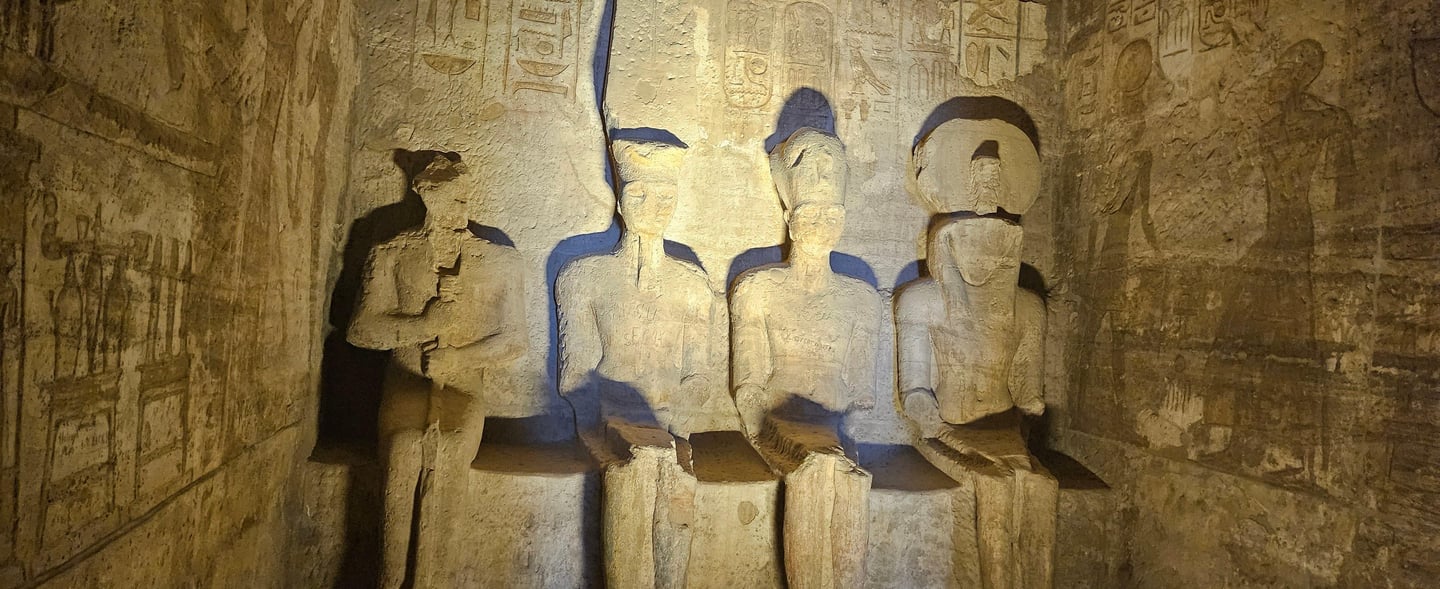
Twice a year the site stages its own show. On February 22 and October 22, dawn light reaches about 60 meters into the inner sanctuary and holds on the statues of Ramesses II, Amun-Ra and Ra-Horakhty for twenty minutes or so, leaving Ptah in shadow.
Sunrise falls near 6:24 am in February and 5:50 am in October. If those dates fit, they are worth building around.
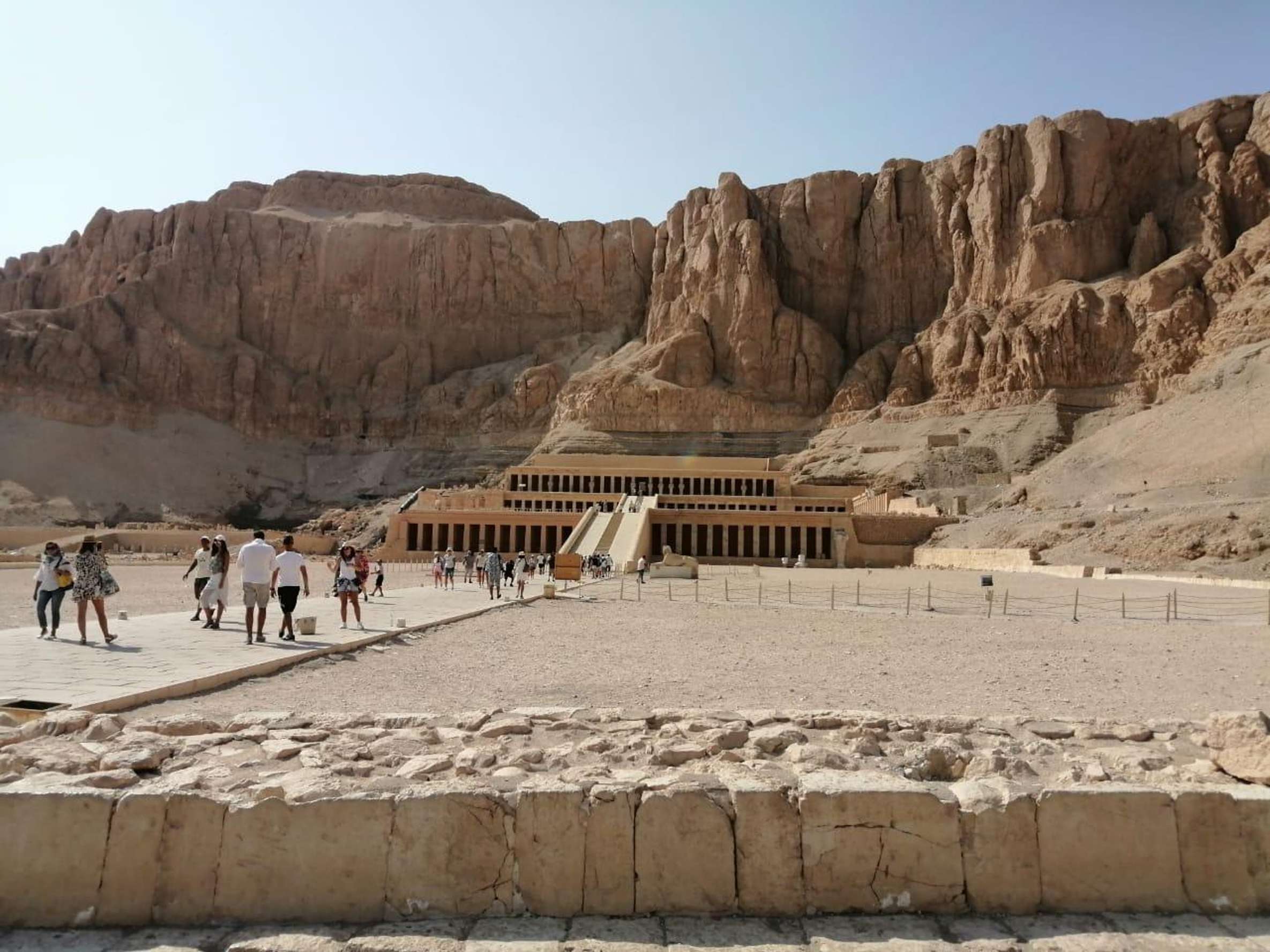
Tempted by a rented car or a hired driver? The drive is real. Leave Luxor before dawn, sit through six to seven hours of highway to Aswan, then push on into the desert toward the temples. Roughly halfway along that last stretch, one roadside rest stop offers toilets, coffee and snacks; after that, nothing.
None of this is casual, and the rules show it. The Aswan to Abu Simbel desert road opens to traffic from 5 am to 5 pm, and the Luxor to Aswan road carries tourist vehicles only between 9 am and 4 pm, a window that alone kills most self-drive day plans.
Police checkpoints line both routes, and officers want the original passport; photocopies are generally not accepted.
Tourist vehicles run under their own protections: speed limiters calibrated to 90 km/h, real-time GPS monitored by the tourism ministry, scheduled technical inspections, and mandated rest periods for professional drivers. The drive is orderly and closely watched. It is also, for a day trip, mostly driving.
Whichever row you pick, the last line is the one the tours follow: base yourself in Aswan, and the early start happens on a rested morning instead of a highway seat.
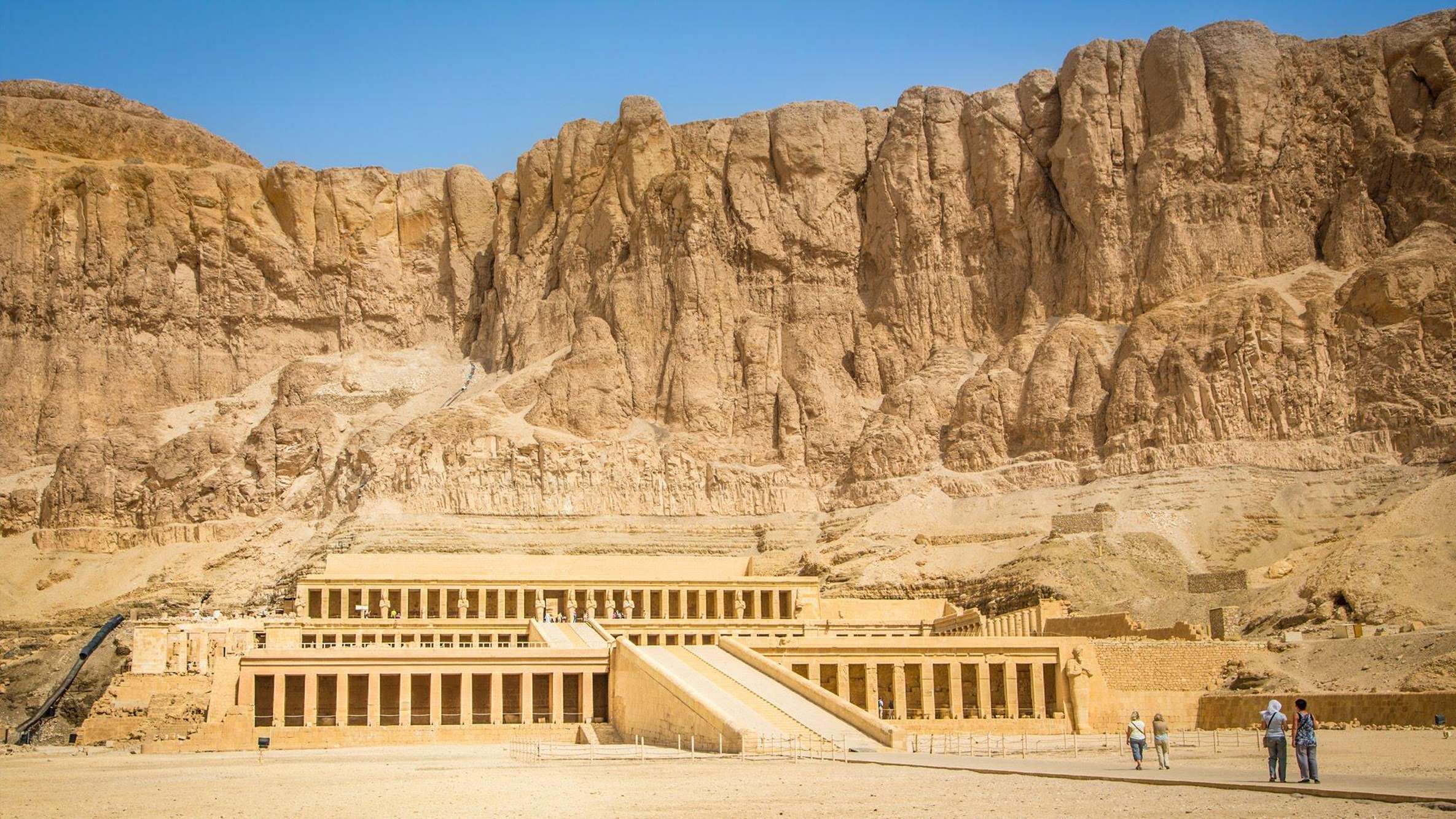
Here is the fact that reroutes everyone: no direct flight links Luxor or Cairo with Abu Simbel. Scheduled non-stop domestic flights reach the temples only from Aswan, and Cairo services stop there en route. So the air-and-road tours that get you there fly into Aswan first and cover the last three hours overland.
Pack for those domestic legs with the local rules in mind. On EgyptAir's domestic routes, checked luggage is limited to one piece of up to 23 kg and 158 cm, and economy carries 8 kg on board.
Anything over 32 kg is refused outright. If you are pairing a Nile cruise with flights, that allowance matters more than your airline's international one, because the domestic ticket is the one that enforces it.
The routing has a quiet reward: with a night already spent in Aswan, your Abu Simbel morning begins from a bed, not from a highway seat.
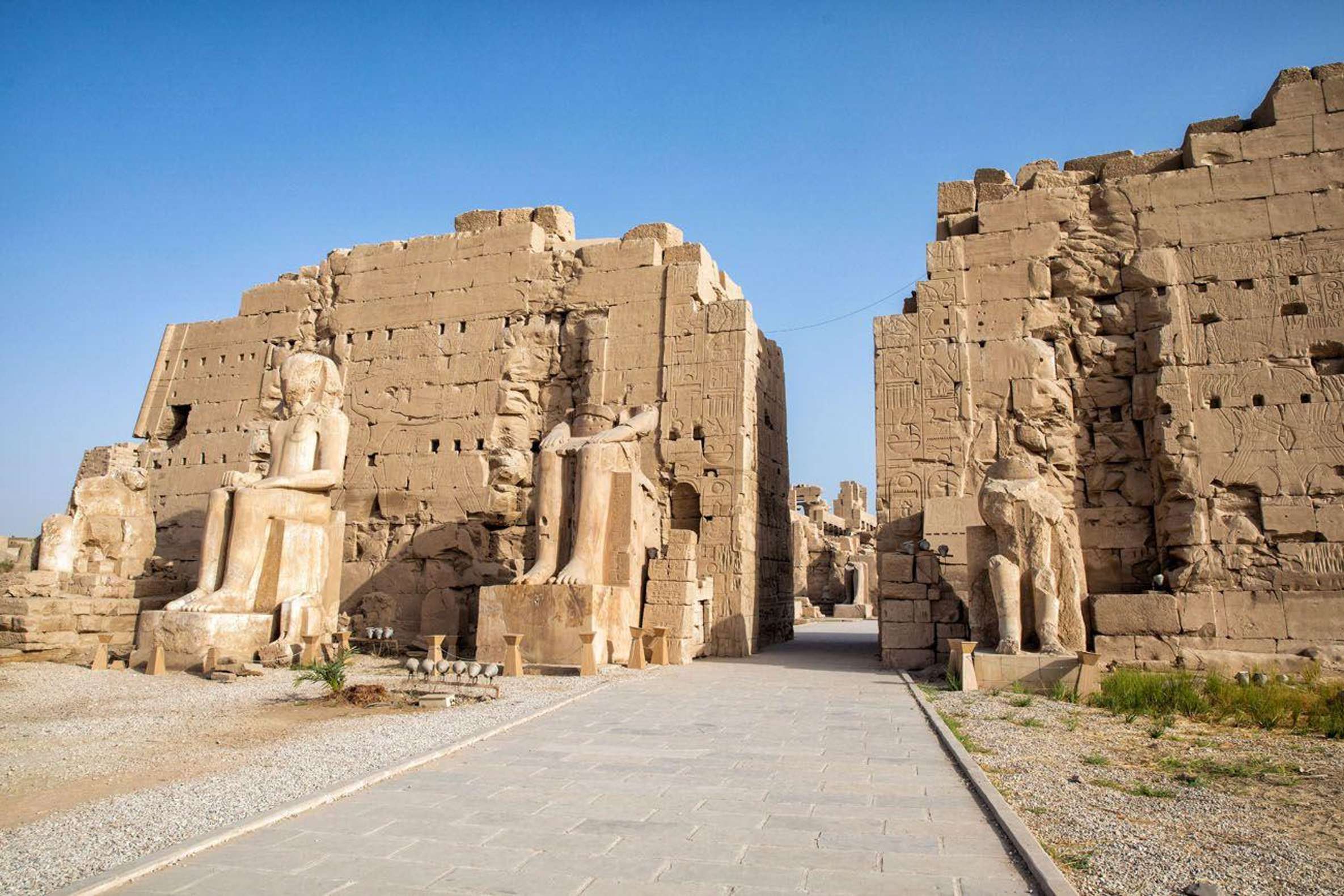
No single-day Luxor departure is sold here, so the real choice is between two-day plans and something longer.
The From Cairo: 2-Day Abu Simbel & Luxor Tour spends day one on Aswan, Philae and Abu Simbel, sleeps in a 4-star hotel with breakfast, then gives day two to Luxor's East and West Banks, with all domestic flights, transfers, guide and entrance fees in the price.
The Cairo: 2-Day 1-Night Luxor, Aswan, and Abu Simbel by Flight is fully private, with your own air-conditioned vehicle and bottled water included, and it cancels free up to 24 hours out, where the first tour asks three days' notice.
For tighter schedules, a cruise works differently: its fixed timetable does not compress, so four days is the realistic floor. Both two-day tours protect the Abu Simbel morning by sleeping in Aswan the night before, which is what the logistics demand.
The checklist below scores the recommended tour on each point worth weighing.
| Check | Why it matters | Our pick |
|---|---|---|
| Is Abu Simbel in the itinerary at all | Some Luxor-only tours skip it; check before booking | Yes, a full dedicated day at the temples |
| Road or flight routing | Flights cut hours off the transit | Domestic flights Cairo, Aswan and Luxor all included |
| Where you sleep the night before | An Aswan night saves the 3 am desert start | Overnight in a 4-star Aswan hotel with breakfast |
| What the price covers | Entrance fees and meals add up on the ground | Fees, lunch, guide and transfers all included |
| Cancellation room | Weather and flights can shift | Full refund up to 3 days before |
Scored line by line, the two-day tour answers the four questions that decide the booking: the temples are in the itinerary, the flights are included, the Aswan night is booked, and the fees and meals are already paid.
The restful version of this trip floats. A four-day, three-night sailing from Aswan to Luxor, the standard shape, puts Abu Simbel at the start as an early-morning excursion from the Aswan mooring, then adds Kom Ombo, Edfu and Luxor's banks as the ship moves north.
On the From Cairo: 4-Day Nile Cruise to Luxor with Balloon Flight, flights from Cairo, three nights of full board on a five-star ship and a sunrise balloon over the West Bank are all part of the package.
Know what full board means before you count your cash: breakfast, lunch and dinner are covered, while drinks, water included, are billed to your cabin.
And do not try to bend the schedule; the sailing runs on its own clock, and travelers who accept its early mornings report the full program pays them back. For a first Upper Egypt trip, this is the version where someone else drives the whole time.
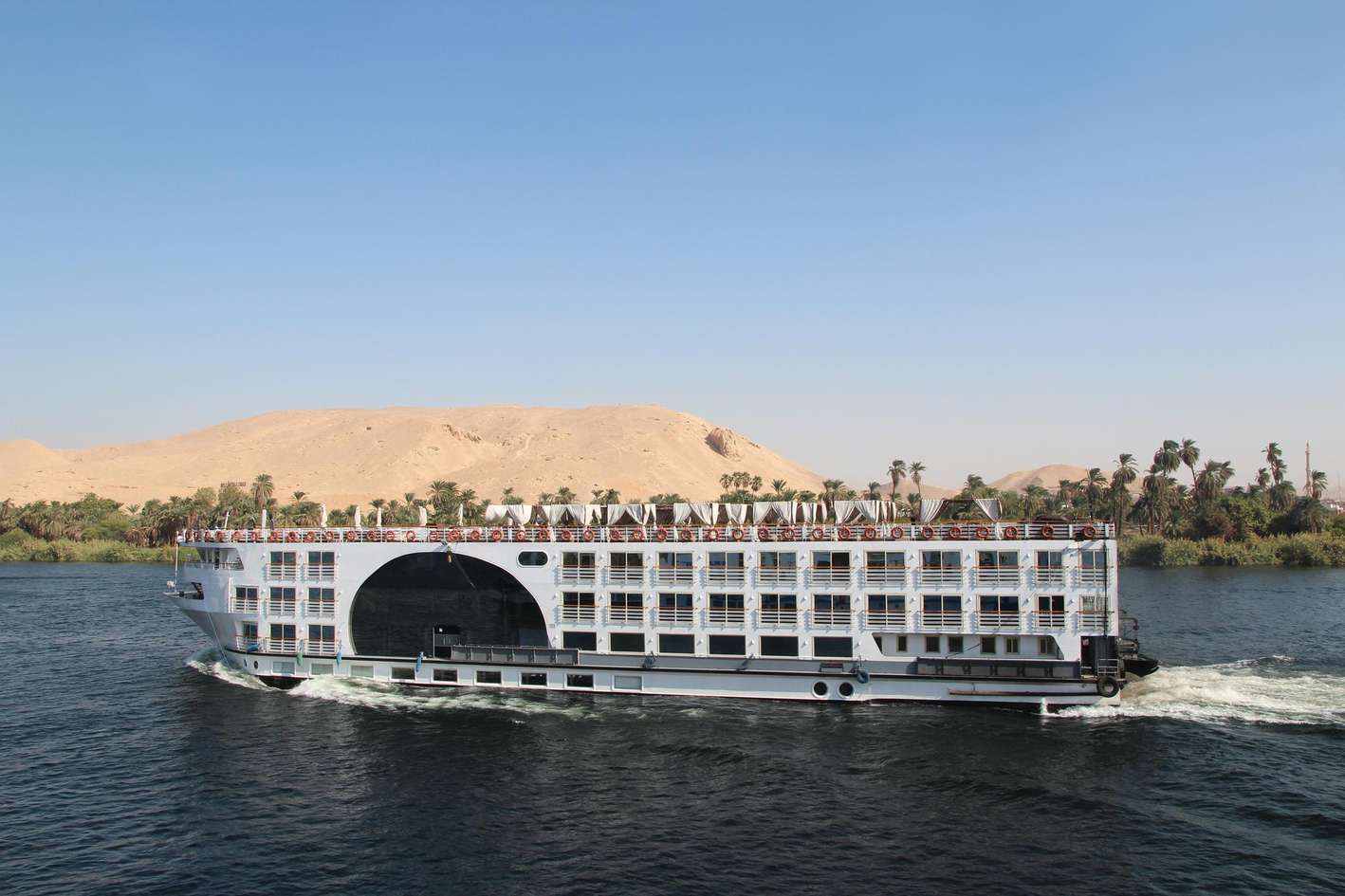
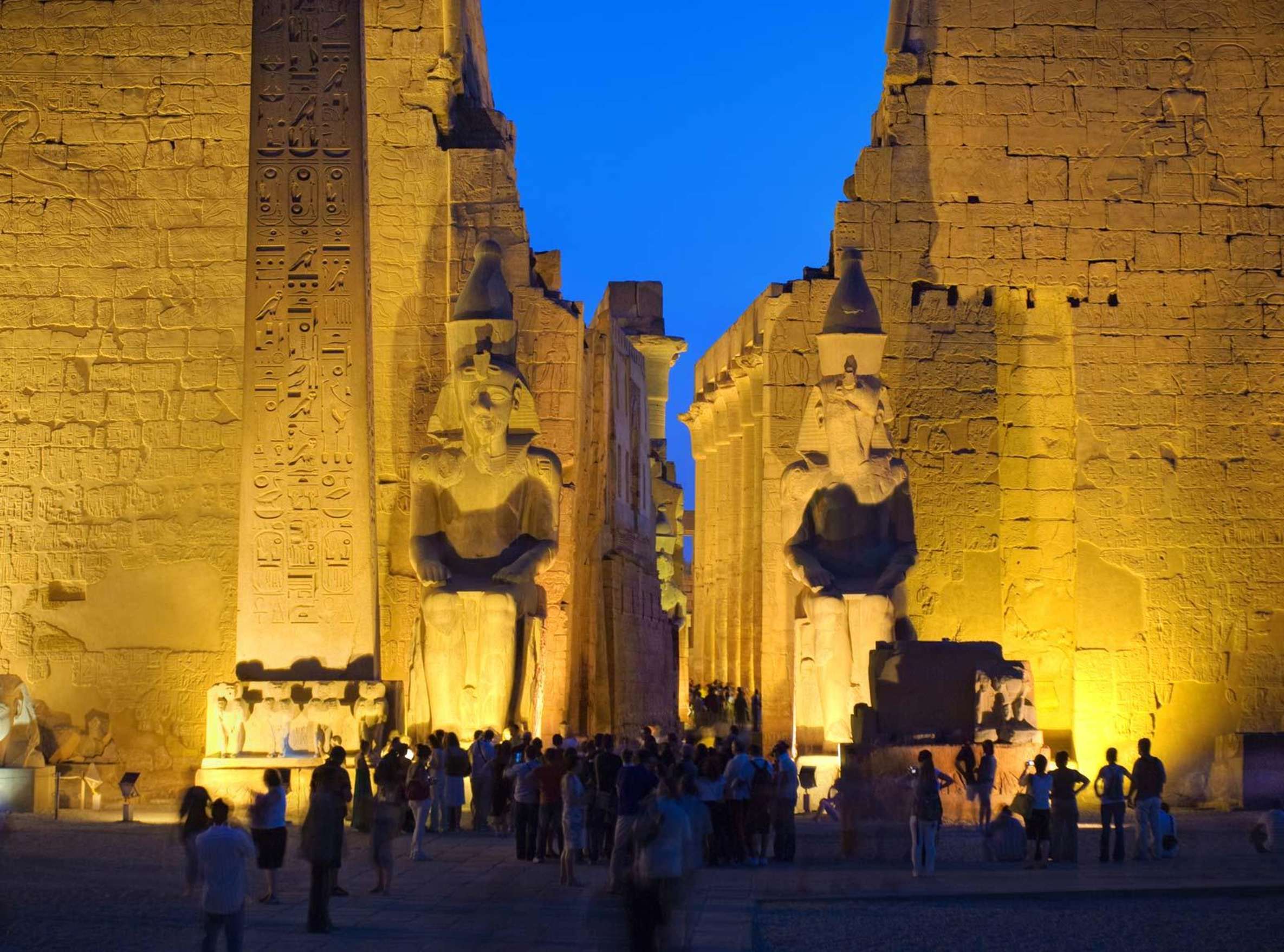
Packing for this trip splits in two. The temples themselves are cashless: entry tickets at Abu Simbel are card only, so the bank card in your own name matters more than a stack of bills at the gate.
Small Egyptian notes still earn their place for the toilet attendants and the tips drivers and guides expect, since change for large bills is hard to come by.
Documents come next. Domestic flights need a passport valid six months from arrival and a full Egyptian tourist visa; a Sinai-only stamp will not get you on a plane to Luxor or Aswan. On the road legs, checkpoints want the physical passport too.
| If this happens | What happens then |
|---|---|
| EgyptAir causes you to miss a confirmed connection | Rebooking on the next available service, rerouting, or a refund, at no extra charge |
| Air Cairo delays your flight over two hours | Full refund or a free flight change |
| Air Cairo causes a missed confirmed connection | Rerouting or rebooking with no extra charge |
| Airport check-in | Counters close 30 minutes before departure; online check-in closes earlier, 90 minutes on EgyptAir |
None of that turns into a lost day if you build slack around flight days, which is what the multi-day tours already do.
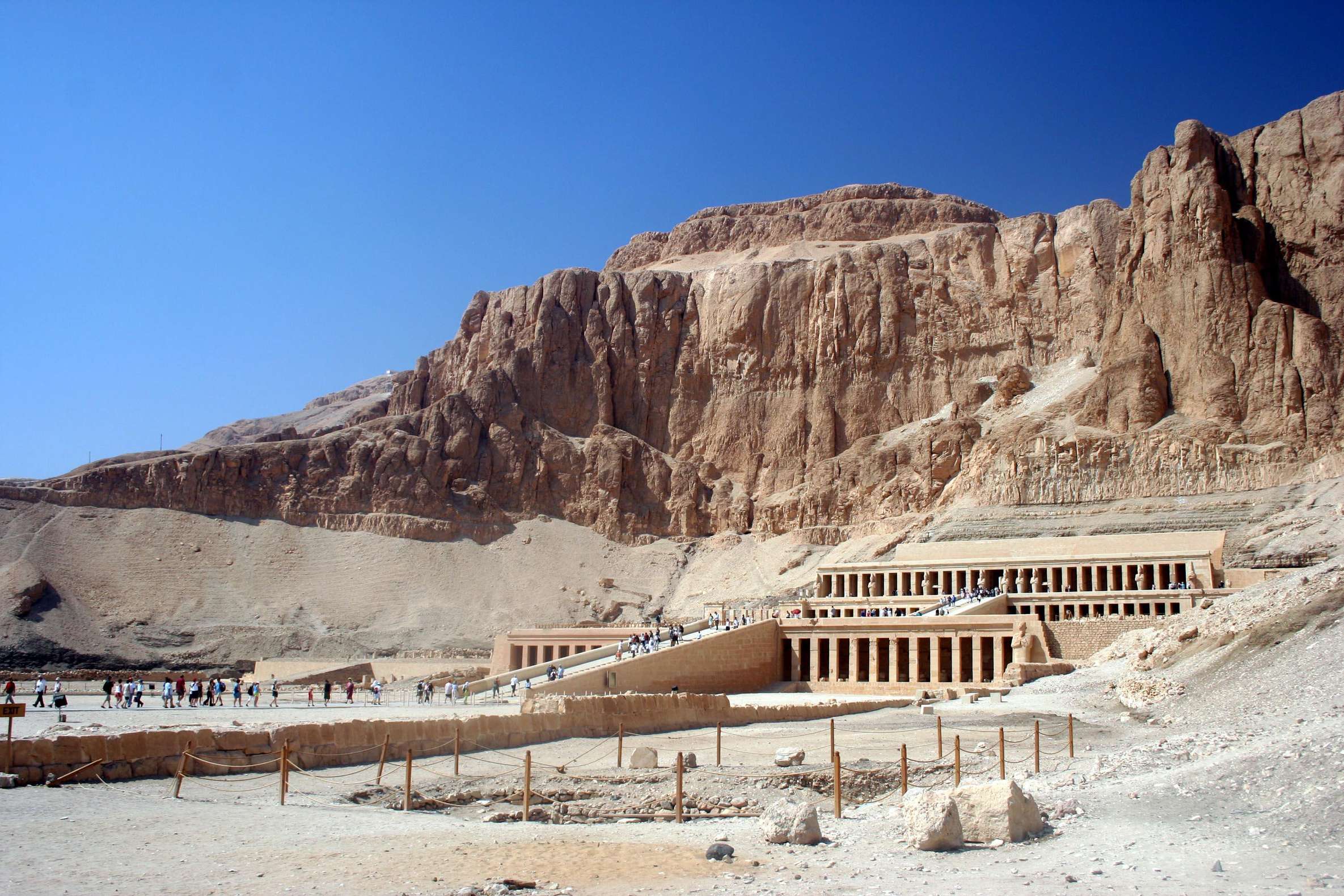
Once Abu Simbel sits where it belongs, on a rested morning out of Aswan, the days around it write themselves.
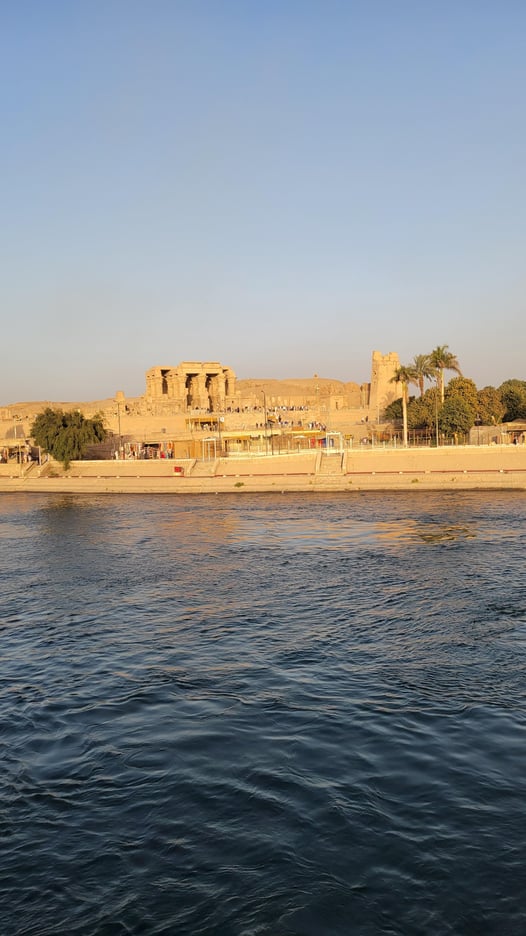
The road between Aswan and Luxor breaks naturally at Kom Ombo and Edfu, two river temples that make the drive feel like part of the sightseeing instead of a transfer. The cruise tours fold both stops into the sailing; road travelers can ask for the same detour.
Your trip begins in Cairo, though, and the hours around your hotel there can fill themselves before the flight south. Most of the departures on this page start from central Cairo, where good stops sit within a short walk or drive.
A free afternoon in the city, an Egyptian Museum visit a few minutes from the hotel, and the desert week settles into place. Give Luxor its due as well.
The highlights there are spread out, and two days, one for each bank, cover them properly, while three full days let you keep Karnak and Luxor Temple together, take the Valley of the Kings and Hatshepsut's temple on a second day, and leave the southern West Bank for a third without rushing.
The West Bank is the hot, exposed half, so start it early.
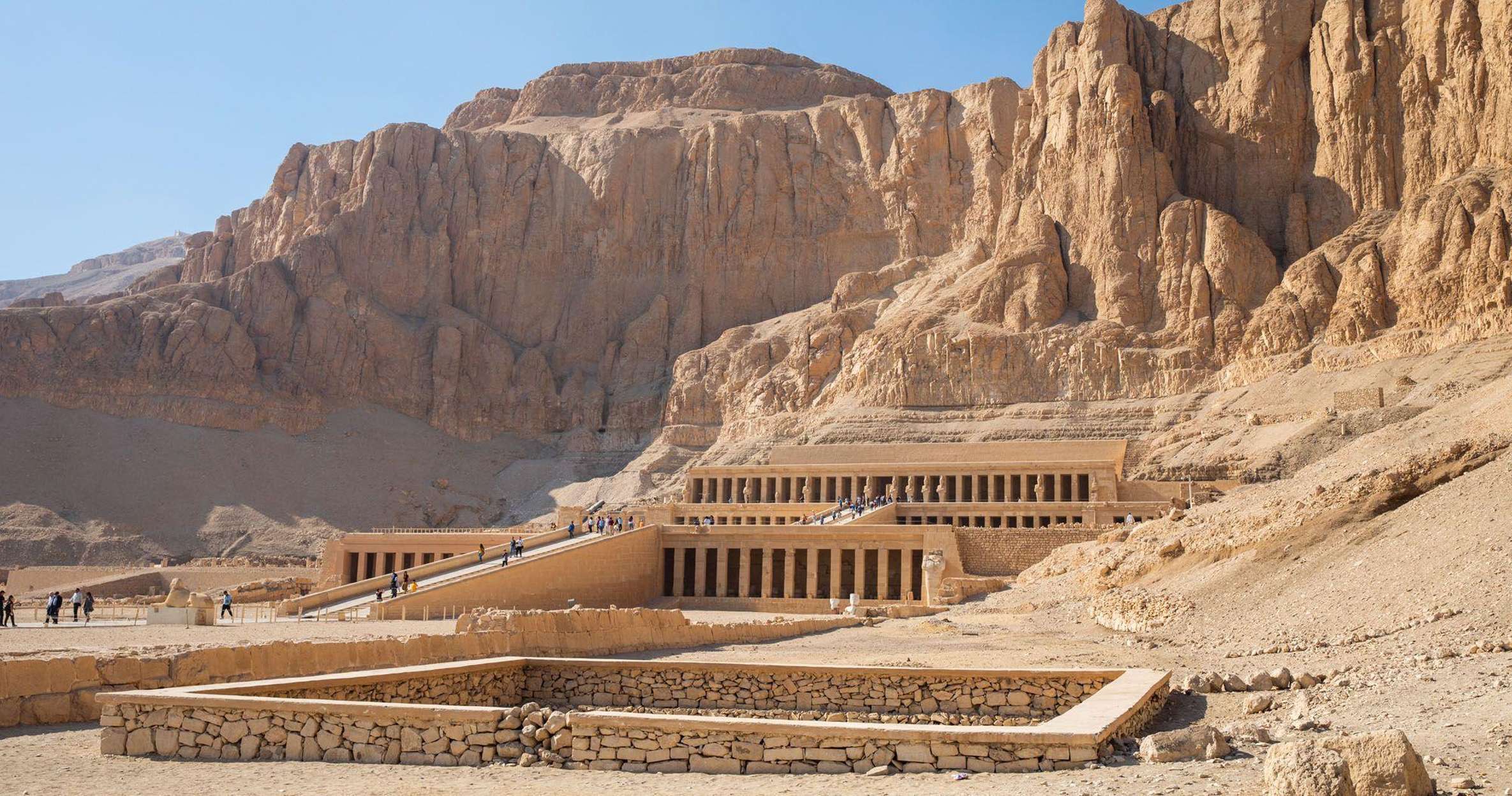
A one-day Abu Simbel run from Luxor is a 14-to-16-hour desert round trip, so the trip works best split: a night in Aswan before the early start, flights where they run, and Luxor given its own day.
Book the two-day tour if you are short on time, the cruise if you would rather the river do the driving.
Straight answers on the drive, the tickets and the two-day tours that get you there without a marathon.
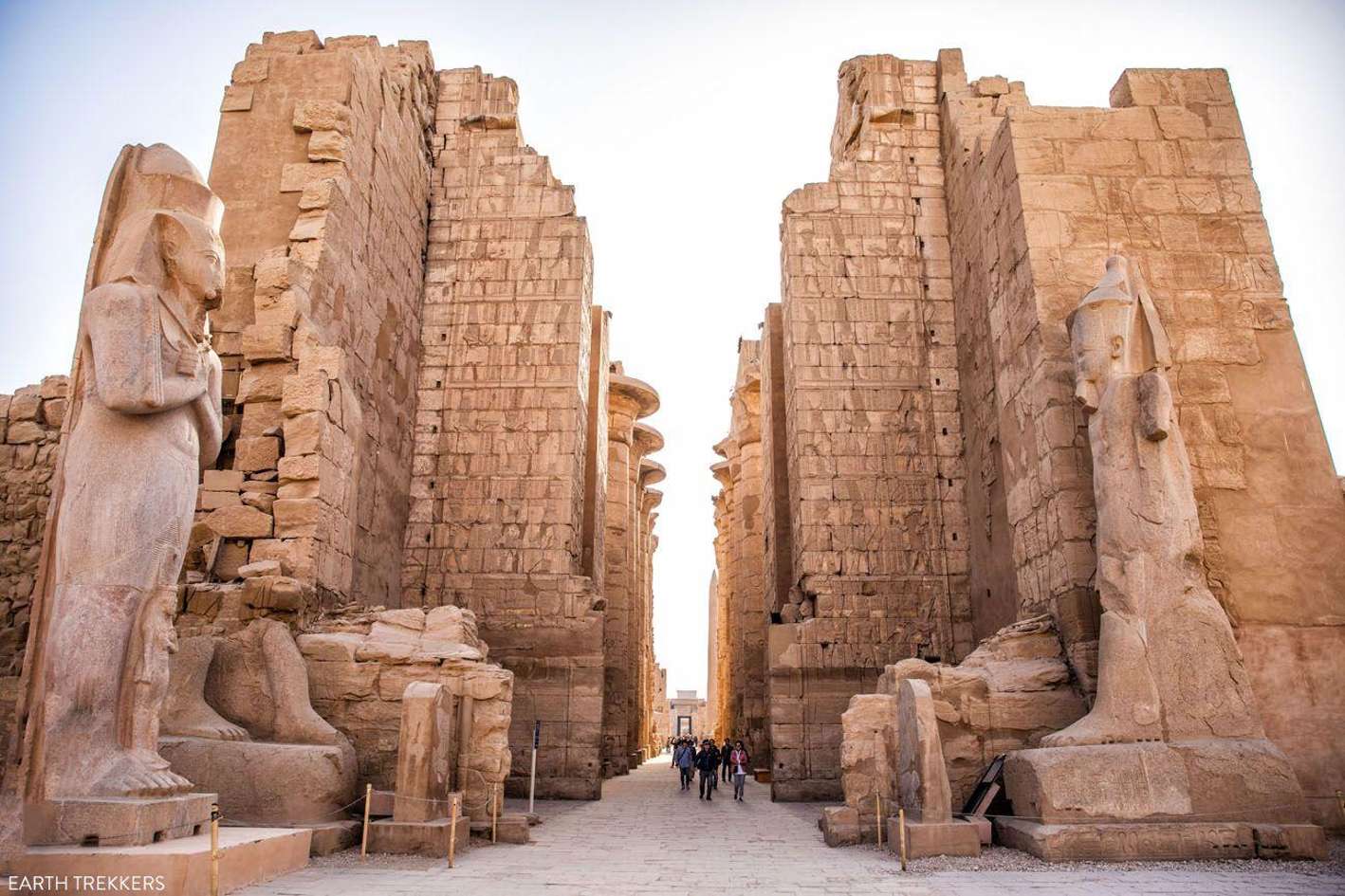 Luxor2026
The road south runs about 480 km each way through Aswan, so a private driver needs a departure between 3 am and 4:30 am, and the round trip eats 14 to 16 hours.
The Luxor to Aswan stretch also opens to tourist vehicles only from 9 am to 4 pm. The tours on this page solve it by splitting the journey across two days with a night in Aswan.
Each one starts with a domestic flight from Cairo to Aswan, then a road transfer south along the desert highway, where vehicles pass monitored police checkpoints and passports get presented. From Cairo, the trip is a short hop in the air followed by a few hours on the road.
Day one covers Philae Temple, the High Dam and Abu Simbel itself, with a night at a 4-star hotel in Aswan and breakfast. Day two moves to Luxor for the East and West Banks, including the Valley of the Kings. Domestic flights, transfers, entrance fees, a guide and lunch are all in the price.
Plan on 1.5 to 2 hours on site. The Great Temple of Ramesses II takes about an hour to an hour and a half, and the smaller Temple of Hathor for Queen Nefertari another 30 to 45 minutes.
Yes. The card machines at Abu Simbel take bank cards only, so bring yours. Cash gets you nowhere at the ticket counter, though small Egyptian pound notes are still handy for tips to guides and drivers along the way.
Karnak and Luxor Temple are block-built and stand close together in a busy temple zone. The two temples at Abu Simbel were hollowed straight out of a natural cliff and sit alone beside a quiet lake, so the setting feels far more isolated.
Tours leave before breakfast, so pack your own snacks and drinks. On the road to Abu Simbel there is a rest stop roughly halfway with toilets, coffee and simple refreshments, but the time at the temples is short and no cafeterias wait at the site.
It does. The small temple next to the Great Temple is part of the visit, and it is worth the stop: Nefertari's colossal statues stand at the same height as Ramesses II's, which broke with the Egyptian convention of showing queens smaller.
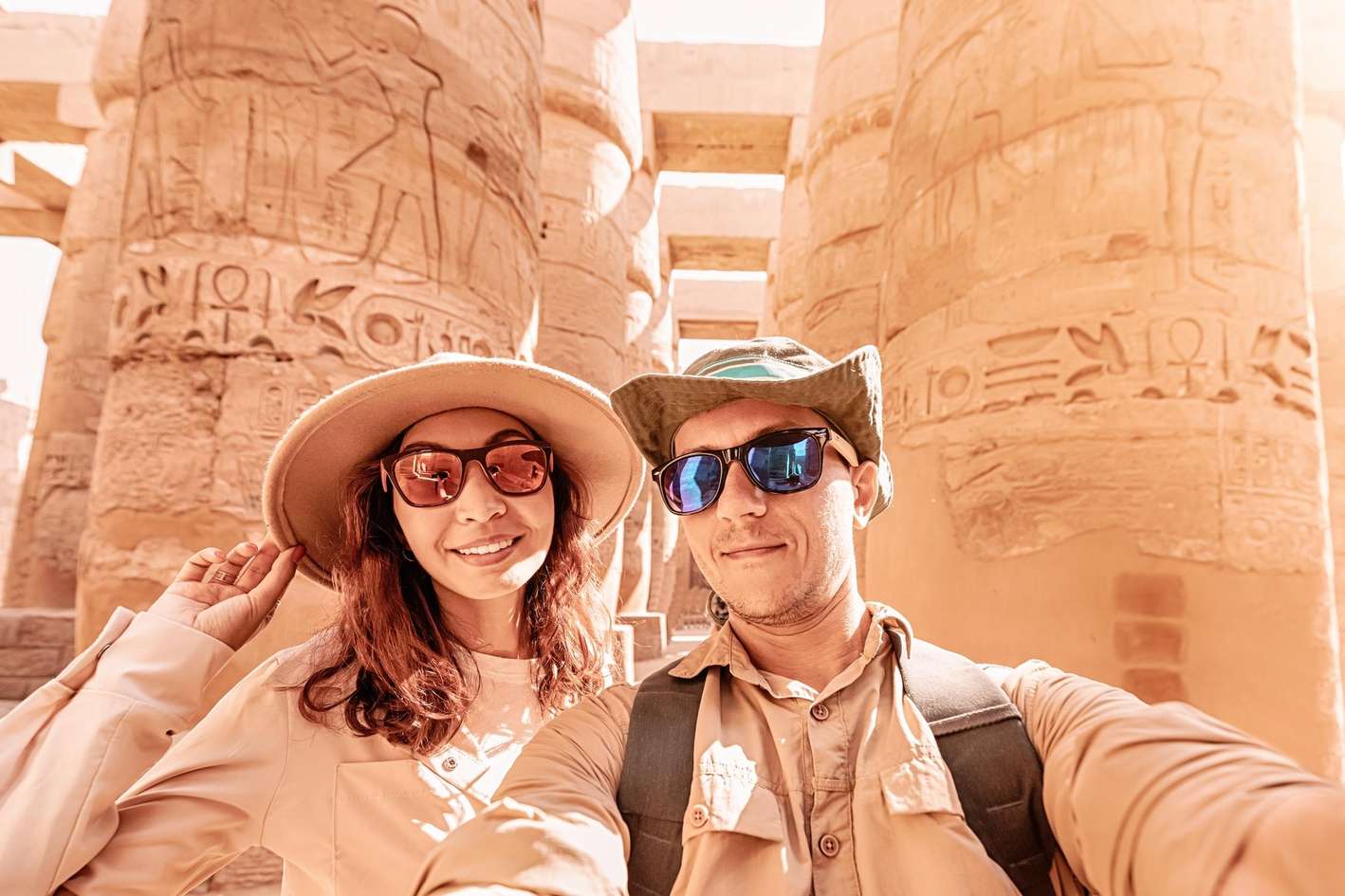
See what a single day in Luxor can actually hold, from Valley of the Kings to Karnak, before you fix your schedule.
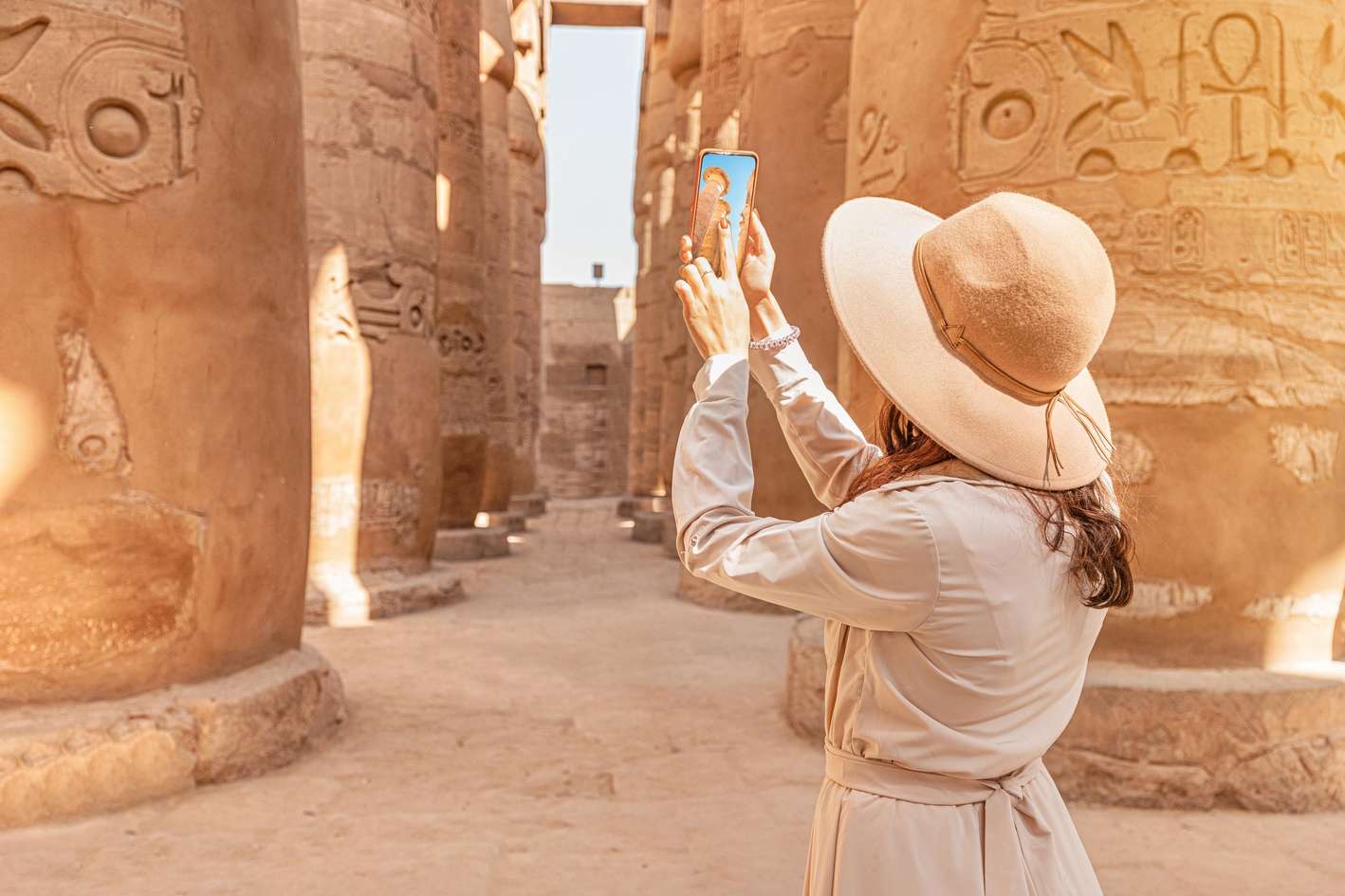
Staying on the Red Sea instead? This page compares plane trips and small-group tours from Hurghada to Luxor's monuments.
Marsa Alam beachgoers get the same clear-eyed look at driving times, departure hours and guided day options for Luxor.
From Sharm el Sheikh, only a flight makes a Luxor day work; here are the schedules and guided tours that do.
Philae and the High Dam sit closer to Luxor than Abu Simbel does; see how an Aswan day trip from Luxor runs.
Want the West Bank at your own pace with an Egyptologist? Compare what a private full day in Luxor covers.
Cruises cover Luxor, Aswan and Abu Simbel without rebooking hotels; start with how packages from Cairo work.
Sailing between Cairo and Luxor takes well over a week, so short boat trips link the two by air; see the options.
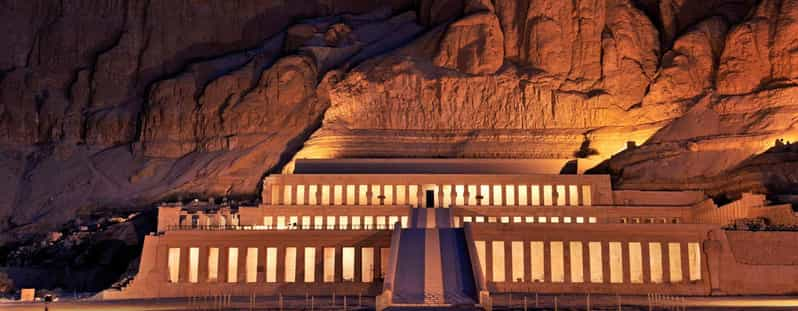
Aswan lies further upriver than Luxor; this page explains what a Cairo to Aswan sailing involves and where it stops.
The classic downriver sailing pairs an early Abu Simbel morning with three or four nights on the water; compare it here.
Short on dates? See how one- and two-night cruise formats fit Luxor and Aswan into a tight itinerary.
For a relaxed evening on the water in Cairo itself, the two-hour dinner cruise page covers boats, menus and showtimes.
Flight, sleeper train or road transfer? This page weighs every way of covering the 650-odd kilometres to Luxor.
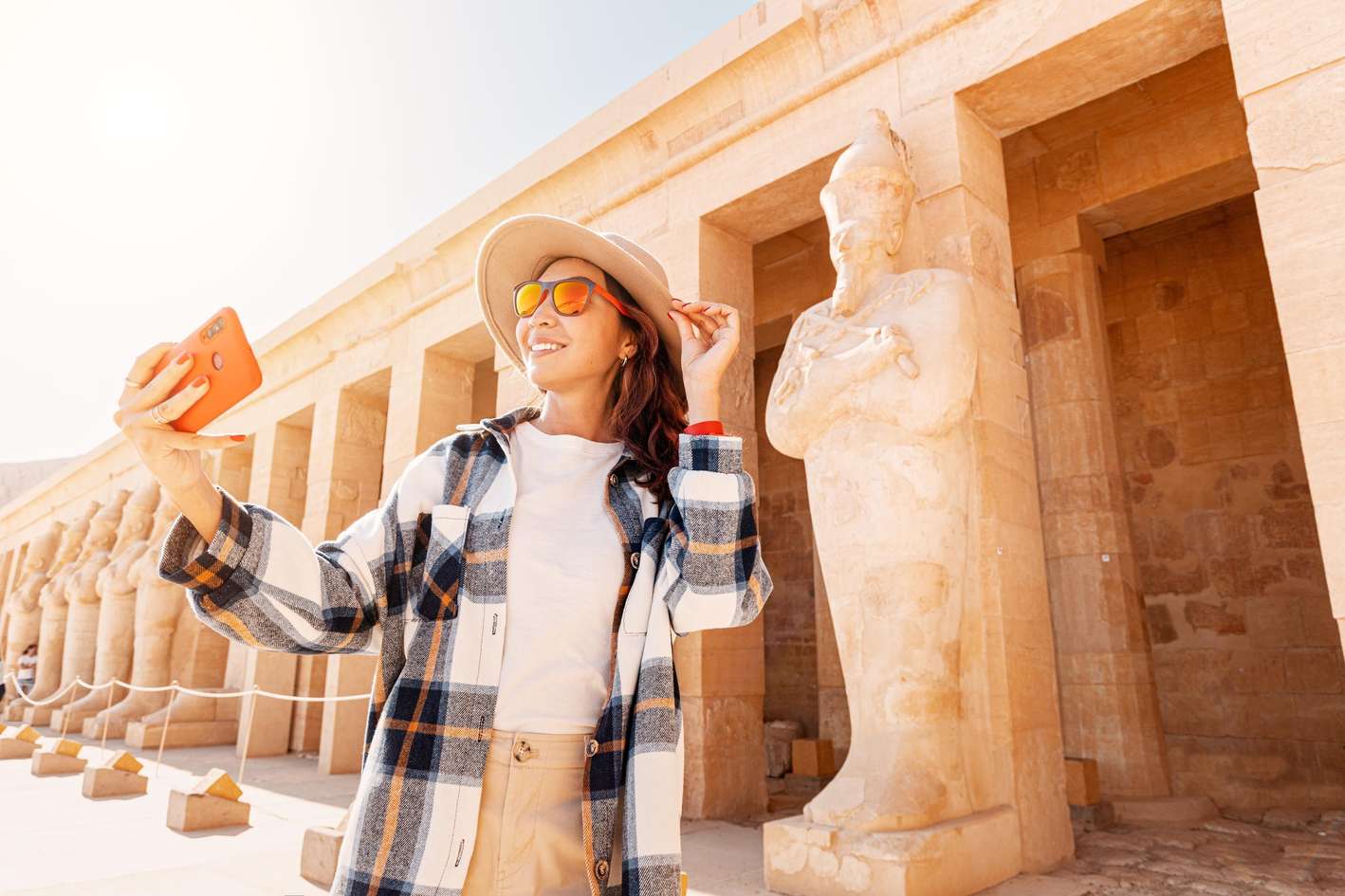
Domestic seats to Luxor sell out in high season; check schedules, flight times and booking windows before you commit.
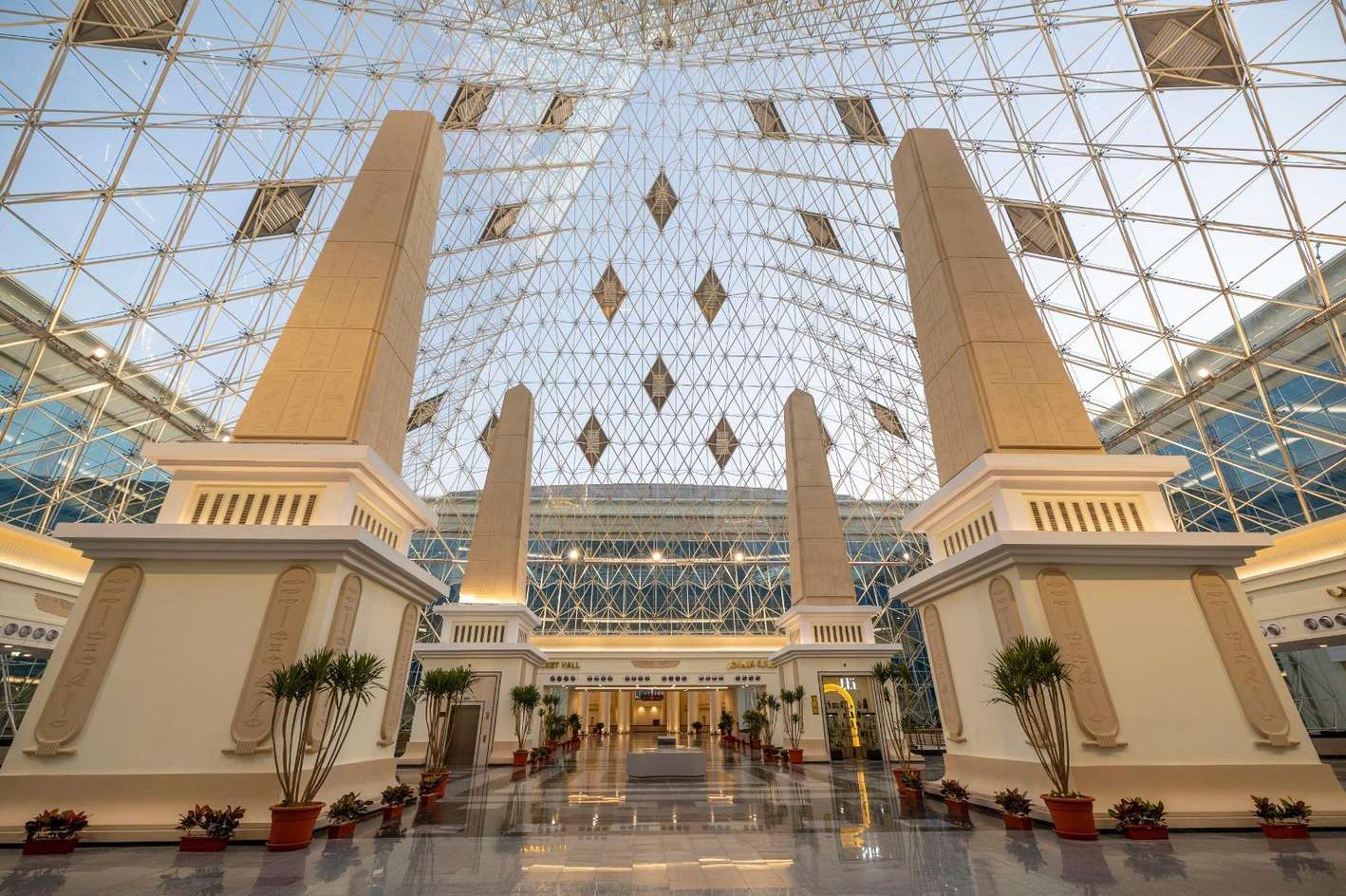
The overnight train saves a hotel night and delivers you south by morning; see routes, cabins and ticket rules.
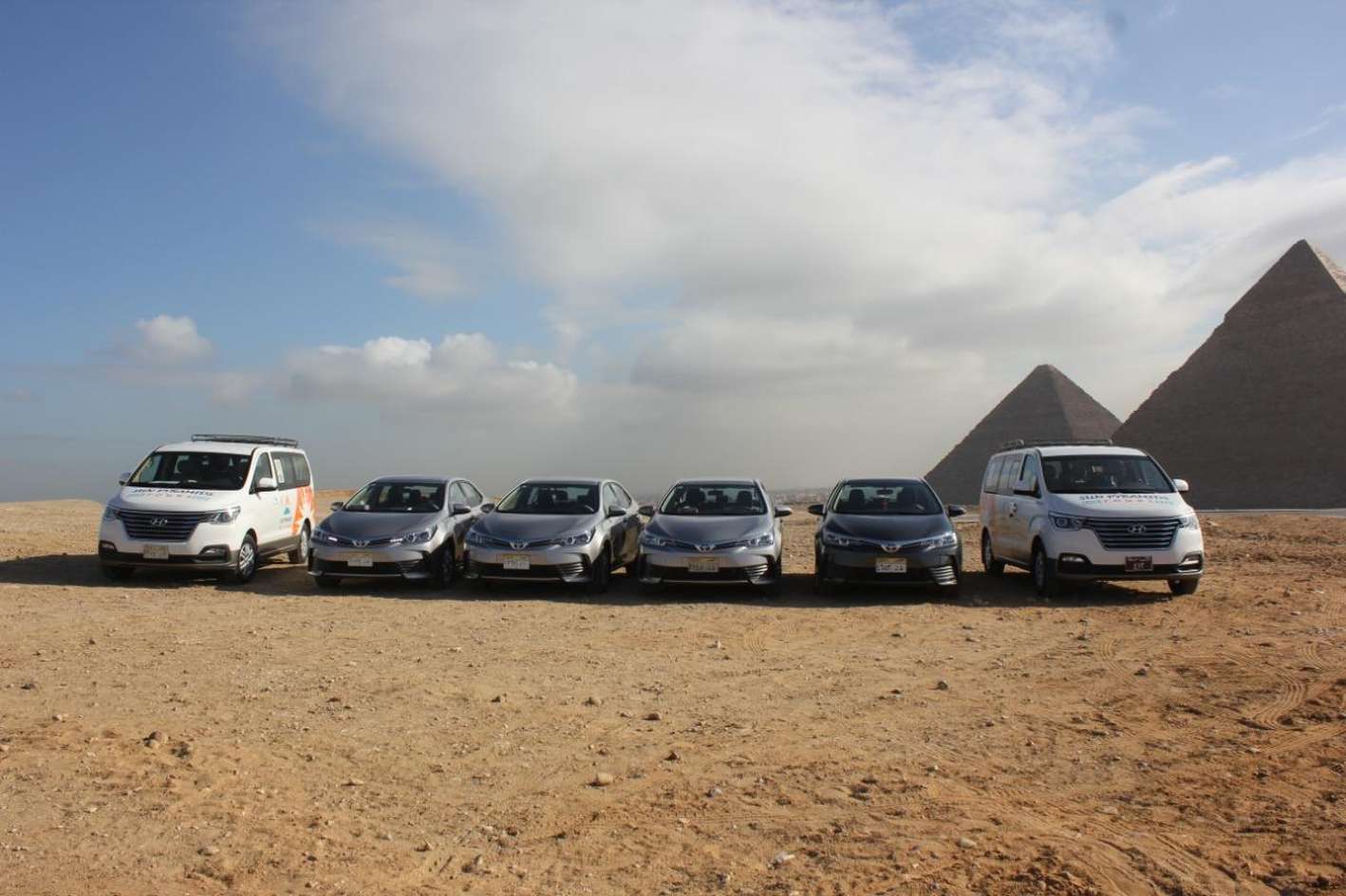
Prefer door-to-door ground travel? Compare private transfer times, vehicle standards and what the desert road costs in hours.
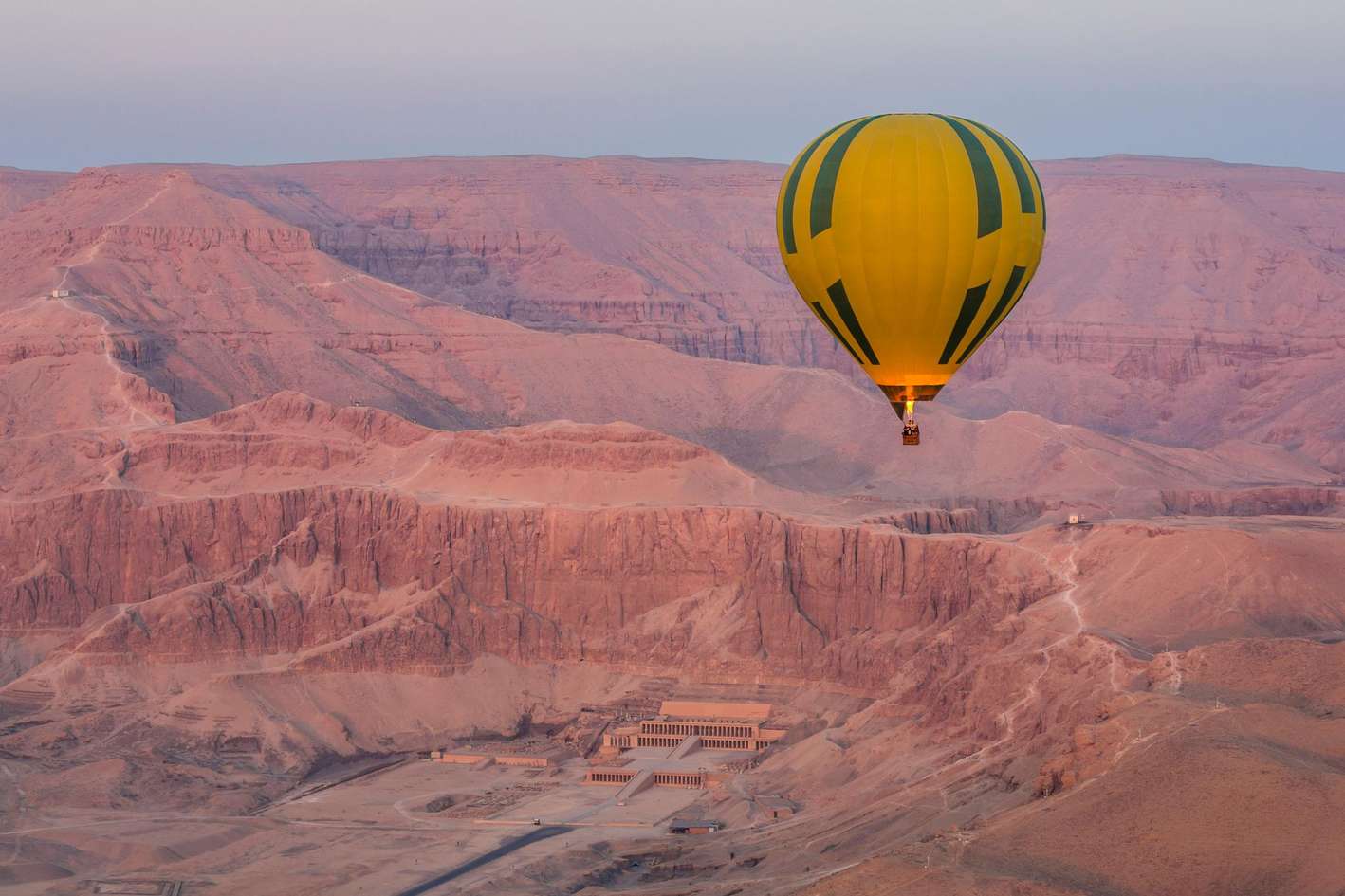
A dawn balloon over the West Bank pairs well with any Abu Simbel plan; see age rules, weather limits and flight options.
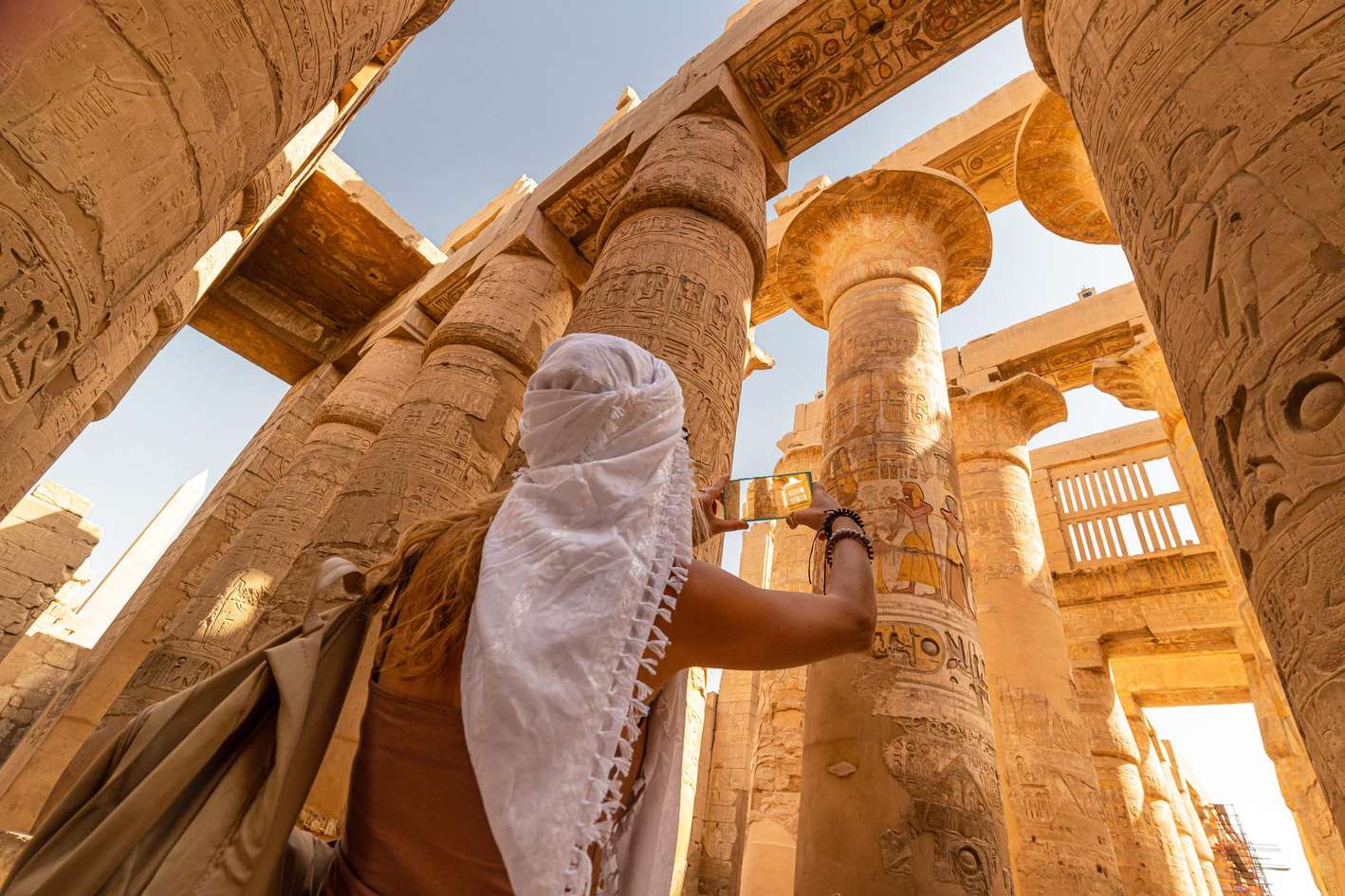
Karnak deserves more than a rushed stop; opening hours, ticketing and sound and light times are laid out here.
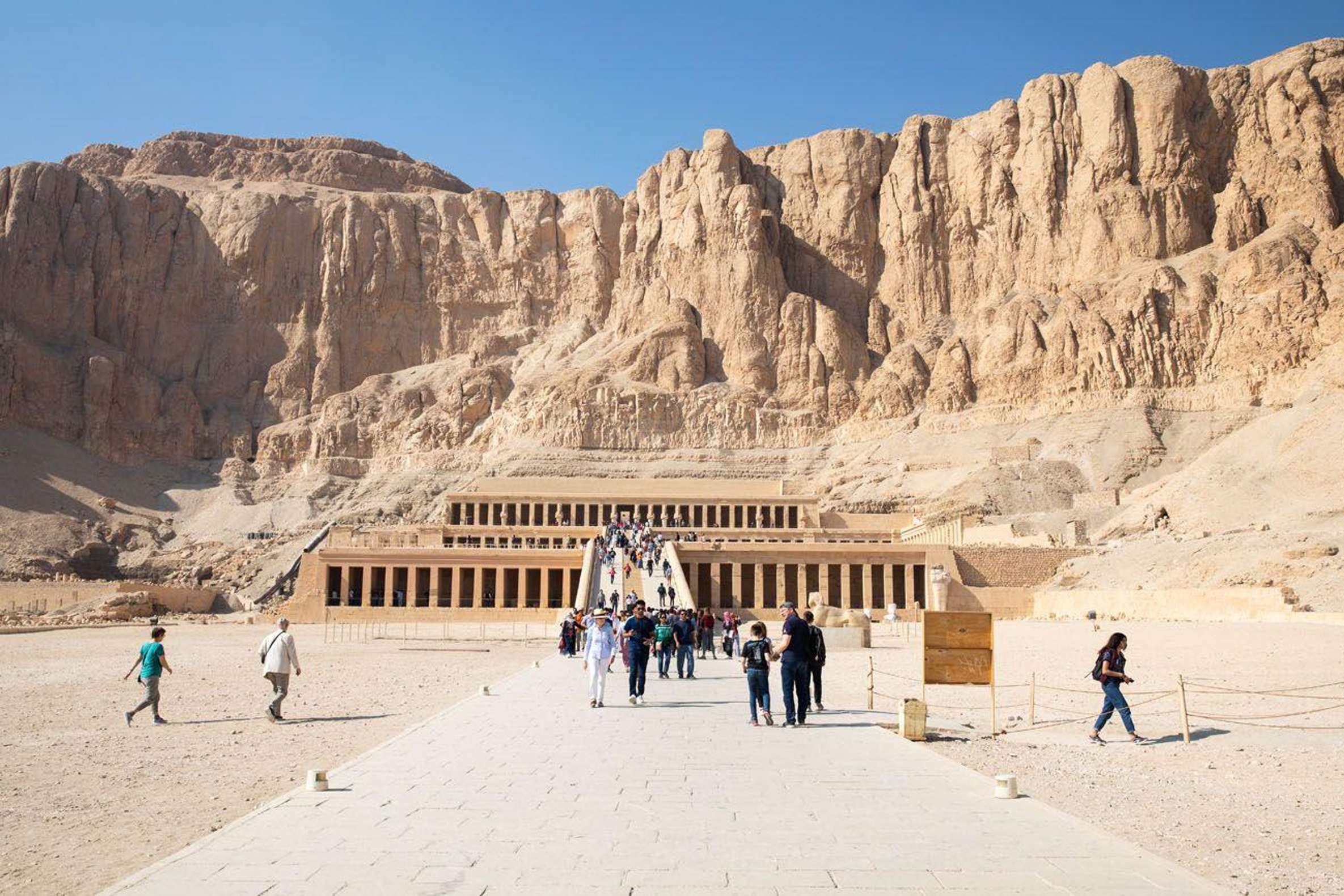
Flights, hotels, guides and entry fees are all arranged for you, and you can cancel up to 3 days ahead for a full refund.