Nile River Cruise from Cairo to Aswan -Route Details, Stops & Sailing Dates
Book your Nile river cruise from Cairo to Aswan the practical way - a flight-and-cruise package with domestic flights, hotel transfers and a 3- to 5-night river ship past Kom Ombo and Edfu. Guides, meals and door-to-door coordination come handled, so you skip the 13-hour train and the logistics.
“For history and art lovers wanting to dive deeper into ancient Egypt, this cruise is perfect. Everything flawlessly organized, transfers, visits, ship. Guide Mahmoud passionately explained ancient Egypt's wonders.”
Cruise length3 to 4 nights between Luxor and Aswan
Total duration4 to 8 days
Best monthsNovember through February
Tours for a Nile River Cruise to Aswan
No ship sails the full route between Cairo and Aswan in a few days, so every package here pairs a domestic flight with a 3- or 4-night cruise between Luxor and Aswan.
Our top pick
★ 3.6 (40) · 5 days · English
From Cairo by Plane: 5 Days & 4 Nights Nile Cruise to Luxor
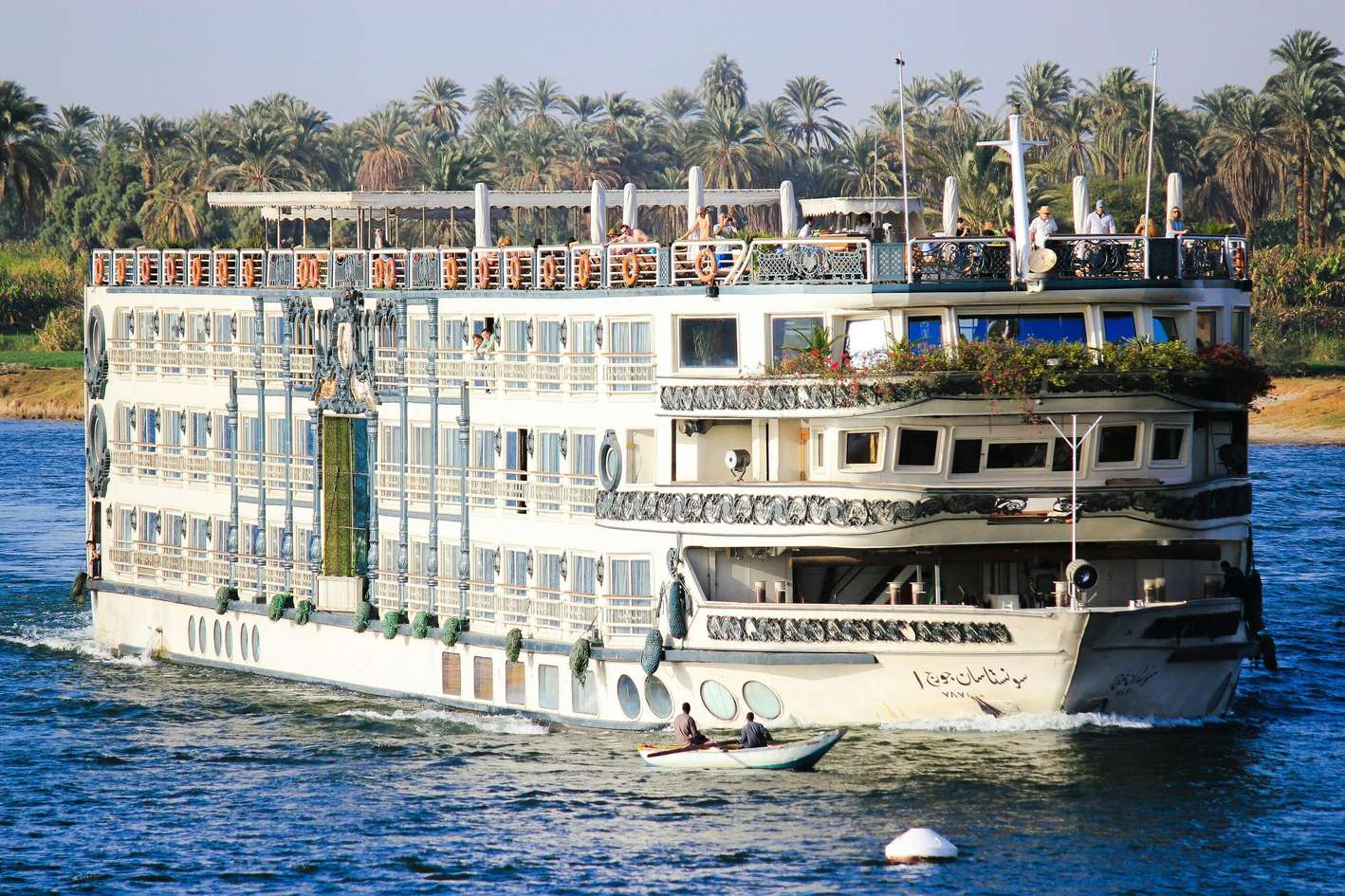
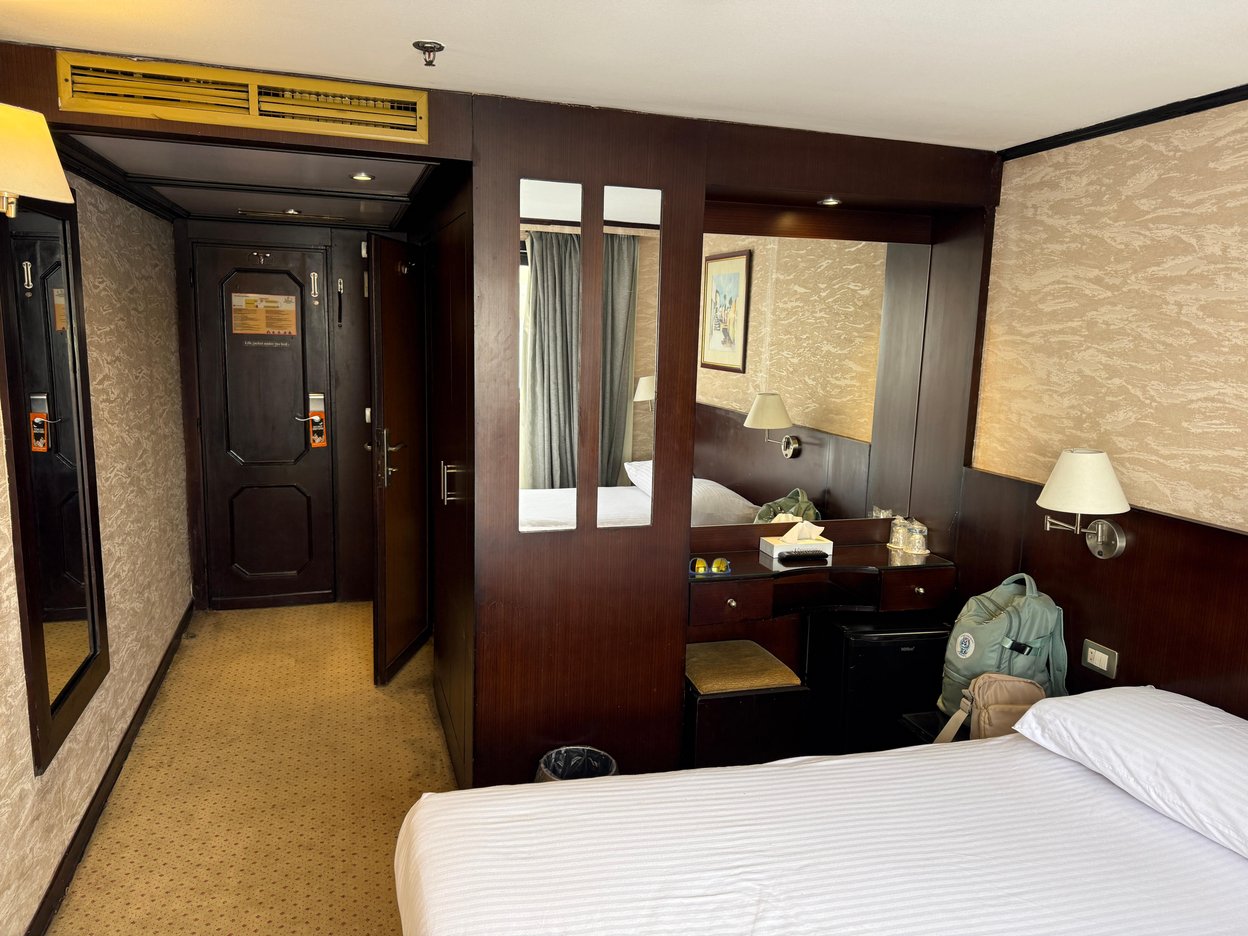
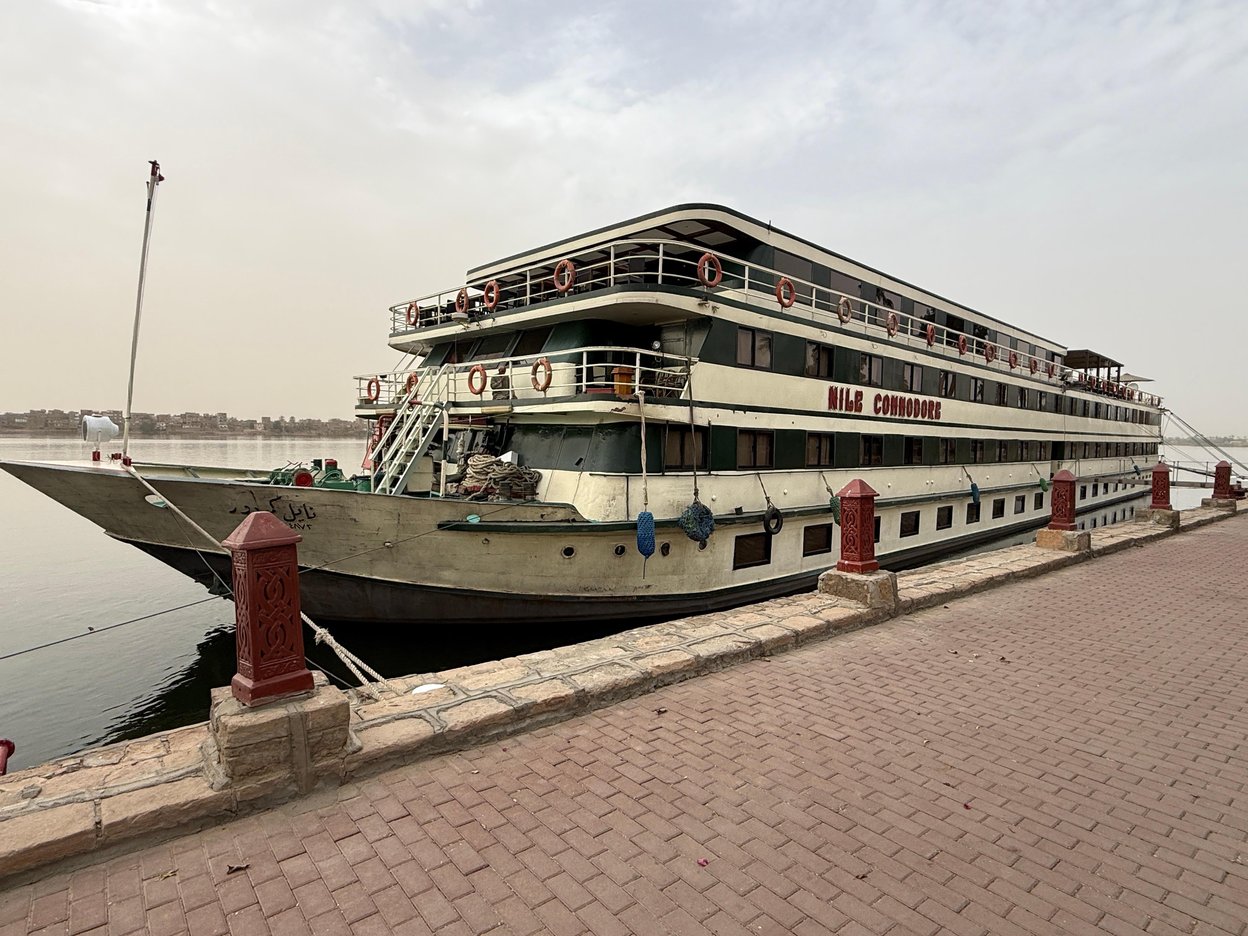
Flight from Cairo to Luxor & from Aswan to Cairo5 days and 4 nights on a 5-star cruiseCabin with all facilities
Most reviewers praise their guides, naming several by name and saying the explanations made every temple come alive.
Best surprise
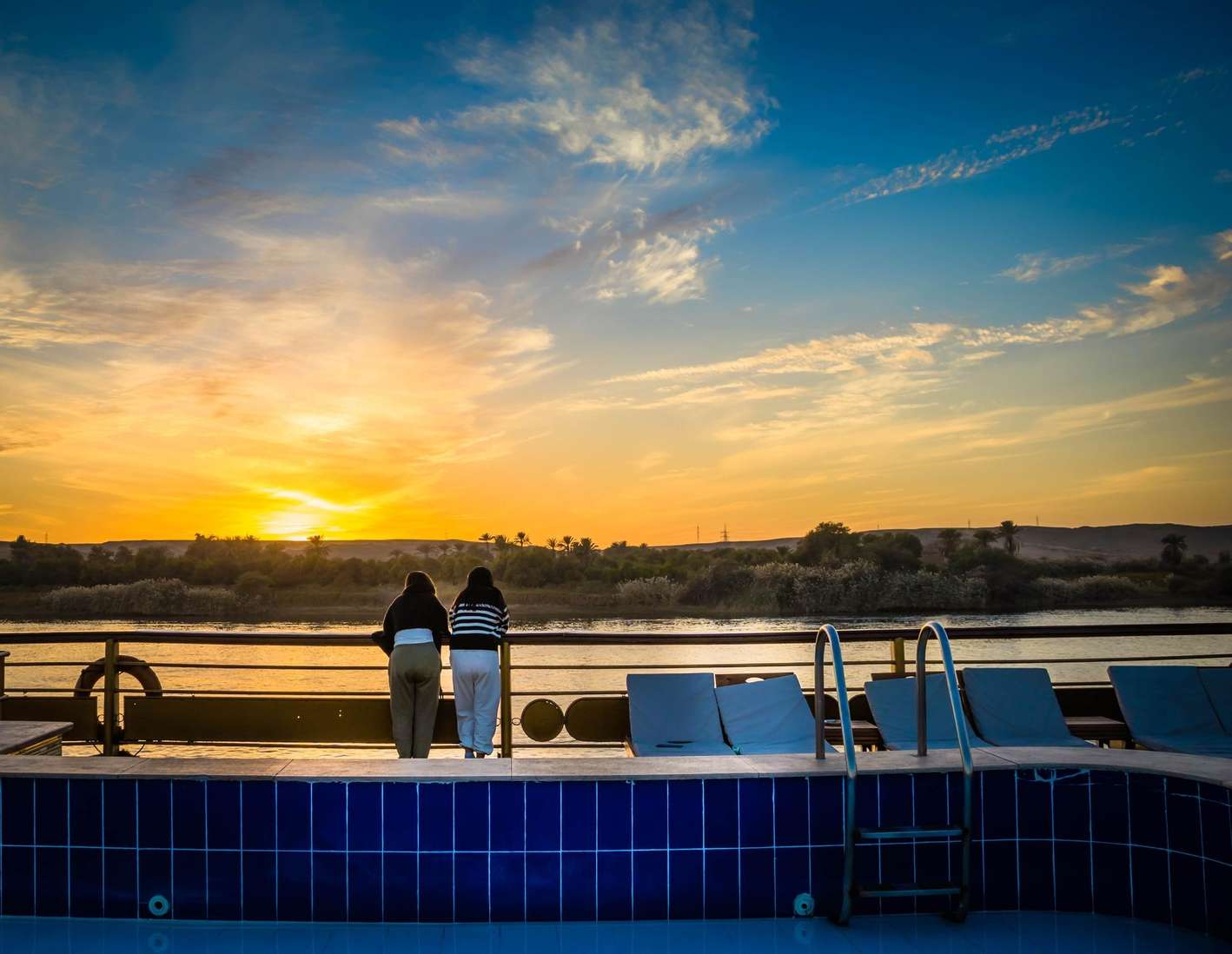
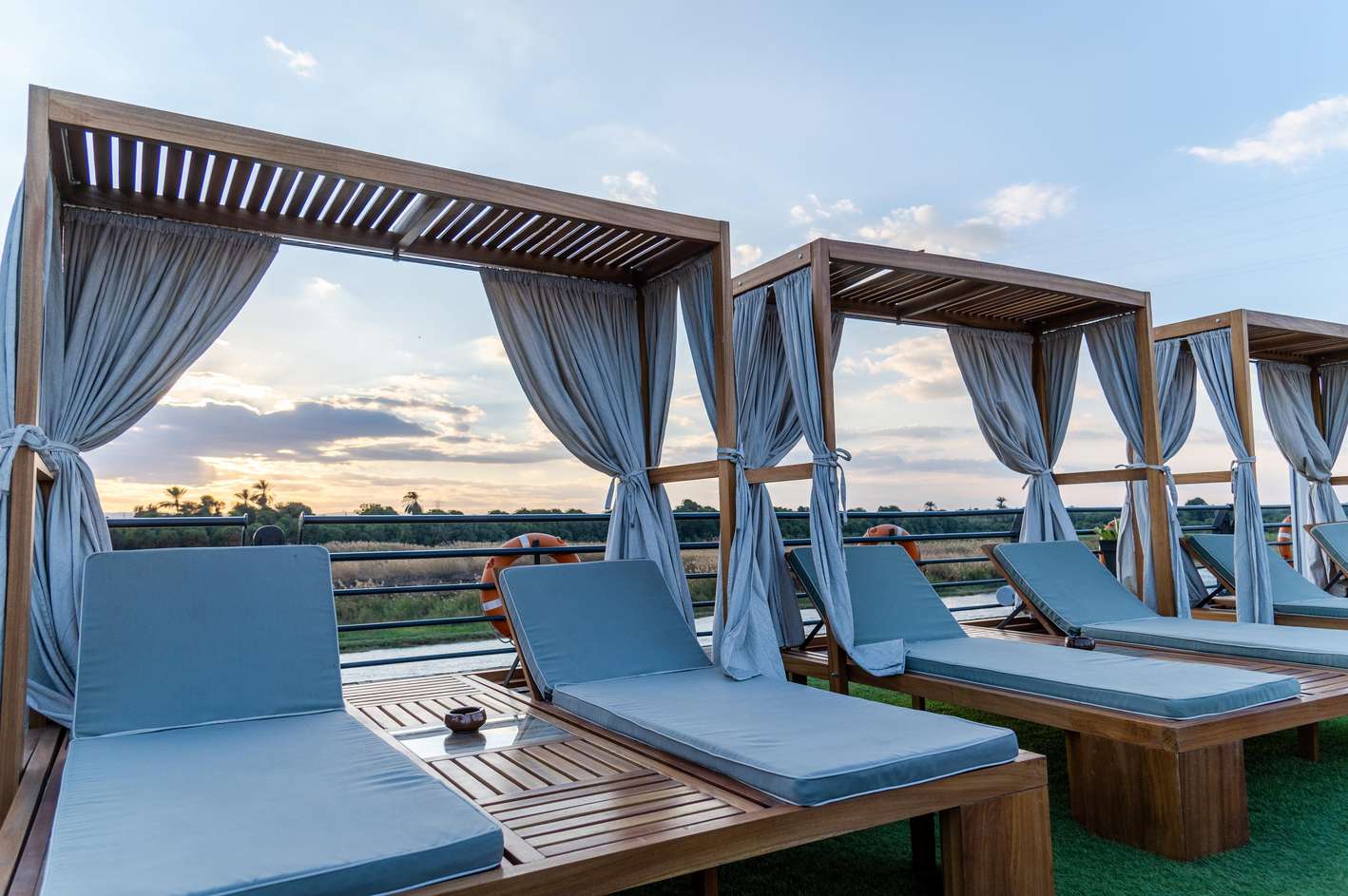
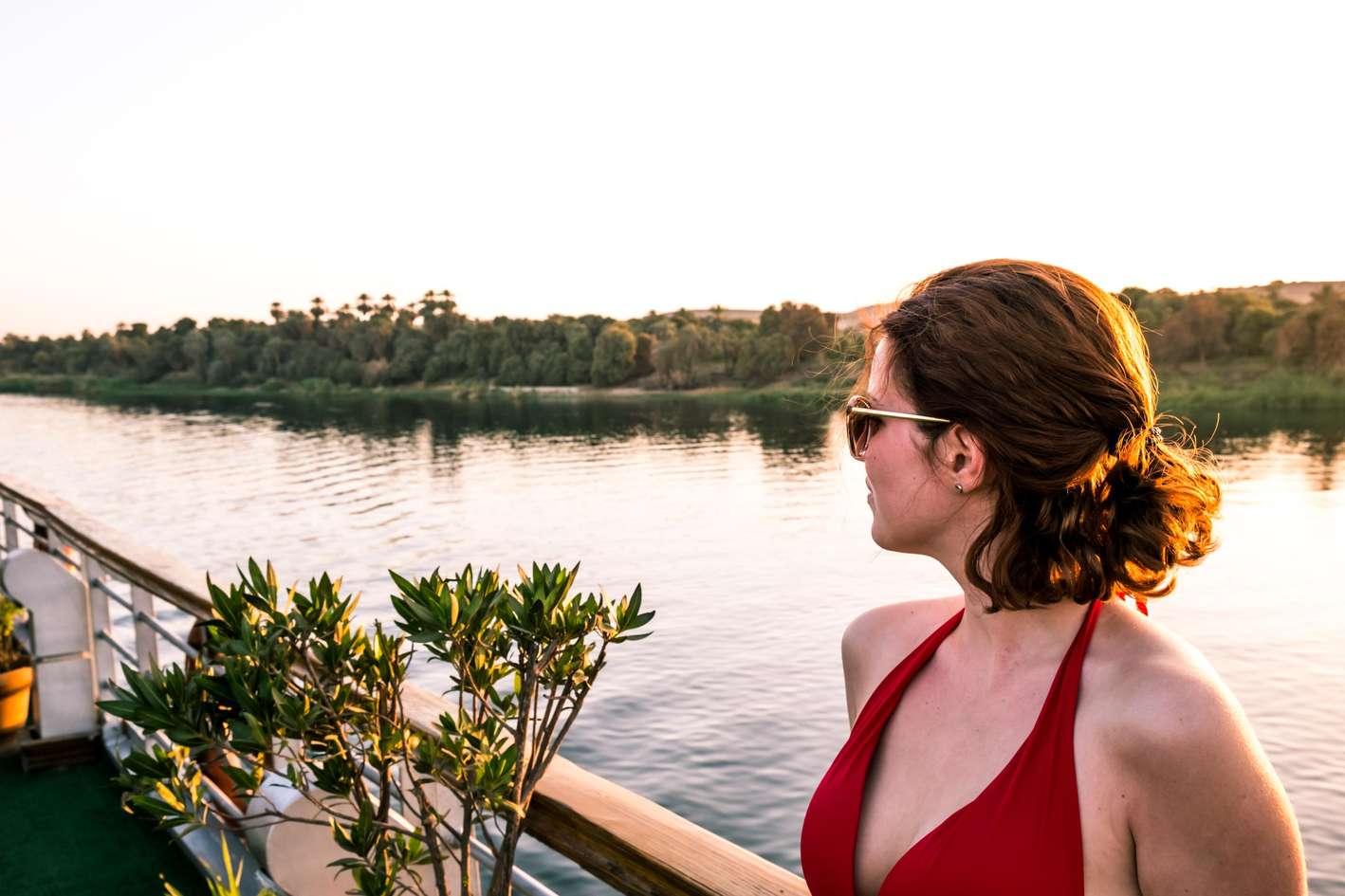
Many were surprised by the onboard food and service, calling the meals five-star and the sundeck sailing the highlight of the trip.
Most common wish
Several wished for clearer information upfront about tips, entrance fees, and drinks, since extras were billed on board.
How to book a Nile river cruise from Cairo to Aswan
01
Pick your date and book early
Choose your sailing window first, then lock it in. Winter cruises between December and February, Easter, and Egyptian holidays sell out, so book eight to twelve weeks ahead for peak season and at least as soon as you know your dates if you have less than two weeks of travel time.
Pro tipBook the domestic flights on the same booking as your international ticket, because seats on the Cairo to Aswan route fill up fast
RecommendedNovember is the best month for a Nile cruise, with comfortable days around 30°C, though it is the busiest sailing month of the year
02
Choose the direction and length
Pick a route that flies you down to Aswan first, then sails to Luxor with the current, which is the standard three-night cruise. The reverse, sailing upriver from Luxor to Aswan, takes four nights and gives more time on the water. Both cover the same temples, so decide by how much time you have.
Pro tipA four-night cruise covers every major temple stop and still leaves you time on the sundeck, while three-night sailings can feel rushed
Common mistakeFirst-timers assume the sailing direction changes what you see, but it only changes the pace and the number of nights on board
03
Pick the right cabin tier
On these cruises you choose between standard, deluxe, and luxury tiers, and the difference is the cabin, not the itinerary. Ask for an upper deck cabin in the middle of the ship, since that is furthest from the engine room and the lowest-deck kitchen.
Pro tipA luxury cabin often means a private balcony, while standard cabins get panoramic windows or French balconies
Common mistakeMany travelers book any cabin that is free, then spend three or four nights over the engine room
04
Confirm pickup and documents
After payment, you get confirmation and then tour coordinators send daily updates, flight tickets, and pickup details the evening before each excursion by WhatsApp. A representative meets you at your Cairo hotel or its main entrance for the airport transfer.
ImportantCarry your passport in your hand luggage for the domestic flight and the airport meet-and-greet
ImportantYour Egyptian tourist visa must allow travel beyond the capital, so a Sinai-only entry stamp does not cover Luxor or Aswan
05
Know what is included on board
Check the package details before you board. Some cruises include entrance fees for every temple on the program, while others exclude them, and full-board plans cover breakfast, lunch, and dinner but bill drinks separately. Budget for tips as well, since guides and drivers expect them.
RecommendedCarry plenty of cash in small denominations for tipping and site extras, and tell your guide at booking if you need vegetarian, vegan, or gluten-free meals
Common mistakePacking a drone, which customs confiscate on arrival in Egypt
The route · 10 min read
Nile River Cruise Cairo to Aswan
Cairo to Aswan covers about 874 km, too far for a short cruise to sail the whole way. The practical route is a 1.5-hour flight south, then a riverboat that carries you between the temples of the valley for three or four nights.
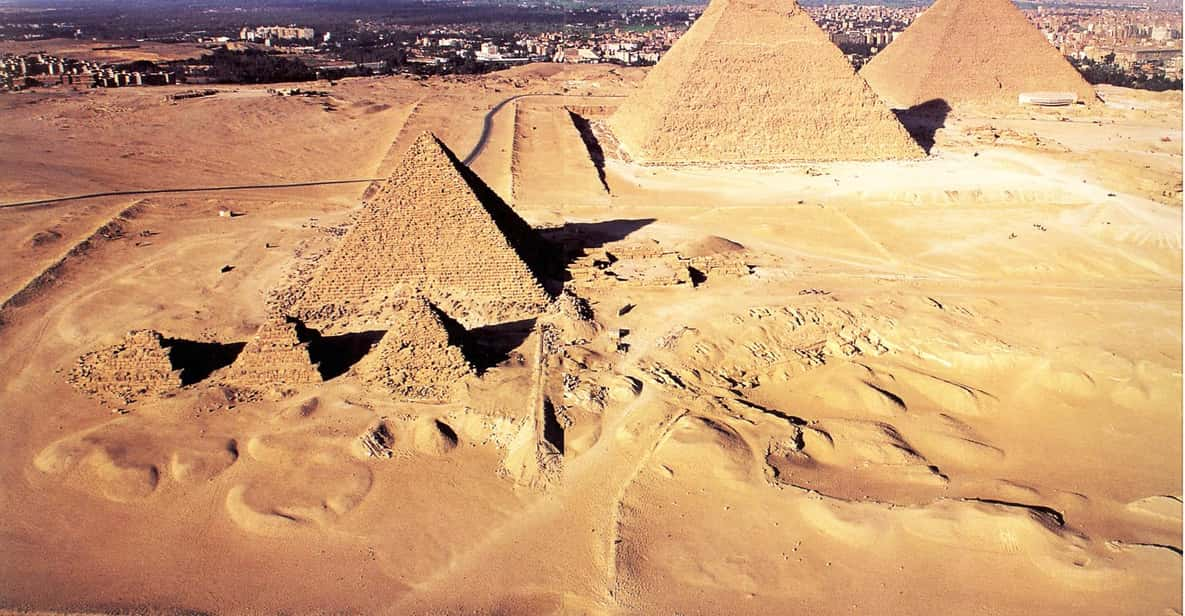
The sailing corridor runs between Luxor and Aswan, with stops at Edfu and Kom Ombo, where you can walk straight from the mooring up to the temple. Most packages start with a few days in Cairo for the pyramids, then fly you south to board.
What decides the shape of the trip is time. A four-day package covers the cruise alone, while an eight-day one adds Cairo sightseeing and a fuller stop at Aswan, with Philae Temple and the High Dam included. November through February gives the mildest sailing weather.
Cairo to Aswan
CairoCairo Governorate
510 km
AswanAswan Governorate
Guided tourEasiest
Quickest option with included domestic flightSee the tour →
A free Sinai-only entry stamp does not cover the Nile Valley, so it will not get you onto a Cairo to Aswan flight or cruise.
Check your passport is valid for at least six months from arrival and hold a full Egyptian tourist visa, bought online or on arrival, before you book domestic flights to Luxor or Aswan.
Can you take a Nile cruise from Cairo to Aswan?
The short answer deserves its own scene: no short cruise departs Cairo. Direct continuous sailings from Cairo to Aswan take 12 to 14 days and run only on select dates. Short multi-day cruises cannot depart from the capital at all, because covering the full river length takes around two weeks.
That does not kill the cruise. It moves the starting point. The trip south covers roughly 850 to 880 kilometers, and you make it by plane, train, car or bus before boarding a ship on the temple corridor between Luxor and Aswan.
Look at the numbers and one option stands out: a guided tour with a domestic flight gets you there in about 1 hour 30 minutes of flying, while the train takes 13 hours 30 minutes and the direct bus 13 hours. A private car comes in around 10 hours on the desert highway.
The cruise itself is very much on. The only question is how you reach the river.
Tour for this
From Cairo: 8-Day Tour of Cairo, Luxor and Aswan with Cruise4.3★ (234) · 8 days · Hotel pickup · Free cancellation
Flight and Nile cruise packages from Cairo - how the days fit together
The most popular option packages the whole trip: a few days at the pyramids, a 1.5-hour domestic flight south, then 3 to 4 nights aboard between Luxor and Aswan.
The 4, 5 and 8-day figures on the tour listings are the durations of these flight-and-cruise package products.
They differ from the ten to twelve nights that itinerary planning advice suggests for a first trip combining Cairo, Giza and the cruise, because the package days count only the southern tour itself, while the planning advice adds your days in Cairo and Giza around it.
The package covers the south; the longer figure covers the whole country.
The logistics you might fear are handled for you. Tour coordinators send daily updates, flight tickets and pickup details the evening before each excursion via WhatsApp. Representatives meet you at the airports, and guides and drivers reliably show up at your Cairo hotel and at Luxor airport on arrival. Air-conditioned vehicles handle every transfer.
One rule to plan around: EgyptAir domestic flights allow 23 kg of checked luggage and 8 kg of carry-on, and no piece over 32 kg is accepted.
Cairo sights, the pyramids first The short flight south Embarkation The sailing days between the temples Disembarkation and the return flight
A tour like the "From Cairo: 3-Nights Nile Cruise Luxor, Aswan by Flights" bundles it in one booking: domestic flights Cairo, Aswan and Luxor, meet-and-assist by English-speaking representatives, three nights aboard on a full-board basis and an Egyptologist guide.
Tour for this
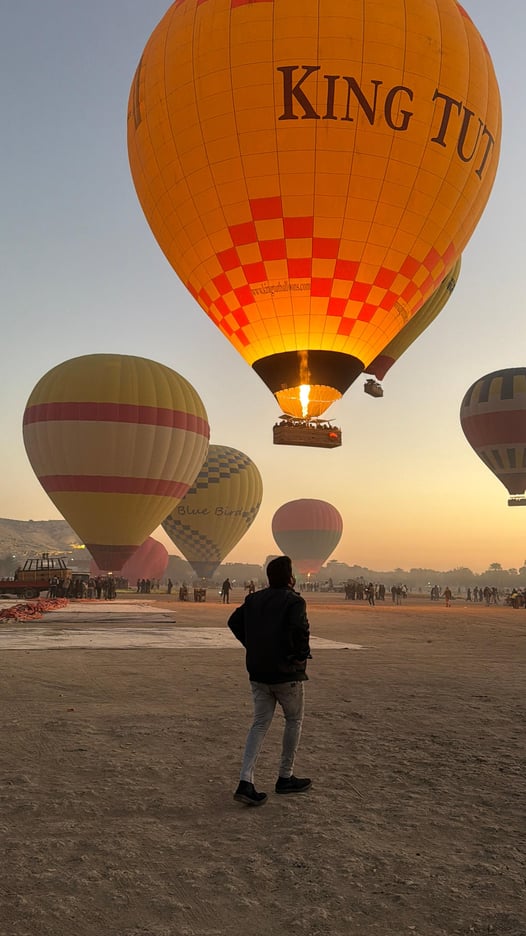
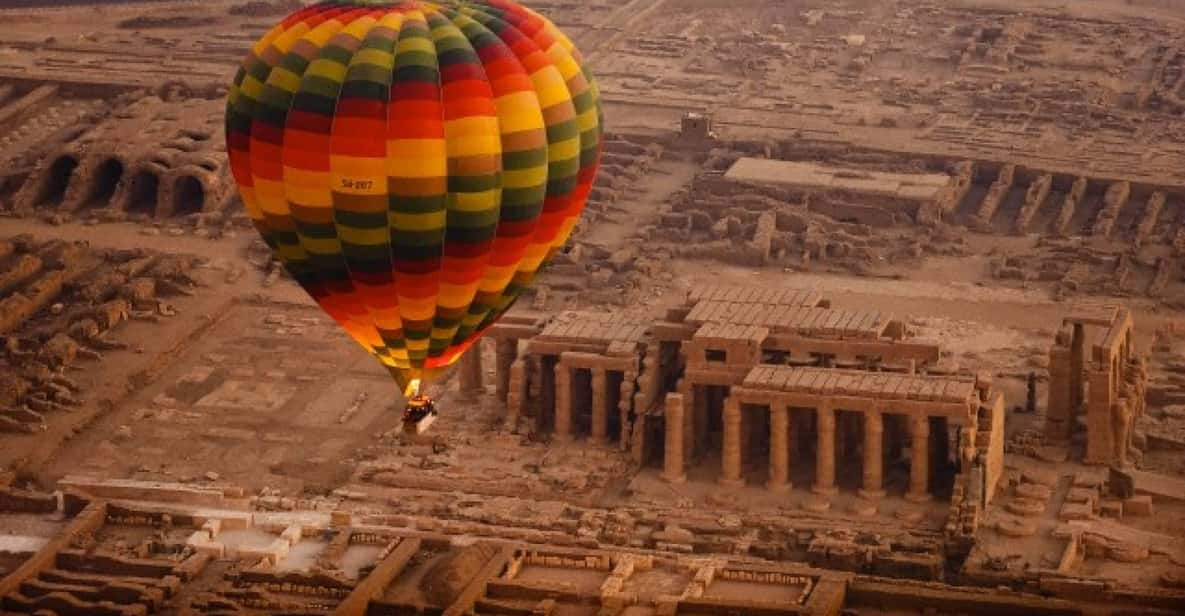
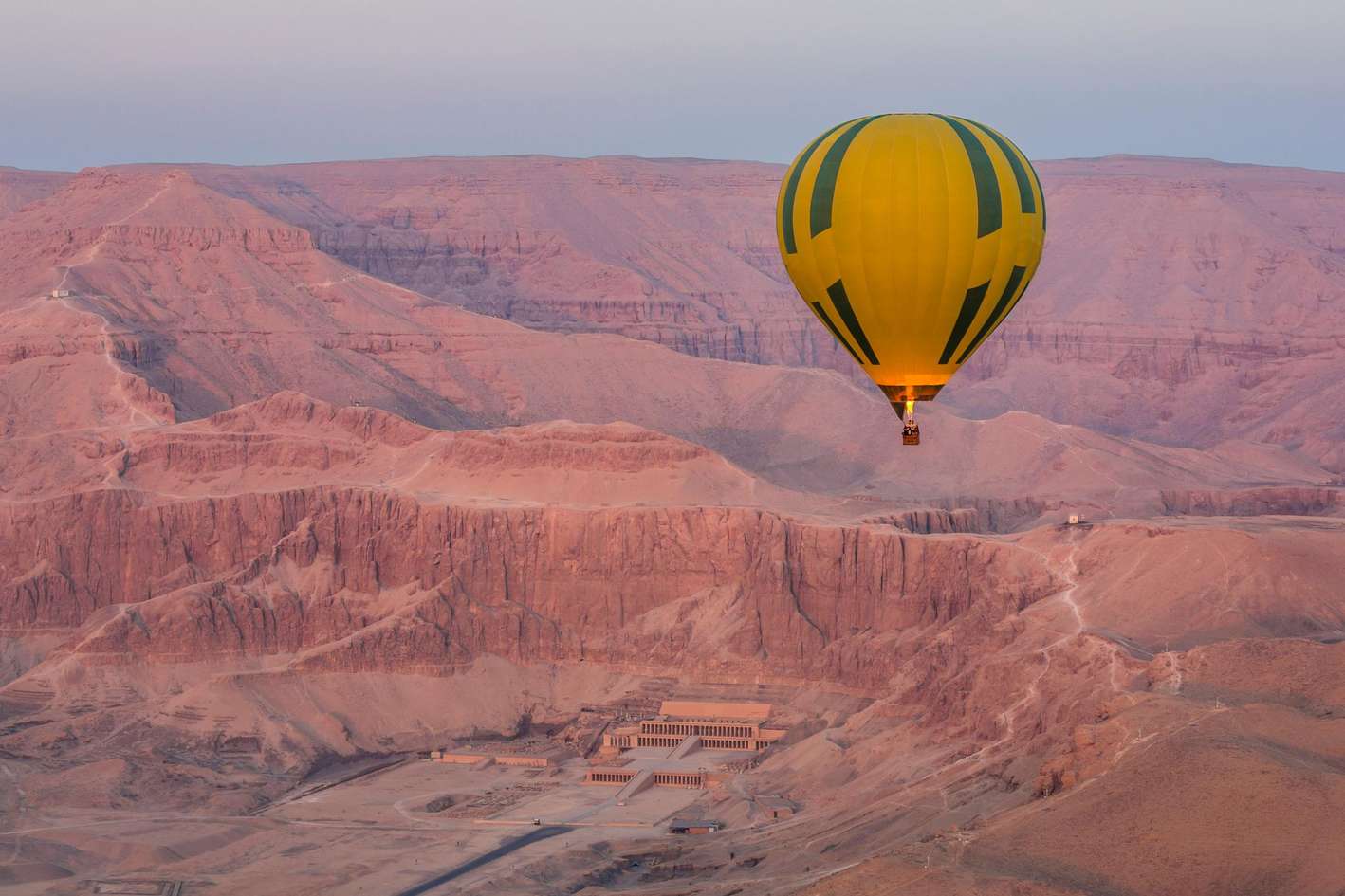
Cairo: 4-Day Nile Cruise to Luxor with Balloon & Flights4.2★ (19) · 4 days · Hotel pickup · Free cancellation
Sleeper train and Nile cruise packages - the overland adventure
The second option trades the flight for the rails. A combined sleeper train and cruise package takes 8 days, typically with 2 nights on sleeper trains and 3 to 4 nights aboard.
Duration of the sleeper train and Nile cruise package
8 daysTotal tour duration
3 to 4 nightsNile cruise duration
2 nightsOvernight sleeper trains
Boarding happens at Bashtil Station, also known as Upper Egypt Station, in Cairo's Imbaba district. Show your ticket PDF on your phone at the entrance gate, staff point you to the platform, and you walk along it to find your carriage number, where a cabin attendant greets you at the door.
Arrive at least 45 minutes before departure, and keep all bags with you: the station offers no left luggage.
The sleeper route runs through to Aswan without a change at Luxor. The one friction point comes at the end: Aswan Railway Station is not directly connected to the cruise moorings or hotel docks, so a separate transfer by taxi, hotel driver or pre-arranged vehicle matters.
When boarding for the return, present your ticket and passport at the main entrance, then confirm your cabin number with the attendant.
The "From Cairo: 8-Day Tour to Luxor and Aswan with Nile Cruise" takes this route and adds meet-and-greet at the airports, guest relations assistance and all transfers by air-conditioned coach, plus a domestic flight back from Aswan to Cairo.
Tour for this
From Cairo by Plane: 5 Days & 4 Nights Nile Cruise to Luxor3.6★ (40) · 5 days · Hotel pickup · Free cancellation
Continuous long cruises sailing the full river from Cairo to Aswan
The dream option exists. Cruise ships start at boat moorings and river terminals along the Nile in Cairo and sail the whole river, taking 12 to 14 days and running only on select dates.
A shorter long-range cruise from Cairo to Luxor still takes 11 to 13 days, typically 11 nights on board, with stops through Middle Egypt at Beni Suef, Minya, Tell el-Amarna and Dendera before docking in Luxor.
That is a serious commitment of vacation time. The reward is the river itself: the long stretches of Middle Egypt that the corridor cruises never see, rural banks changing slowly day by day, no flights at all. The cost is a fortnight of your life, and the sailing dates follow the operator's calendar.
Ask yourself plainly whether two weeks belongs to the water. If it does, the long cruise is the trip for you. If it does not, the flight or train packages deliver the same corridor temples in a fraction of the time.
Tour for this
From Cairo: 8-Day Tour to Luxor and Aswan with Nile Cruise5.0★ (2) · 8 days · Hotel pickup · Free cancellation
Flight package vs sleeper train vs long cruise - which way south suits you
Three ways south, three different trips. The flight package folds into a standard vacation in 4 to 8 days and hands every transfer to the operator.
The sleeper train package takes 8 days and leaves you boarding at Bashtil Station yourself, with a transfer to arrange at Aswan's end. The continuous long cruise takes 12 to 14 days and starts right at the Cairo moorings, no flights, no stations, but only on select dates.
"The three options side by side"
Duration
4 to 8 days by flight package, 8 days with the sleeper train, 12 to 14 days sailing continuously
Connections
Escorted flight transfers on the flight packages, independent station boarding on the sleeper train, boarding in Cairo on the long cruise
Time on the river
3 to 4 nights aboard on the short packages, 2 plus 3 to 4 nights split between trains and ship on the train package, 11 to 14 nights on the long cruise
Duration
Connections
Escorted flight transfers on the flight packages, independent station boarding on the sleeper train, boarding in Cairo on the long cruise
Time on the river
3 to 4 nights aboard on the short packages, 2 plus 3 to 4 nights split between trains and ship on the train package, 11 to 14 nights on the long cruise
4 to 8 days by flight package, 8 days with the sleeper train, 12 to 14 days sailing continuously
The deciding questions are your own: how many days you can give, how many handoffs you want to survive, and how much of the trip is sailing time versus sitting in a seat.
Tour for this
From Cairo: 4-Day Nile Cruise to Luxor with Balloon Flight4.5★ (162) · 4 days · Hotel pickup · Free cancellation
The corridor itself is the reason you booked. A standard one-way cruise between Luxor and Aswan takes 3 nights sailing downstream from Aswan to Luxor with the current, or 4 nights upstream against it, and neither direction is meaningfully better: both cover the same core temples and stretch of river.
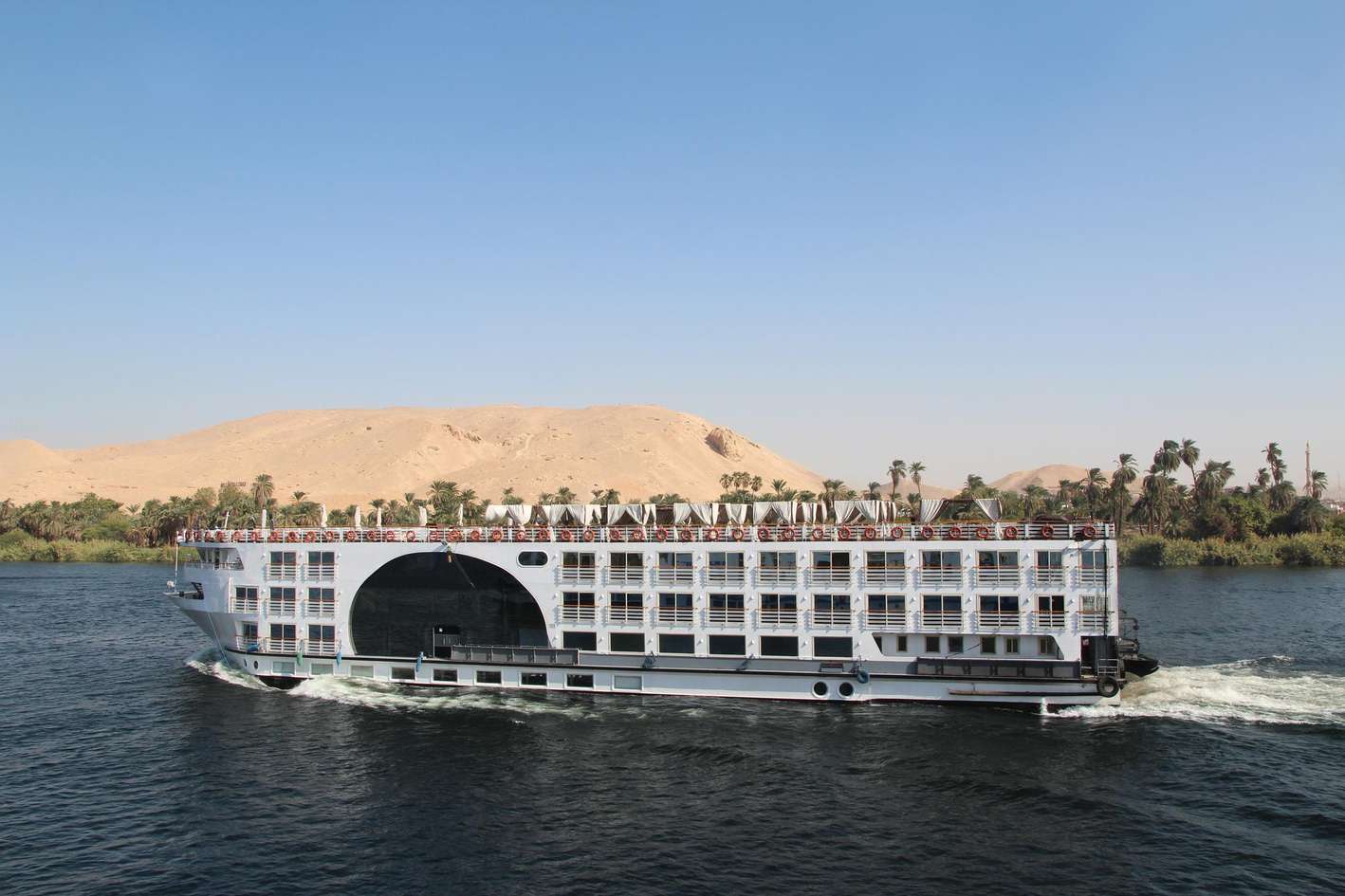
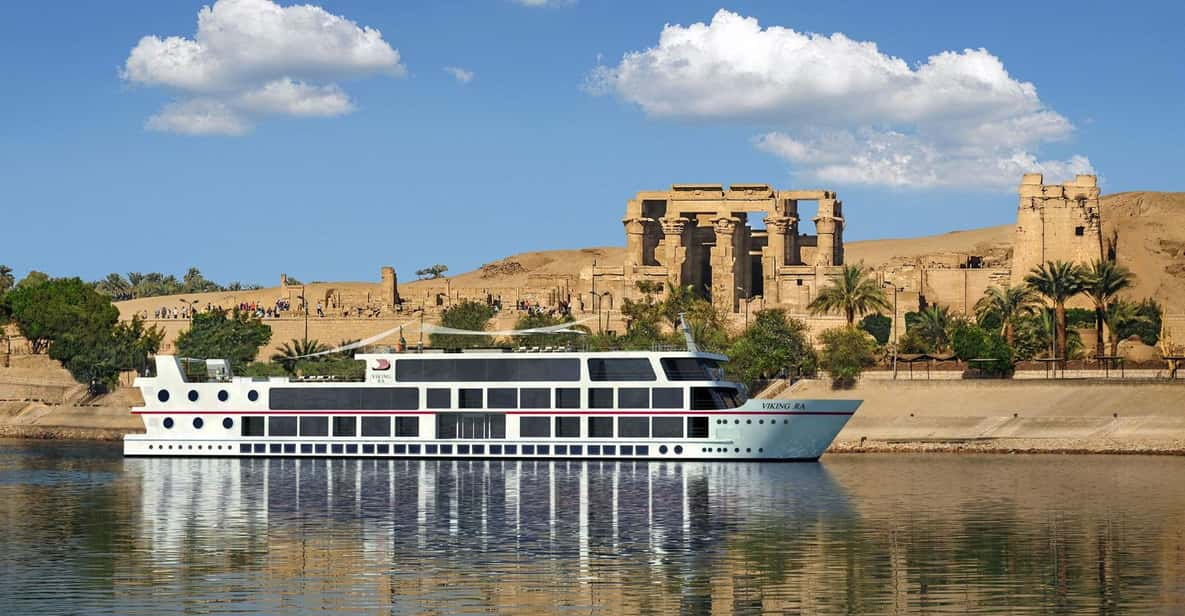
Large riverboats are limited to purpose-built docks at Esna, Edfu and Kom Ombo, three to five sites depending on vessel size. At Esna, 34 miles from Luxor, you find the Temple of Khnum.
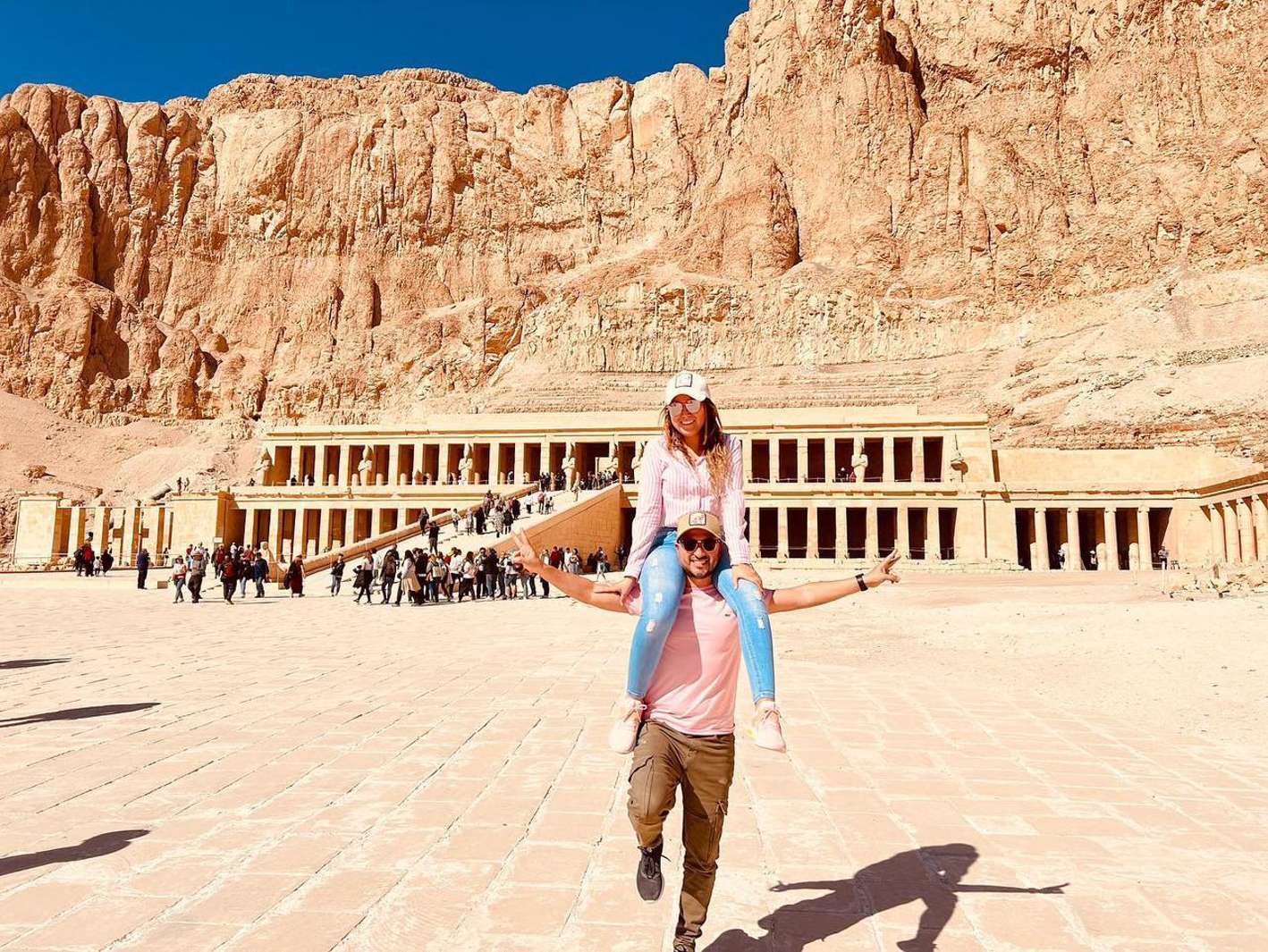
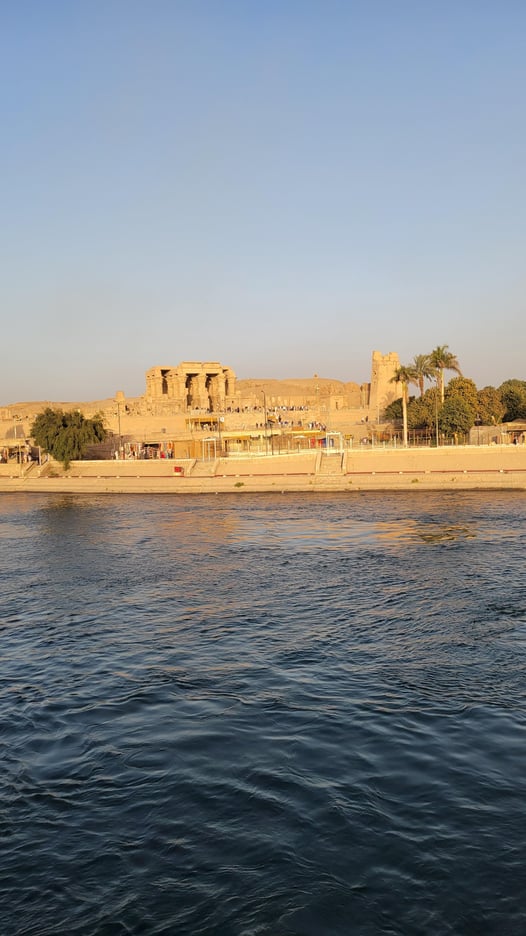
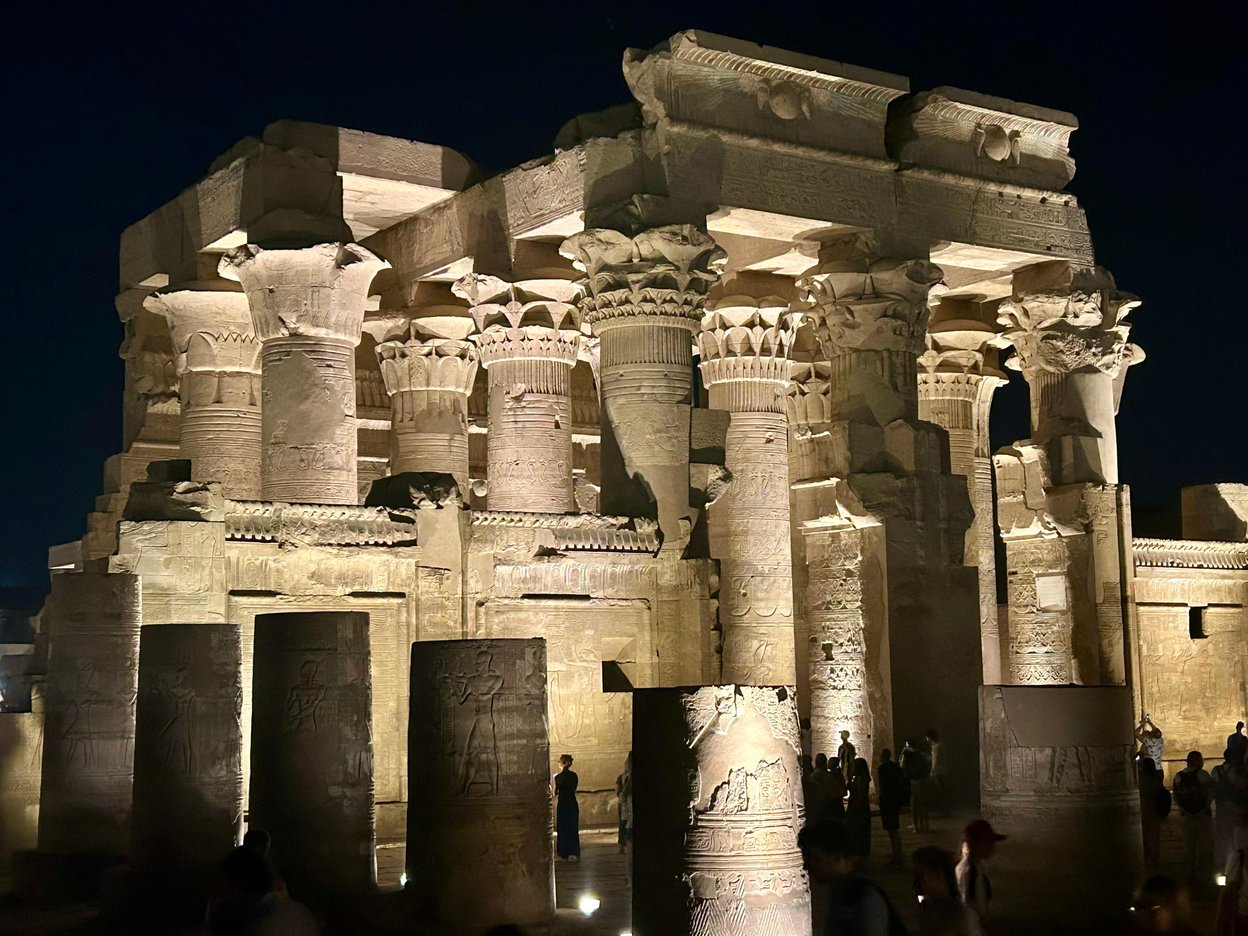
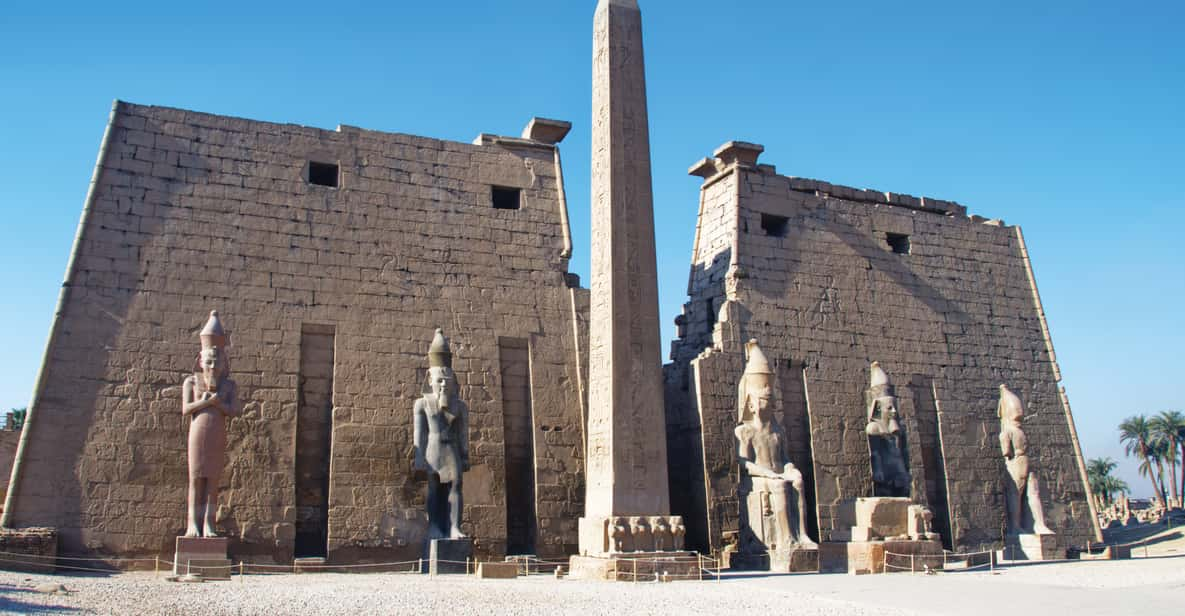
Edfu, at 68 miles, brings a horse carriage ride to the Temple of Horus. Kom Ombo, 106 miles from Luxor, holds the double temple with sanctuaries dedicated to Sobek and Haroeris, and here you walk directly from the mooring to the temple without a coach.
Large riverboats can only dock at the purpose-built piers at Esna, Edfu and Kom Ombo, while shallow-draft dahabiyas can tie up at quiet riverbanks, which is why two cruises over the same water can visit different sites.
Whatever package you chose covers the same core stretch, so the monuments the cruise guarantees are already certain.
Tour for this
From Cairo: 3-Night Aswan to Luxor Nile Cruise with Flights4.1★ (50) · 4 days · Hotel pickup · Free cancellation
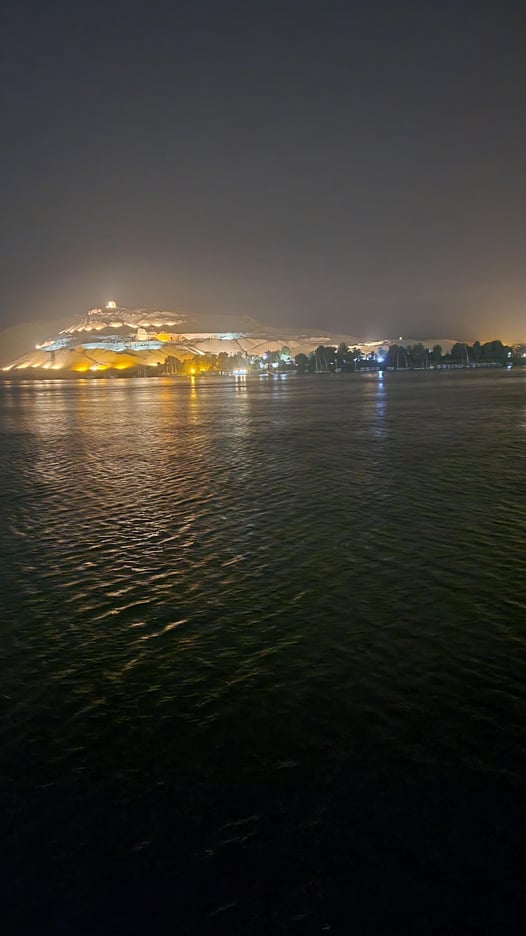
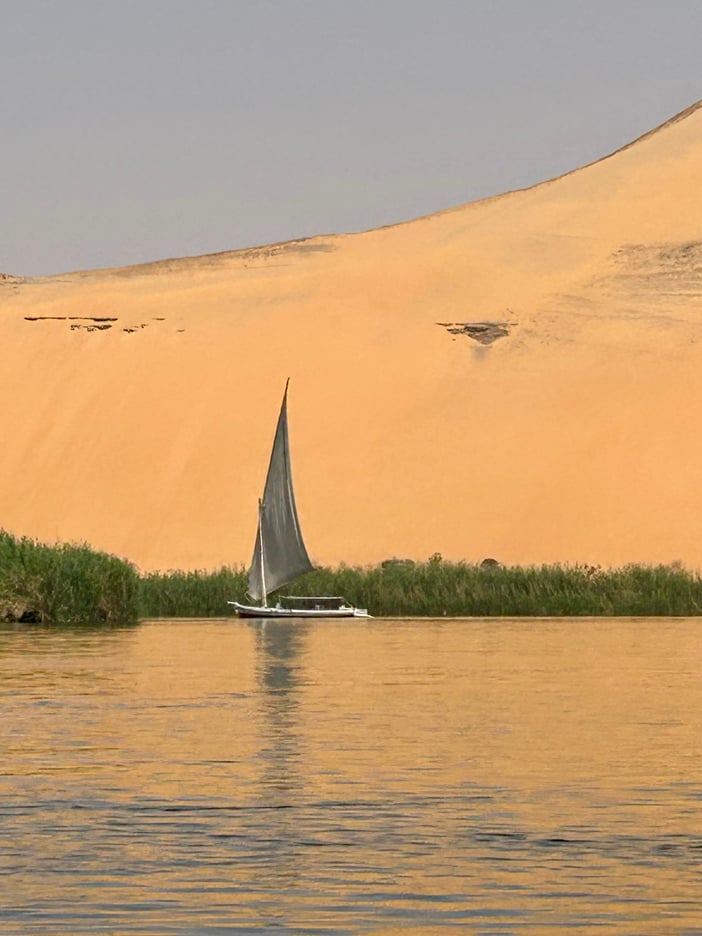
The boat ties up where the Nile widens over its first cataract, with sand dunes running right down to the water on the barren West Bank.
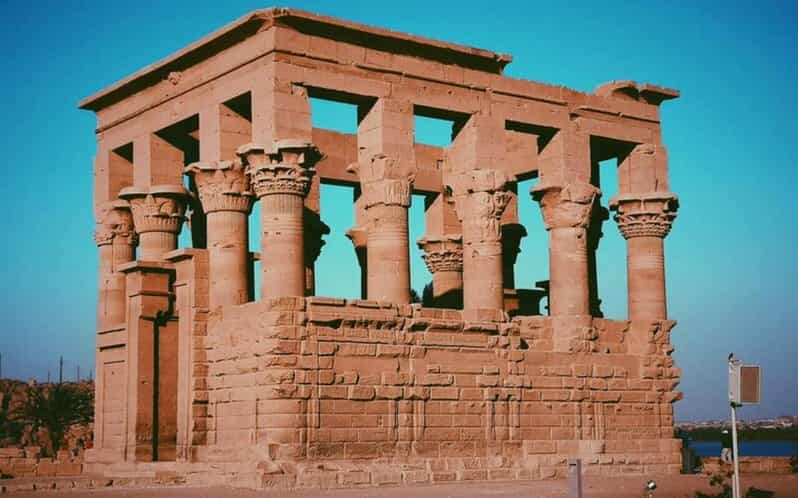
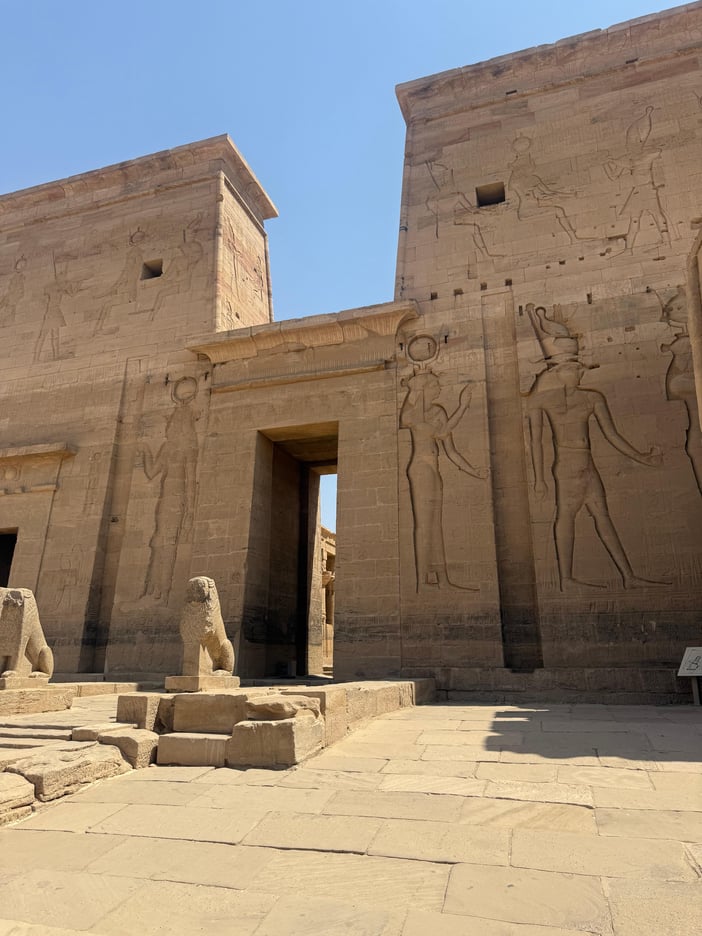
Aswan repays the extra travel south: Elephantine Island with its Roman-era Nilometer and ruins of the Temple of Khnum, Kitchener's Island planted as a botanical garden of imported exotics, the Unfinished Obelisk in the ancient granite quarries, the Aga Khan Mausoleum and the Tombs of the Nobles on the West Bank, and the temples of Philae on Agilkia Island.
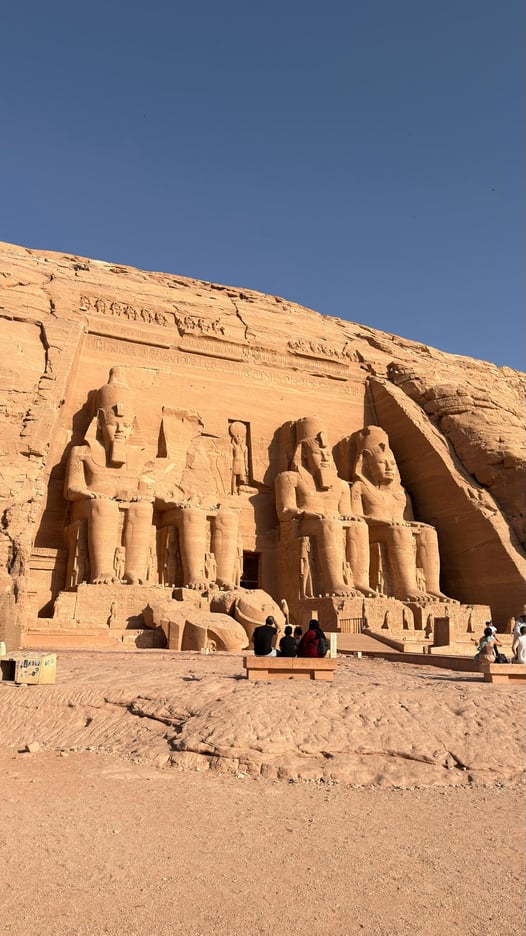
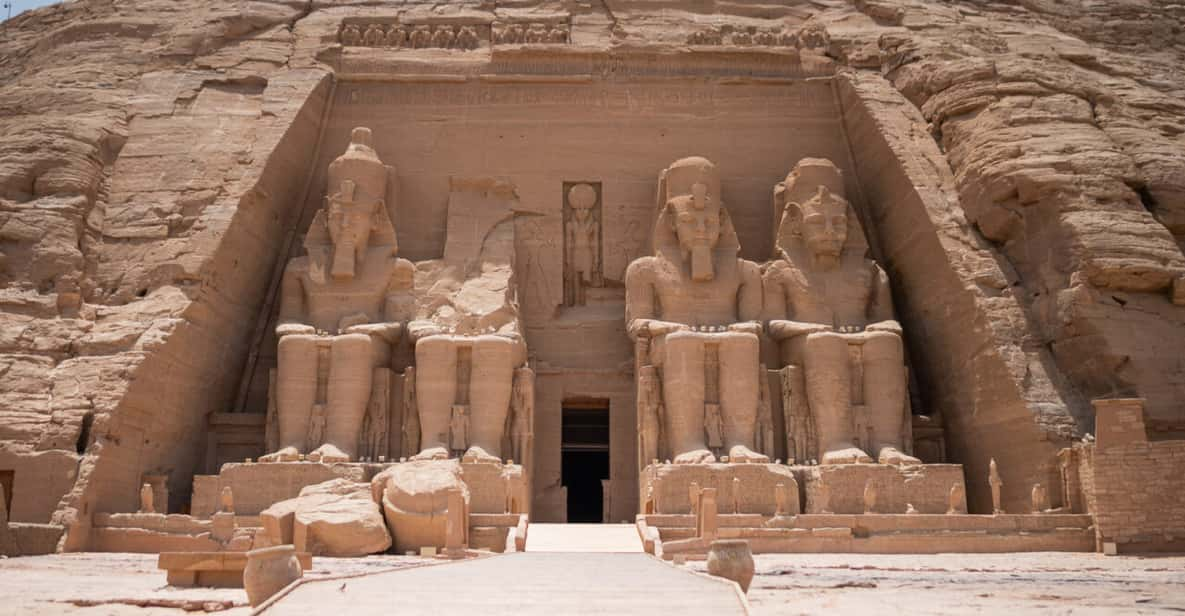
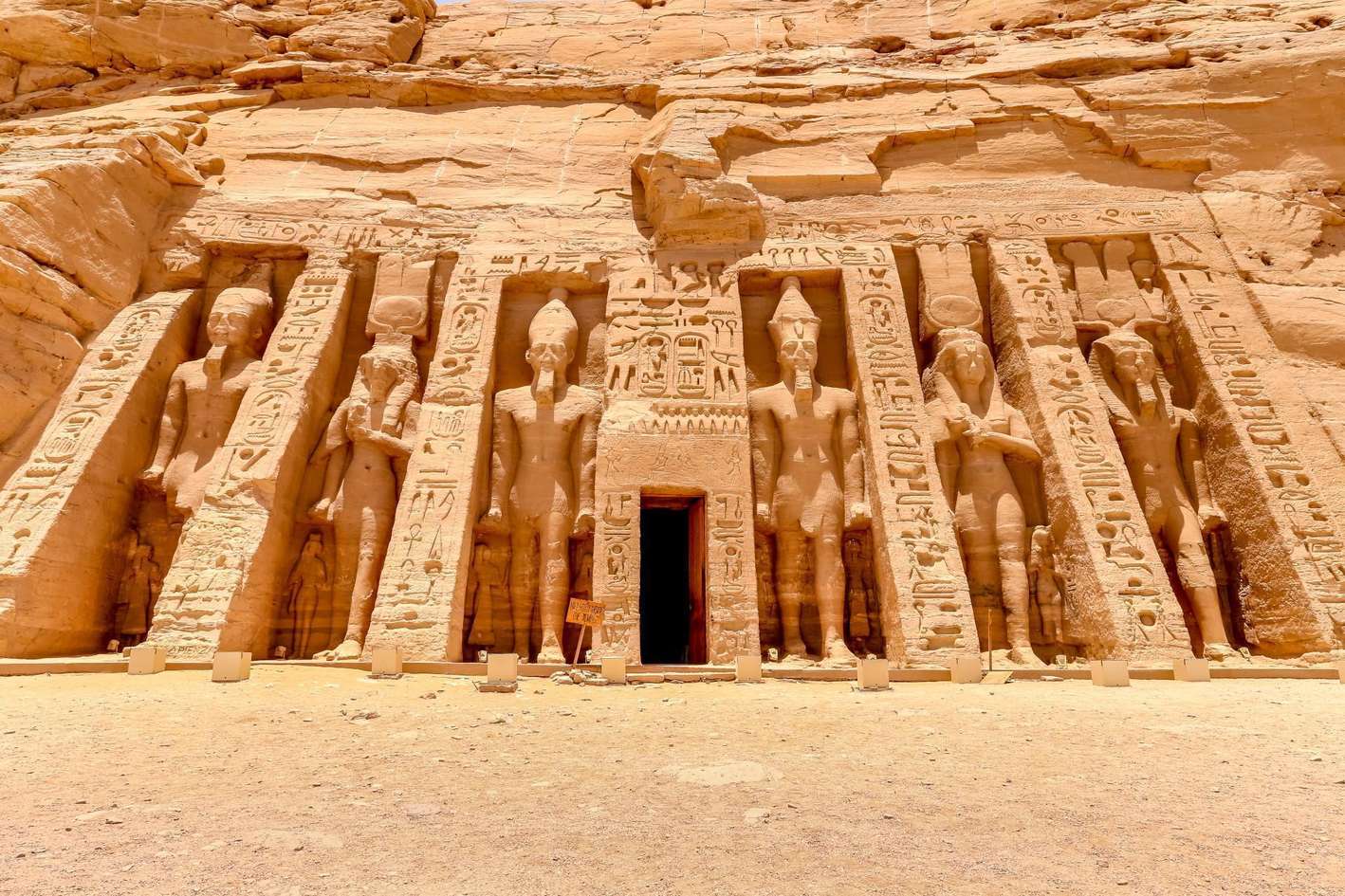
Then the big detour. Abu Simbel lies roughly 300 kilometers south, reached by a 3 to 4 hour road journey each way or a 40 to 45 minute EgyptAir flight that provides a free shuttle between the airport and the temple, waiting during your visit.
Road trips depart in a convoy-style schedule, early morning or mid-morning, with all tourist transport registered with the Tourism Police and clearing several checkpoints.
"The road window to Abu Simbel"
The desert highway to Abu Simbel closes to tourist traffic from 5 pm to 5 am, and road travelers must leave the site by 4 pm to clear the security checkpoints. Book the excursion around this window.
Entry at Abu Simbel is cashless, so bring a card, and mobile phone photography inside is free while flash is prohibited.
Cabins, decks and life aboard - choosing a ship you won't regret
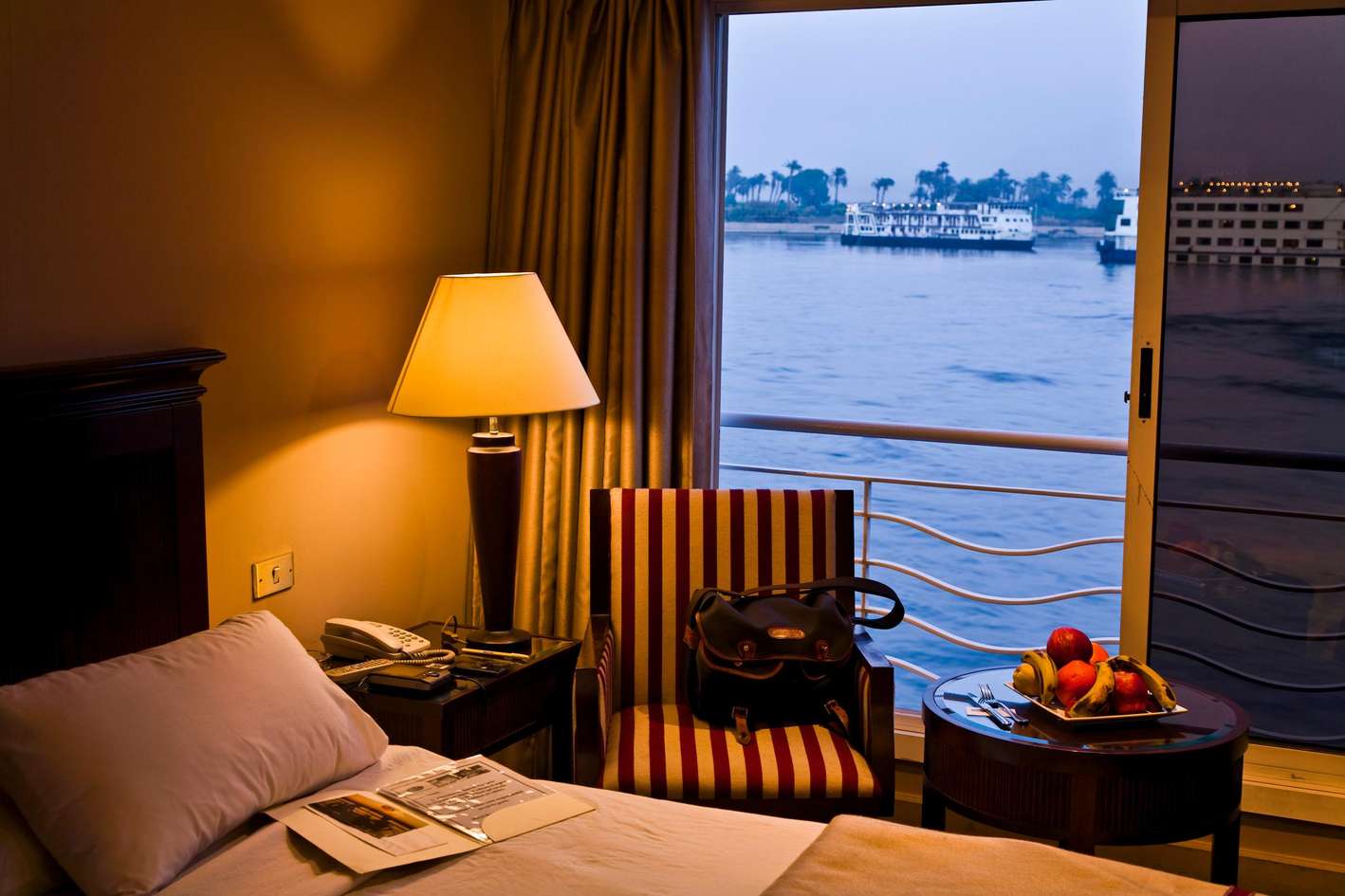
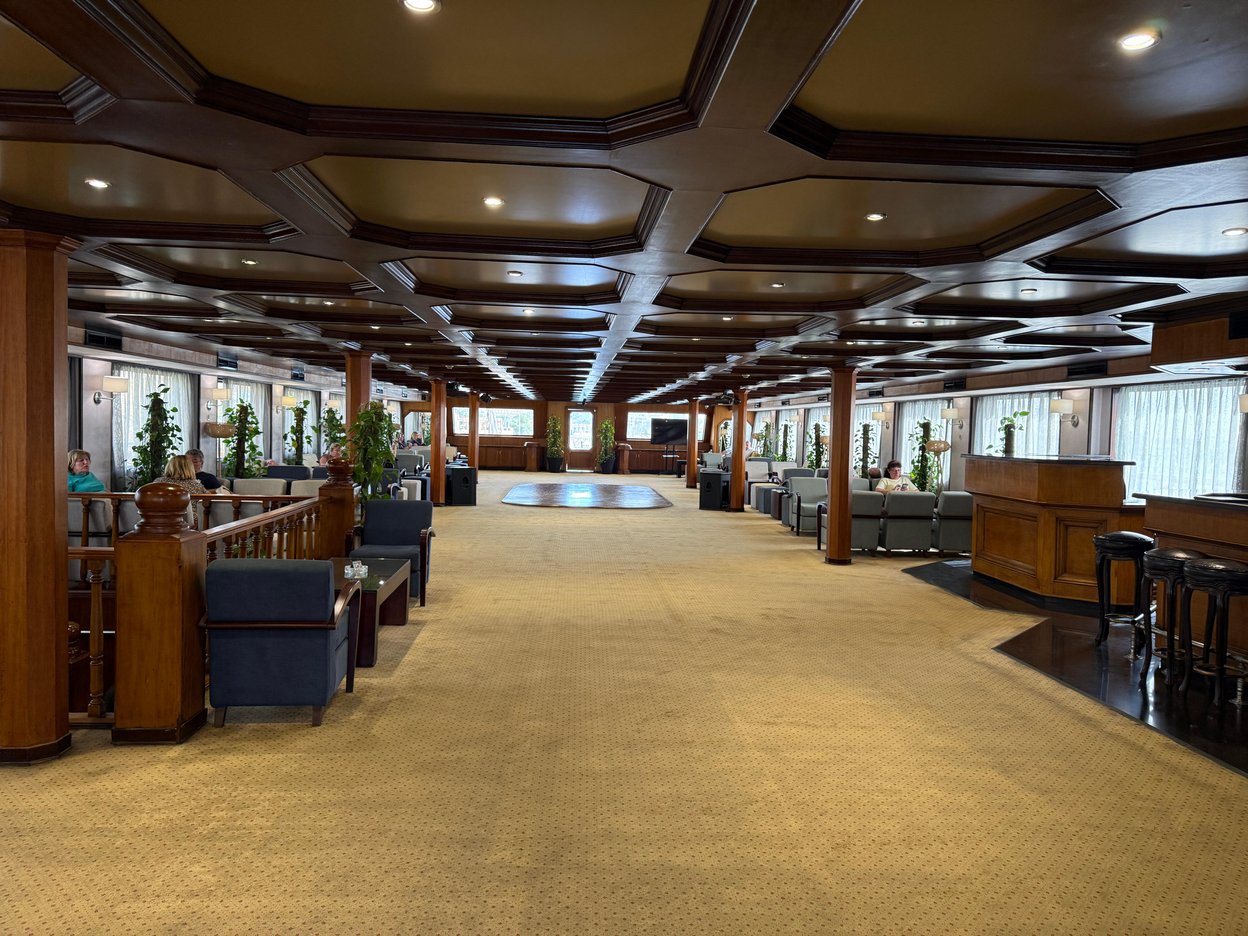
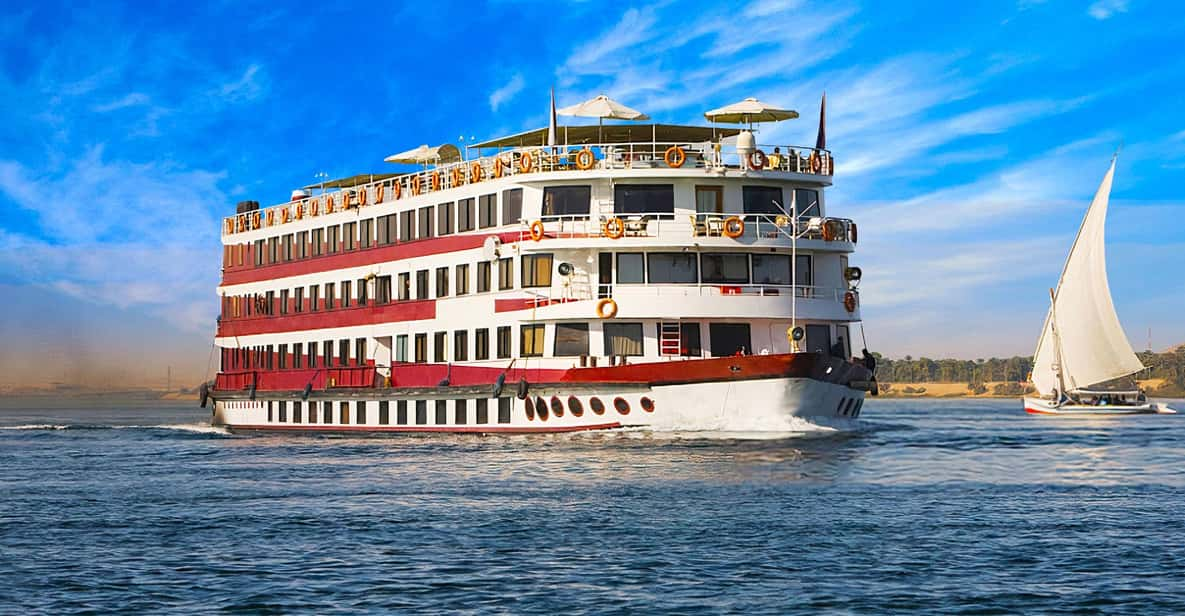
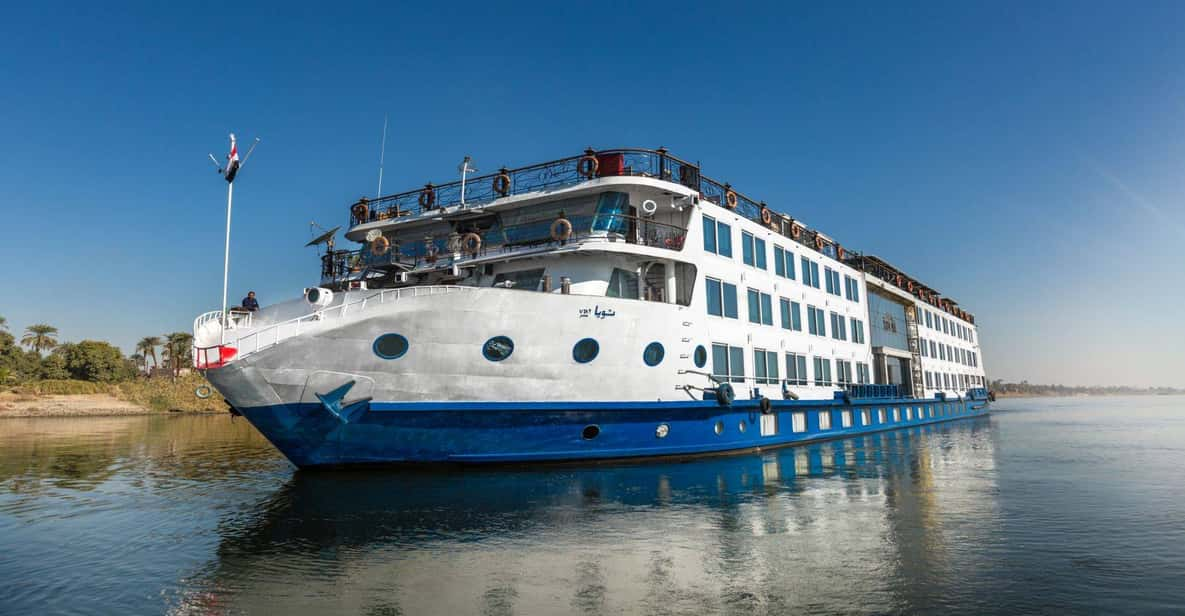
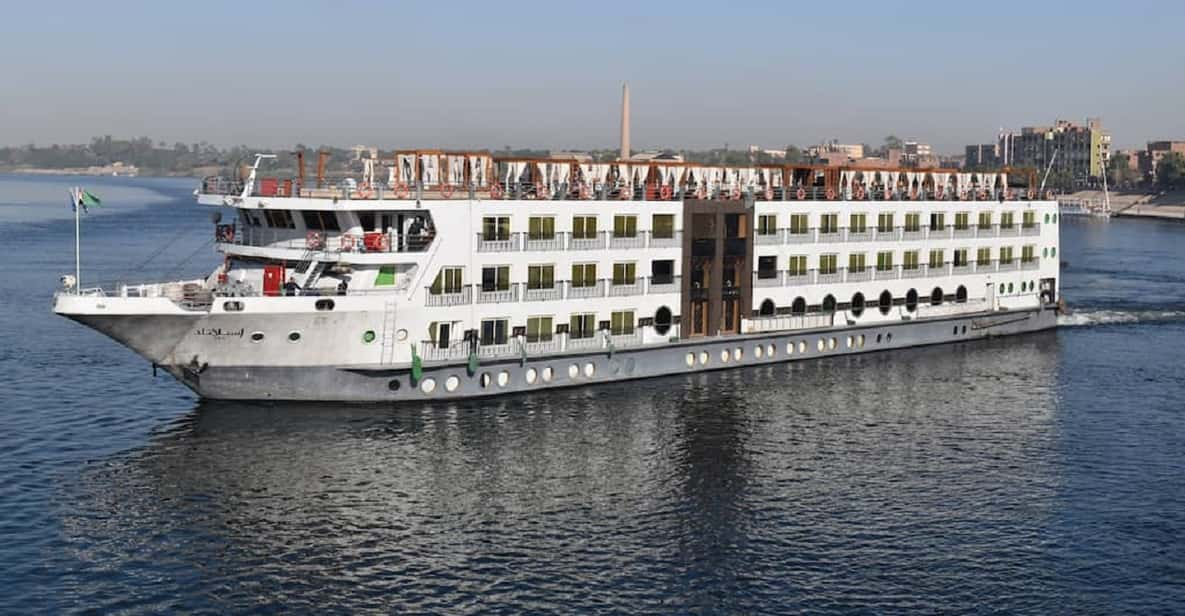
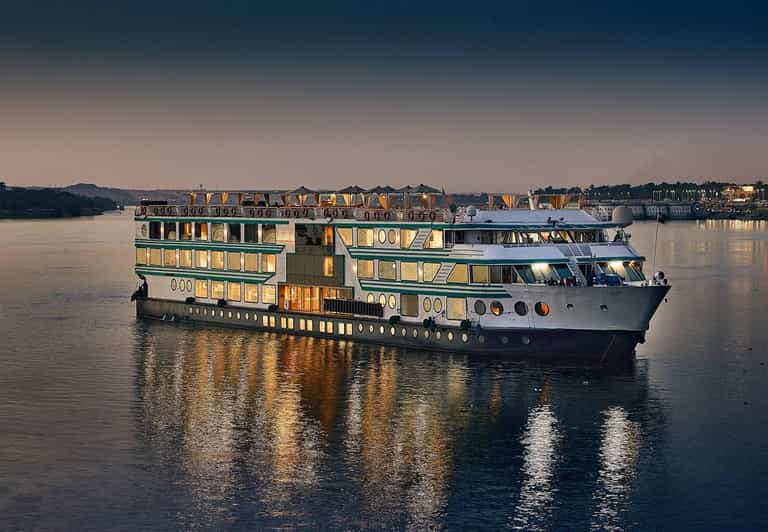
Walk the deck of your future ship before you book. Luxury vessels commonly offer private balconies, while standard or lower-tier ships typically feature panoramic windows or French balconies.
Buffets serve breakfast, lunch and dinner on most vessels, though some deluxe ships offer multi-course dinners, and the food blends international comfort food with Egyptian dishes such as koshari, molokhia, mahshi and grilled Nile perch. Vegan, vegetarian and gluten-free travelers are generally accommodated with advance notice at booking.
One booking lever matters more than the rest: request an upper-deck cabin in the middle of the ship. That position sits furthest from the engine room, so you escape engine noise and vibration, and because the kitchen sits on the lowest deck, an upper cabin also keeps galley food odors away.
Plan for one extra cost: full-board cruises include breakfast, lunch and dinner, but drinks, including water, are billed separately.
A traveler's note
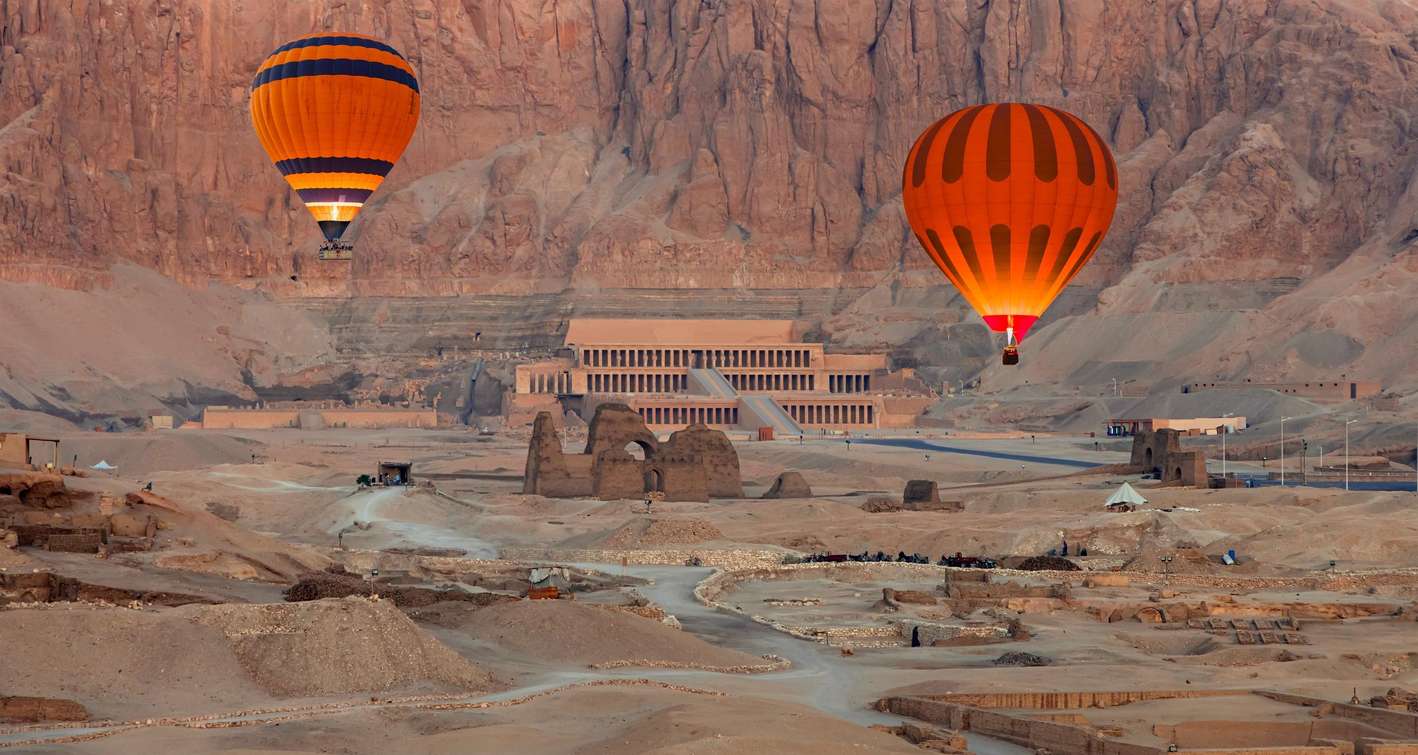
For history and art lovers, this cruise is the right choice. Perfectly organized transfers, visits, and ship. Guide Mahmoud passionately explained ancient Egypt's wonders. Don't miss Abu Simbel and the hot air balloon.
Packing, documents and money - what to have ready before boarding
Pick a date and book ahead, because the checklist that applies to every option is short. Your passport must be valid for at least six months from your arrival date, and you need a valid Egyptian tourist visa that permits Nile Valley travel, a standard single-entry or multiple-entry visa acquired online or upon arrival.
A free Sinai-only entry stamp does not cover Luxor or Aswan, so travelers coming from Sharm el Sheikh must arrange a full tourist visa before flying south.
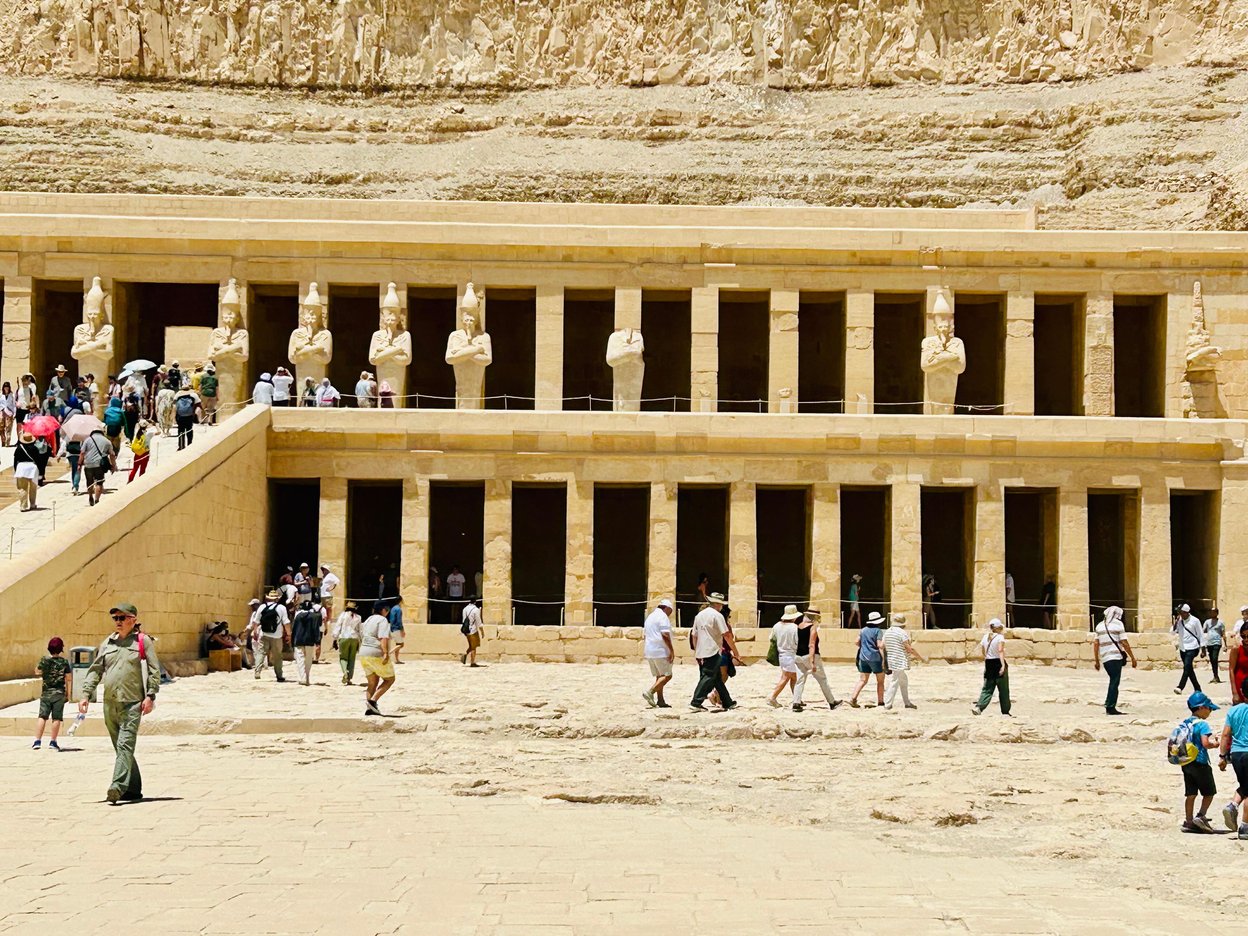
Money comes next. The temples have gone cashless: Luxor, Karnak, Hatshepsut, Edfu, Kom Ombo, Philae and Abu Simbel all require bank cards or credit cards at the gate. Foreign visitors pay with their own cards on arrival.
Cash still rules the small stuff, so carry small notes for tips, since tipping guides and drivers at the end of a tour is a strong social expectation.
Pack for the early mornings and evening decks: loose, breathable trousers or below-knee skirts, tops covering the shoulders, sturdy closed-toe walking shoes for uneven stone, and a warm layer, because November through February mornings and evening sailings drop to 8 to 15 degrees Celsius.
Recommended"Cash and cards, both": Keep a stack of 5, 10 and 20 Egyptian pound notes for tips, tomb guards and restroom attendants, and carry a bank card, because Luxor, Karnak, Edfu, Kom Ombo, Philae and Abu Simbel all refuse cash at the gate.
Hold both forms of money from day one and the gates open smoothly: cards for the big tickets, notes for the hands that help you along the way.
The calendar closes the trip. November through February bring the most comfortable sailing weather on the corridor, with average daytime highs between 23.5 and 30.1 degrees Celsius, nights around 10 to 16 degrees, and monthly rain of just 0 to 1 mm.
November is the best overall month, combining 30-degree days and 16-degree evenings with calm winds and virtually zero rainfall, though it is the busiest cruising month of the year.
January and February offer mild afternoons around 24 degrees for walking around open-air temples, with moderate to high tour activity.
Summer is the opposite story: June through August bring extreme 40 to 43 degree heat, and at exposed spots like Philae and the High Dam, stone surfaces become scorching, restricting sightseeing to sunrise and early morning.
How busy it gets, month by month
November: 5 out of 5 for how busy it gets.
HighestFeb to May, Nov
In betweenJan, Jun, Oct
LowestJul to Sep, Dec
Darker: a higher how busy it gets score, out of 5
Tap a month to read it.
Timing then sets your booking.
Book 8 to 12 weeks ahead for high-season peak sailings to secure a cabin on a reputable boat, and arrange domestic flights between Cairo and Luxor or Aswan at the same time as your international flights, since capacity on those routes is limited and tight between December and February, at Easter and during Egyptian holidays.
Staying well on board - health, water and staying connected
A few quiet facts first-timers don't expect, all of them easy to plan around. Avoid swimming in the river at any point on the route, because freshwater contact with the Nile carries a risk of schistosomiasis.
Ship food is safe. Nile cruise vessels follow a food safety risk management system with regular computerized audits of hygiene and standards, so cooked meals on board carry no special worry.
Connectivity is the surprise. Most cruise ships offer on-board Wi-Fi, but it is often slow, unreliable while moving, or an expensive add-on, and rarely fast enough for video calls.
Mobile coverage along the corridor is generally more dependable. Install an eSIM before arriving in Egypt and you have data the moment you land, with no airport queues or registration paperwork.
If the mobile signal disappears on remote stretches between towns, it returns as the boat docks at Luxor, Esna, Edfu, Kom Ombo or Aswan If severe river fog or high winds suspend sailing, expect a schedule shift and a chance to catch up the following day
None of these surprises change what you see. They change the pace, so build in a little slack and the day settles itself.
Take a flight package if your vacation is one to two weeks and you want every transfer, flight and airport meet handled for you. The sleeper train package suits travelers who want the overland nights and can handle boarding at Bashtil Station themselves.
Make the journey on your own only if you are considering the 12 to 14 day continuous cruise, because those sailings run on select dates and no short cruise leaves Cairo anyway. Everyone else is better off flying or training south and boarding the corridor cruise.
Go ifYou have one to two weeks and want the pyramids plus the corridor cruise in one bookingYou want flights, transfers and airport meet-and-greet handled for youYou can book 8 to 12 weeks ahead for a winter peak-season cabin
Skip ifYou expect a cruise to sail directly from Cairo, since short multi-day cruises cannot depart thereYou cannot give the 12 to 14 days that a continuous full-river cruise takesYou want to travel in June through August without early-morning sightseeing
Nile River cruise to Aswan - your questions answered
Can you cruise the entire Nile from Cairo to Aswan on a passenger ship?+
Continuous direct sailings exist but take 12 to 14 days and run only on select dates. The practical route is a domestic flight from Cairo to Luxor or Aswan, then a 3 to 4-night cruise along the temple corridor between the two cities.
How long does a Nile cruise between Luxor and Aswan take?+
A standard one-way cruise takes 3 to 4 nights. Sailing downstream from Aswan to Luxor typically takes 3 nights, upstream from Luxor to Aswan takes 4, and a round-trip between the two cities takes 7.
How do the packages handle flights and transfers between Cairo and Aswan?+
The packages bundle domestic flights, airport meet-and-assist services, and air-conditioned transfers between hotels and the cruise ship. Tour coordinators send flight tickets and pickup details the evening before each leg, usually by WhatsApp.
How many days should I plan for a Cairo, Luxor, and Aswan itinerary?+
Packages covering all three cities run in 4-day, 5-day, and 8-day lengths. For a first trip, ten to twelve nights on the ground is the most practical span: a few days in Cairo, then a 4-night cruise between Luxor and Aswan.
Is three nights on the cruise enough, or should I take four?+
Four nights is the more comfortable choice. A four-night sailing covers all the major temple stops and leaves time on the sundeck, while three-night trips can feel rushed.
What makes Aswan worth sailing past Luxor for?+
Aswan sits at the Nile's first cataract, where granite islands and sand dunes reach the water. You get Philae Temple on Agilkia Island, the Unfinished Obelisk, the High Dam, Elephantine Island, and Kitchener's Island botanical garden, none of which you see on a Luxor-only trip.
Which temples do cruises stop at between Luxor and Aswan?+
Most sailings stop at Edfu, where a horse carriage takes you to the Temple of Horus, and at Kom Ombo's double temple dedicated to Sobek and Haroeris. At Kom Ombo you can walk straight from the mooring to the temple, no coach needed.
Why did my itinerary change direction, and does it affect the sightseeing?+
Tour operators sometimes reverse short cruises between Luxor and Aswan shortly before departure. A reversed itinerary often squeezes Luxor's East Bank and West Bank monuments into a single day instead of two, so read the day-by-day plan before you book.
What meals and drinks are included on board?+
Full-board plans cover breakfast, lunch, and dinner daily, mostly buffet-style, blending international dishes with Egyptian food such as koshari and grilled Nile perch. Drinks, including water, are billed separately. Vegan, vegetarian, halal, and gluten-free diets are accommodated when you note them at booking.
Can I swim in the Nile during a cruise stop in Aswan?+
No. Freshwater in the Nile carries a risk of schistosomiasis, so skip swimming and wading at any stop along the river.
How should I pack for early temple mornings and evenings on deck?+
Loose cotton or linen trousers or below-knee skirts, shirts that cover the shoulders, and closed-toe shoes with solid soles for uneven stone. From November to February, early mornings and evening sailings drop to 8 to 15°C, so add a fleece or light down jacket and a scarf.
Should I rely on the ship's Wi-Fi or get an Egyptian SIM card?+
Buy a local SIM or eSIM in Cairo. Ship Wi-Fi on the Nile is usually slow and unreliable, and cellular signal often disappears on remote stretches between towns, returning when the boat docks at Luxor, Edfu, Kom Ombo, or Aswan.
Keep planning your Nile River cruise south to Aswan


 Our top pick